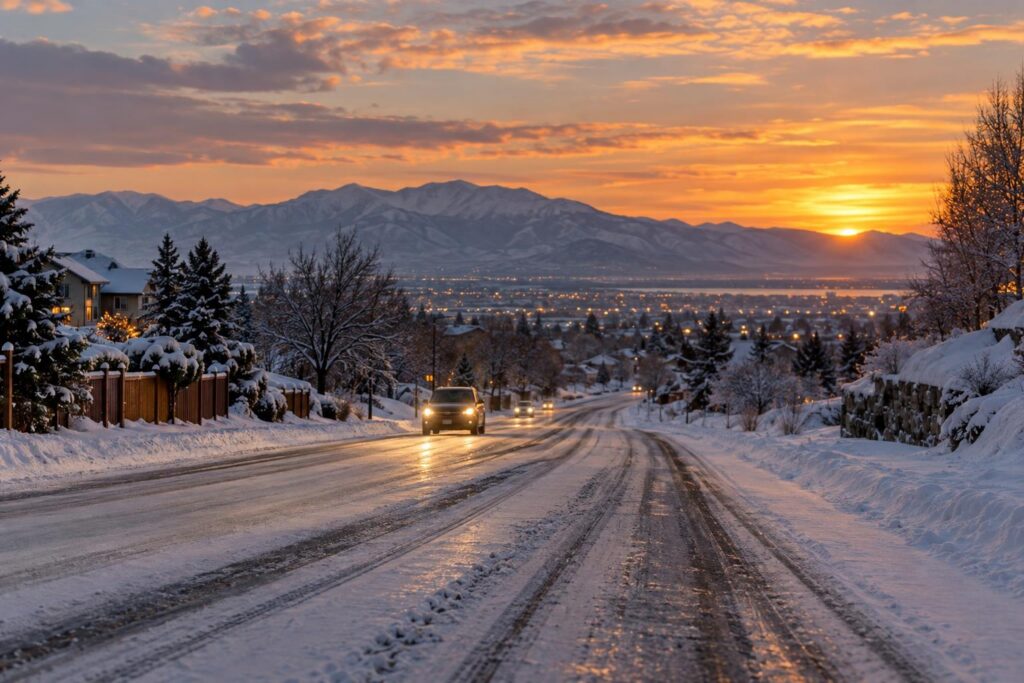
Icy Roads and a Crash in Davis County: Can Weather Be Blamed for Who Is at Fault?
Hurt in a winter crash and told the roads were to blame? Here is how fault can still be weighed in Utah, and what evidence matters after an icy-road collision.
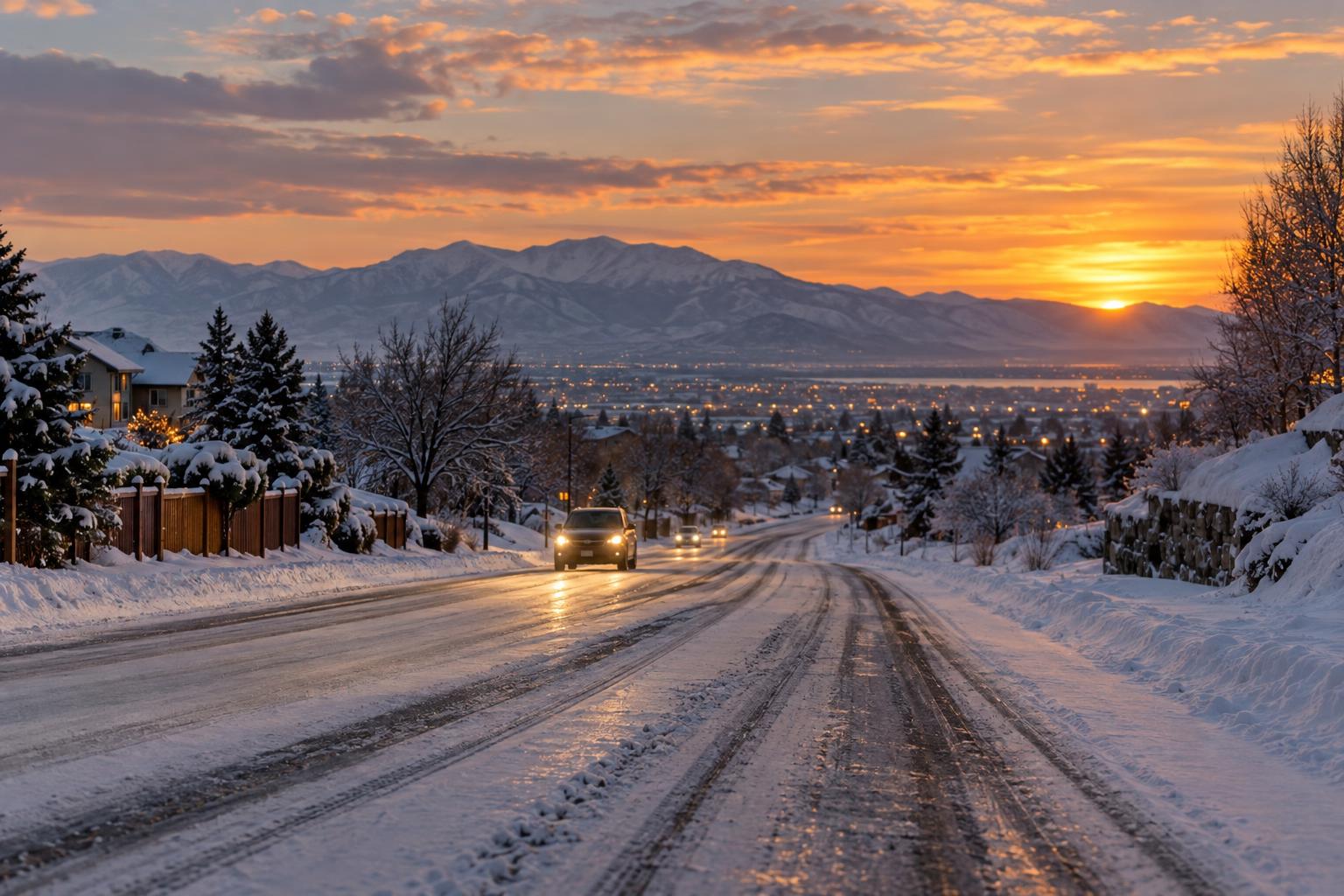
An icy road explains a condition, not automatically who caused a crash. If you were injured on I-15, US-89, Legacy Parkway, or a neighborhood street in Davis County, the useful account connects the road conditions with what each driver did. “It was slippery” is the beginning of that account, not the conclusion.
The posted limit does not answer the conditions question
Utah Code section 41-6a-601 requires speed that is reasonable and prudent for existing conditions and hazards, including weather and highway conditions. The current traffic-code compilation contains the rule. Driving below a posted limit does not, by itself, establish that a speed was appropriate for an icy surface.
That principle still needs facts. Do not turn it into a conclusion that every driver who slides was negligent. The sequence, visibility, traffic, available observations, and conduct of the involved drivers need to be evaluated together.
I would start by separating the condition from the response to it. What could you see? What was happening ahead? When did braking or a lane change begin? What did you actually observe about another vehicle? An honest answer can be “I do not know.”
Get safe before trying to document the road
Seek emergency help when needed and follow directions from responders. Do not stand in traffic or return to a dangerous lane to take a photograph. A useful record is not worth another injury.
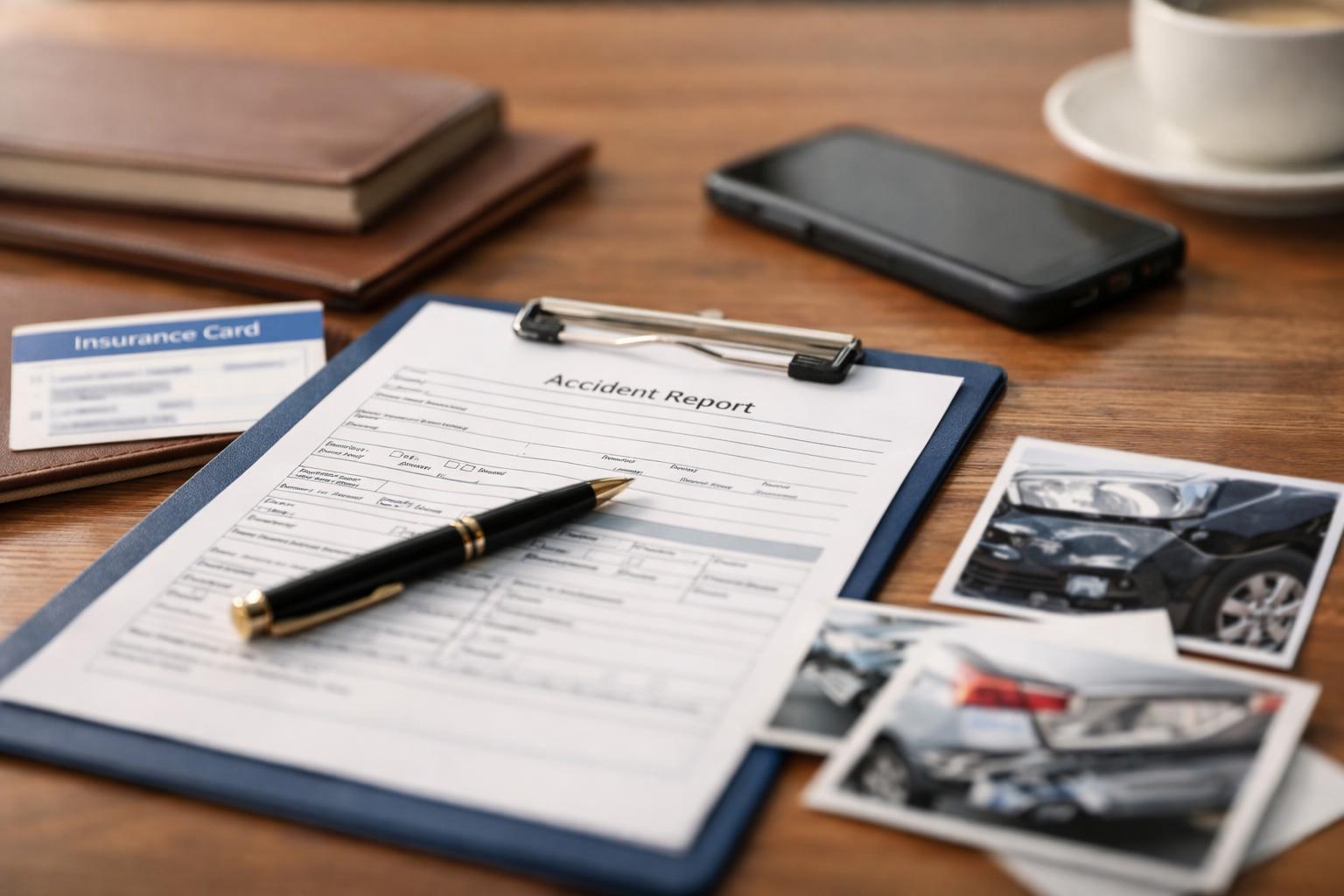
Once it is safe, preserve available photos, the location, and the identities of vehicles and witnesses. Keep medical-care information and the incident or report number. If another person takes photographs, ask for the original files rather than only a compressed screenshot.
On a route through Davis County, a road name alone may describe a long stretch. Note direction of travel, a nearby exit or intersection, and the lane or approach if you know it. Use actual observations; do not estimate a precise location simply to fill an empty field.
Write the sequence before assigning blame
Describe what happened immediately before the impact, during it, and afterward. Did traffic slow ahead? Were you entering, exiting, turning, or continuing straight? Did you see a vehicle lose control, or did you hear a collision and look afterward? Those are different kinds of observations.
Preserve dashcam footage in its original form if available. Do not trim away the moments before the collision or overwrite the original with an edited version. A longer sequence may show information that a short impact clip misses, including traffic movement and what the camera could not see.
Your notes should distinguish measured facts from impressions. “The other vehicle appeared to be moving faster than surrounding traffic” is not the same as knowing its speed. Record the impression honestly without manufacturing a number.
| Part of the account | What to preserve | What it does not establish alone |
|---|---|---|
| Road surface | Safe photographs and contemporaneous observations | The cause of every vehicle’s movement |
| Driver conduct | Dashcam, witness accounts, sequence of braking or turns | A final allocation of fault |
| Visibility | Lighting, obstructions, windshield observations | What every other driver could see |
| Collision | Vehicle positions, damage, official report information | A complete explanation of injury or liability |
| Aftermath | Care records, communications, recovery-related expenses | The amount or availability of a settlement |
Weather evidence needs a place and a time
A general forecast does not necessarily show the conditions at the collision location. A photograph from a different part of the county may not show the same surface. If you save weather information, note its source, geographic coverage, and the time it describes.
Avoid reconstructing the scene from memory alone after reading social-media reports. Keep your own observations separate from information you learned later. If you heard that another road was closed, identify that as information about another road unless reliable records connect it to your location.
Traffic cameras or maintenance records may be worth investigating, but do not assume footage exists, was recorded, or remains available. A lawyer can assess whether a preservation request or other inquiry is appropriate. A public camera view seen after the crash should not be presented as footage of the crash.
For local drivers, the practical value is specificity. “Northbound near this exit at approximately this time” gives an investigator a more useful starting point than “somewhere between Kaysville and Clearfield during the storm.” Mark estimates as estimates.
Fault, insurance, and bills are connected but different
A police report can be important evidence, but a citation or an officer’s preliminary account is not the entire civil-liability analysis. Insurance companies may also request information and reach positions that need closer review. Preserve the actual documents rather than relying on a phone-call summary alone.
Utah’s fault rules can affect whether and how much an injured person may recover. Do not assume that one mistake necessarily decides everything, or that another driver’s error guarantees full payment. Counsel needs the facts and applicable law before evaluating that issue.
Medical billing can begin before responsibility is resolved. Keep claim numbers, insurer names, bills, and explanations of benefits organized by source. Ask which coverage is being discussed in each conversation. A statement about vehicle repairs may not answer a question about medical expenses.
If an insurer requests a recorded statement, authorization, or release, understand the request and any obligations under your own policy. Do not ignore a request on the theory that you should never speak to an insurer. Obtain advice where you are uncertain, and preserve what was requested and when.
A sequence can change the question
Consider a hypothetical collision in which one vehicle slides, another brakes, and a third impact occurs moments later. A photograph of the final positions may not reveal which event came first. A witness might have seen only the last impact. Preserve each account with its limits rather than combining them into a story no one actually observed.
If you review dashcam footage after writing your initial recollection, keep both. Note what the footage clarified and what remains uncertain. Do not overwrite your earlier account as though you always remembered the corrected detail. A transparent explanation of how your understanding developed can be more useful than an artificially seamless narrative.
If a passenger also has photographs or a separate recollection, preserve that material without merging it into your own statement. Identify who created each record and when. Different viewpoints can clarify the sequence, but they should remain attributable to the person who actually observed or recorded them.
What people get wrong about winter crashes
“Nobody is at fault if the road was icy.”
Weather can be relevant without excusing every driving decision. Speed, following distance, attention, vehicle movement, and other circumstances still need examination. A road condition is not a substitute for reconstructing the event.
“A rear-end crash always has one obvious answer.”
The collision pattern matters, but a complete sequence can involve multiple vehicles, earlier impacts, lane changes, or other disputed facts. Avoid making a final legal conclusion from the damage photograph alone.
“If I did not receive a ticket, I cannot share responsibility.”
The absence of a citation does not settle a civil claim. The relevant question is what the evidence establishes under the applicable standards, not simply whether a ticket was issued at the scene.
“An apology proves the other driver accepted legal liability.”
A person’s words should be preserved accurately, but concern or an apology does not resolve every issue. Do not expand a statement into a promise to pay or an admission the speaker did not make.
Keep an evidence file that another person can understand
Use a simple chronology and identify the source of each item. Keep original photographs together, medical records together, and insurance correspondence together. A list of missing information is helpful: a report not yet received, a witness number, or footage someone mentioned.
For a car-accident consultation, bring your coverage documents if available, the report information, the collision timeline, and any pending offer or release. Explain what you are being asked to decide now. That may be different from the larger question of eventual responsibility.
If you notice an error in a record, preserve the original and ask about the appropriate correction process. Do not silently alter an image, timestamp, or statement. An accurate correction with a clear explanation is more useful than a file whose history cannot be understood.
Focus on what the next decision requires
You may need medical follow-up, help understanding an insurer’s request, or a review before signing settlement papers. Those needs do not require you to solve the whole crash investigation first. They do require clarity about what is known and what remains disputed.
The firm’s practice areas can help identify a related issue if the collision also involves another civil matter. For the crash itself, keep the focus on the actual road, time, conduct, and records.
Ice can make an ordinary drive suddenly difficult. The legal review should be equally attentive to the details, without assuming either that weather excuses everything or that an injury proves another person must pay.