Should You Give a Recorded Statement After a Utah Car Accident?
An insurer wants your recorded statement after a Utah crash. Here's what they ask, which policy is calling, and what to consider before you agree.
Should You Give a Recorded Statement After a Utah Car Accident?
Got a call asking for a recorded statement? Before you say yes or no, find out who’s asking. Is it your own insurance company, or the other driver’s? The Utah Insurance Department draws a clear line between the two. With your own insurer, you have a contract. With the other driver’s insurer, you don’t, and that company’s main obligations run to its own policyholder.
There’s no single right answer for every driver in Kaysville, Clearfield, or anywhere else in Davis County. What you owe, and what makes sense, depends on who called, what they asked for, and what your policy says. This guide will help you sort that out, get your records in front of you, and know what to ask before you agree to anything.
Four things to settle first
- Identify the caller.Get the person’s name, the company, whose policy they’re handling, and the claim number.
- Ask what they’re relying on.If they say the recording is required, ask which policy provision or other authority they mean.
- Keep your own insurer in the loop.The Utah Insurance Department advises notifying your insurer as soon as possible and cooperating.
- Separate memory from guesses.If you don’t know a speed or distance, it’s fine to say so.
Who is asking for the recording: your insurer or the other driver’s?
This is the first fork in the road, and it changes nearly everything after it.
Your own insurance company
When you make a claim under your own policy, the Utah Insurance Department calls it a first-party claim. You have a direct contract with that company. The Department’s accident guidance advises notifying your insurer as soon as possible, cooperating with it, and asking what records and forms it needs.
That doesn’t mean every request is automatically required in exactly the form it’s asked. It means your relationship with your own insurer comes with obligations on both sides, and the policy is where those are written down.
The other driver’s insurance company
When you make a claim against someone else’s policy, the Department calls it a third-party claim. You don’t have a direct contract with that insurer, and the Department says its primary obligation is to its own policyholder. That’s not a reason to treat the adjuster as an enemy. It is a reason to understand that the company isn’t working for you.
Someone else
Occasionally the caller represents a different party, like another person involved in the crash or a company that owned a vehicle. If you’re not sure who they represent, ask, and write the answer down.
Make sure the caller is who they say
Before discussing anything, it’s reasonable to confirm the call is real. Ask for the adjuster’s name, direct number, and claim number. Then call back using a number you find yourself, such as the one on your insurance card or the company’s official website, rather than one the caller gives you. A real adjuster won’t mind. And if the call turns out not to be legitimate, you’ve avoided handing personal details to a stranger.
What people commonly get wrong about recorded statements
Most advice about recorded statements online falls into one of two camps: “never give one” or “just cooperate.” Neither holds up as a blanket rule. Here’s what tends to trip people up.
“You should always refuse.”
Not necessarily. Your own policy may have cooperation terms, and the Utah Insurance Department advises cooperating with your own insurer. Refusing everything without reading your policy can create its own problems. The better first step is figuring out who’s asking and on what basis.
“You always have to give one.”
Also not established as a universal rule. A request from the other driver’s insurer comes from a company you don’t have a contract with. What you owe, if anything, depends on the request and the policy involved. Ask what they’re relying on.
“The adjuster is just being friendly.”
The adjuster may well be friendly. The Insurance Department explains that a third-party insurer is investigating whether its insured is legally responsible, how much the damages are, and whether the claimed injuries are related to the crash. Those are reasonable things to investigate. Just know that’s the purpose of the call.
“PIP means fault doesn’t matter.”
Utah’s Personal Injury Protection rules don’t make fault irrelevant. Section 78B-5-818 of the Utah Code weighs the fault of the person seeking recovery against the fault of the others involved. That’s one reason questions about speed, lanes, and timing come up.
“Everybody has underinsured coverage.”
Utah law addresses uninsured and underinsured motorist coverage separately, and coverage selections and rejections matter. If your own insurer calls, the call may be about more than repairs. Ask which coverage the claim involves rather than assuming.
“If I said something wrong, I can just take it back.”
Utah has some special evidence rules that can affect certain statements taken from injured people early on or while they were hospitalized. They come with conditions and exceptions, and they don’t work like a simple undo button. If you already gave a statement under those circumstances, keep track of the date, where you were, and whether you got a copy, and have a lawyer look at it.
Our Car Accidents in Utah page covers the bigger picture of a crash claim, from the first call to deciding whether to get help.
| Who called | Your relationship to them | What they’re likely looking at | What to check before talking |
|---|---|---|---|
| Your insurer | First-party: you have a contract with them | Your claim under your own policy, which may involve more than one coverage | Your declarations page, the full policy, and which coverage the claim involves |
| Other driver’s insurer | Third-party: no direct contract; its main obligation is to its policyholder | Whether its insured is responsible, the damages, and whether injuries relate to the crash | The claim number, who they insure, what they’re asking, and what they say it’s for |
| Someone else | Depends on who they represent | Not clear until you ask | Their name, company, and who they work for, in writing |
Where this comes from: The first-party and third-party distinction, and what a third-party insurer investigates, come from the Utah Insurance Department’s Filing an Auto Claim page. The advice to notify and cooperate with your own insurer, keep dated notes, and save receipts comes from its After an Accident page. Shared fault comes from Utah Code 78B-5-818, and coverage context from Utah Code 31A-22-305 and 31A-22-305.3. None of these sources says every driver must, or must not, give a recorded statement.
What is the insurer trying to establish?
The Utah Insurance Department describes three questions a third-party insurer is trying to answer:
- Is the driver they insure responsible for the crash, and how much?
- What do your injuries and losses add up to?
- Are those injuries and losses connected to this crash?
A recorded statement is one way to gather your version of those things. That’s ordinary. It’s also why the words you use matter. A guess about speed becomes a number on a transcript. “I’m fine” said at the scene, or two days later on the phone, can be read back months later when you’re still in treatment.
None of that means adjusters are trying to trick you. Many are doing their jobs carefully. It means you should talk about what you actually know, and be comfortable saying “I don’t know” about the rest.
Why fault questions come up
Utah’s comparative fault statute allows a fact finder to allocate fault among the people involved, including the person seeking recovery. Being partly at fault doesn’t automatically end a claim under that statute. What matters is how that person’s fault compares with the fault of the others. So when an adjuster asks about your lane, your speed, or when you saw the other car, those questions connect to how fault might be divided. No one can tell you a percentage from a phone call, and you shouldn’t try to assign one yourself.
What to check in your own policy and the written request
Before deciding, I’d want two documents side by side: the request and your policy.
The request
- The adjuster’s name and verified contact information.
- The company and whose policy it’s handling.
- The claim number and your policy number.
- What exactly they’re asking for: a recorded call, a written statement, or something else.
- What they say it’s for, and any deadline they mention.
- Any policy language they point to.
If the request came by phone, it’s reasonable to ask for it in writing. You can ask, though not every company will agree.
Your policy
Pull your declarations page and the full policy, including endorsements. Look for sections about your duties after an accident, cooperation, and claims. If your own insurer says a recording is required, those are the places that requirement would come from. If the wording is unclear, that’s a good moment to ask a lawyer to go through it with you.
Different requests aren’t the same thing. A recorded phone interview, a written statement, a police report, and testimony in a lawsuit each come with their own rules. Ask exactly what’s being requested before assuming which rules apply.
I’d rather read the request and the policy together before you decide anything. Cooperating with your own insurer and agreeing to a recorded interview you don’t understand aren’t the same decision, and the policy is usually where that difference shows up.
If your own insurer is the one calling
A call from your own company can feel more routine, and often it is. But it can involve more than one part of your policy. Utah law addresses uninsured and underinsured motorist coverage separately, and the coverage selections and rejections made when the policy was set up matter. So a call about “your claim” might involve repairs, medical coverage, or something else, depending on what you carry.
A few questions help:
- Which coverage is this claim under?
- Is the statement about my vehicle, my injuries, or both?
- What part of my policy asks me to do this?
- What other records or forms do you need from me?
Asking these isn’t refusing to cooperate. It’s making sure you understand what you’re cooperating with.
Keeping a call log, recorded or not
Whether or not you ever give a formal recorded statement, you’ll probably talk with adjusters more than once. The Utah Insurance Department recommends keeping dated notes of those conversations. A simple log protects you either way.
For every call, write down:
- The date and time.
- The person’s name, company, and phone number.
- Which claim it was about.
- What they asked, and what you said.
- Anything they promised to send, or asked you to send.
Do it right after you hang up. It takes two minutes, and it means you won’t be trying to remember in three months whether that conversation happened in March or April.
What records to have in front of you
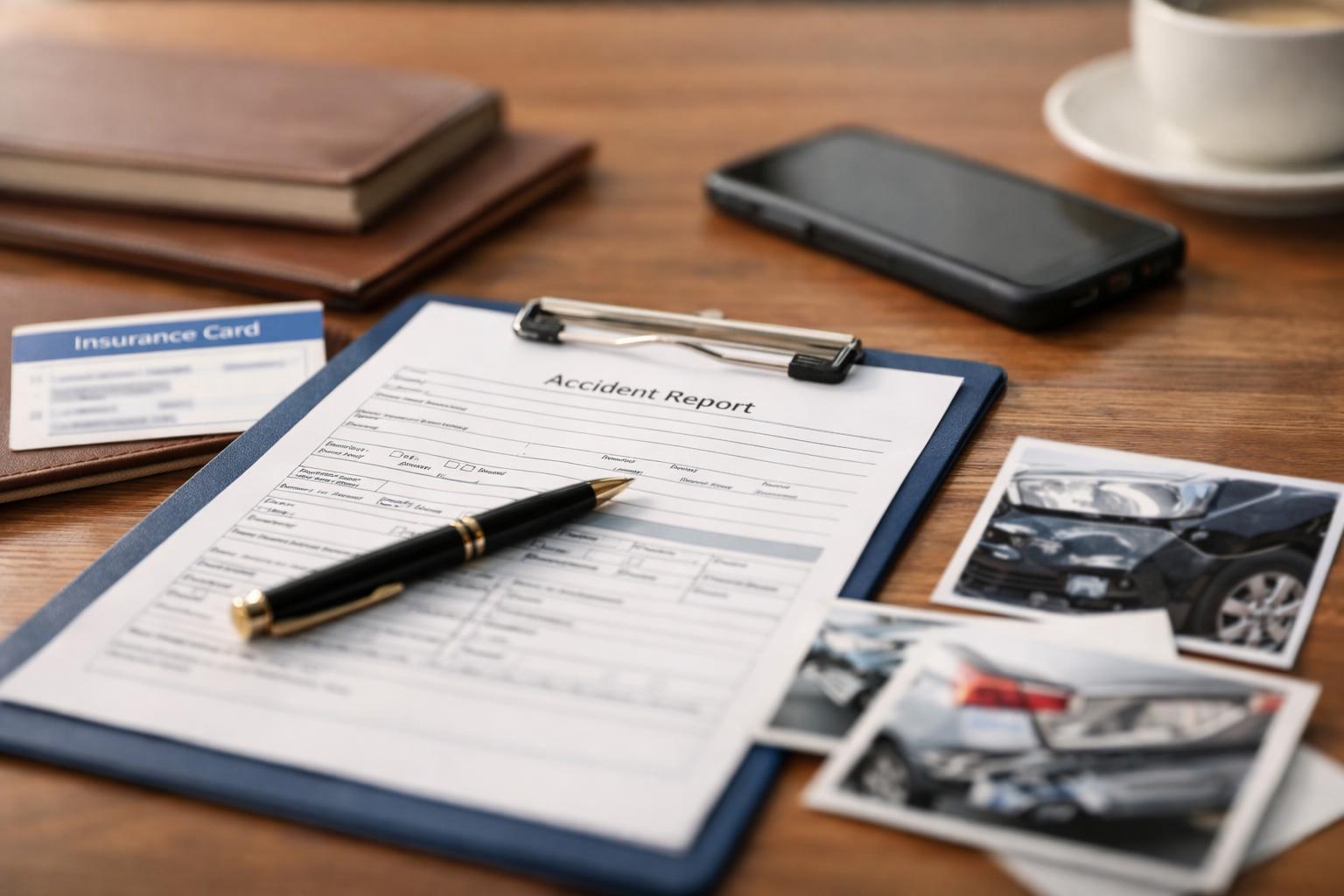
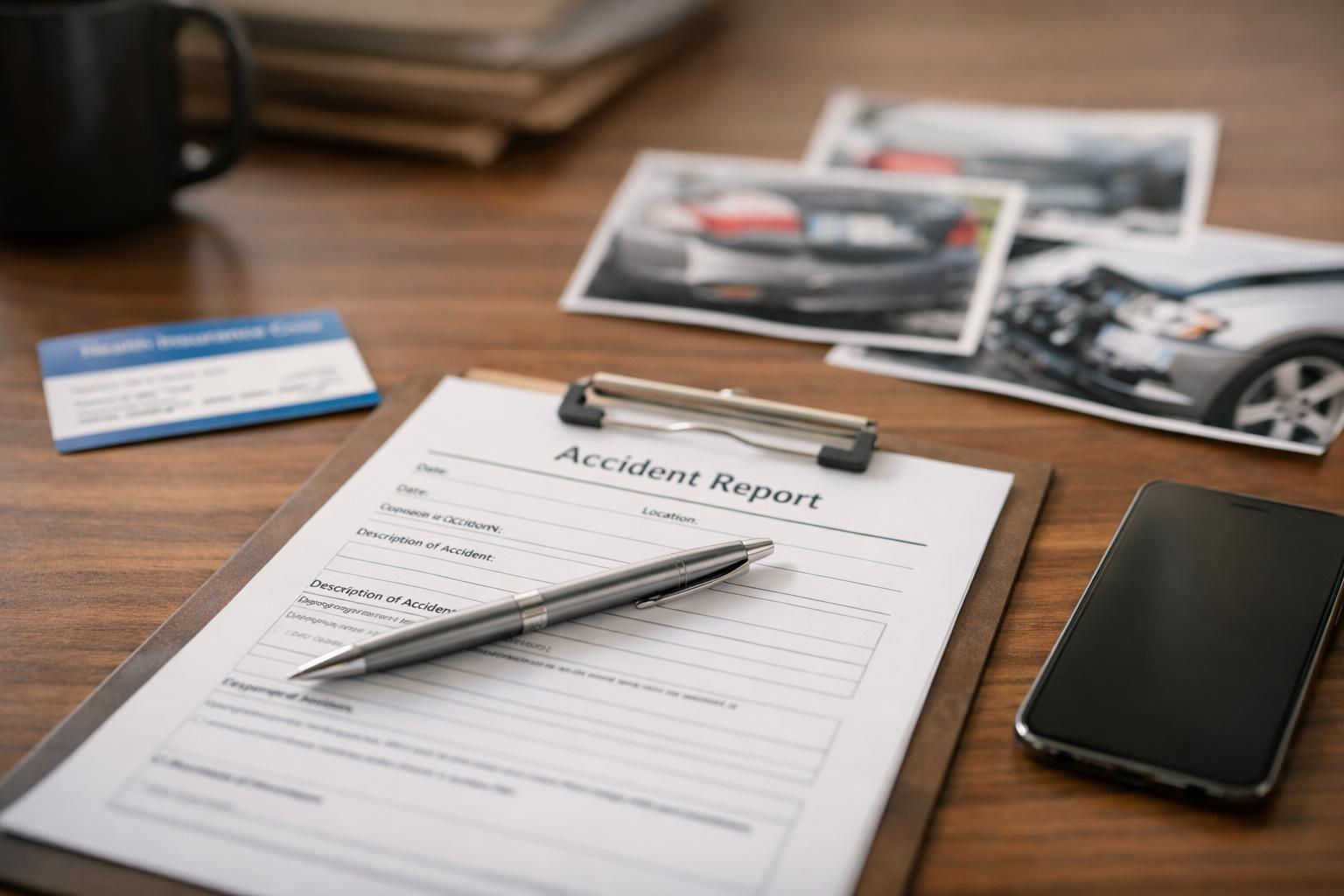
If you do give a statement, or even just talk with an adjuster, it helps to have your records out rather than working from memory. The Utah Insurance Department recommends writing down incident details, keeping dated notes of claim conversations, and saving bills and receipts.
The incident folder
- The crash report, if you have it.
- Photos of the scene, the vehicles, and any injuries, with their original dates.
- Witness names and contact information.
- A dated account you wrote yourself, in your own words.
If the Utah Highway Patrol handled your crash, UHP offers an online request process through GovQA and asks for identifying information about the incident. If a city police department or another agency responded, request the report from that agency. Don’t assume a crash in Kaysville or Clearfield was handled by UHP.
The claim folder
- Every letter and email from any insurer.
- A call log: date, time, name, company, and what was discussed.
- Your claim numbers.
The health and cost folder
- Treatment dates and providers.
- Bills and receipts related to the crash.
- Questions your doctors haven’t answered yet.
Be careful with medical records. Bring what relates to the crash, and get advice before handing over broad authorizations or unrelated history.
How to explain what you know without guessing
The hardest part of a recorded statement isn’t remembering. It’s resisting the urge to fill in gaps. People want to be helpful, so they estimate. Estimates turn into facts once they’re recorded.
- Say what you saw, heard, and did, in that order.
- When you’re estimating, say so: “I think,” “about,” “I’m not sure.”
- If you don’t know a speed, a distance, or a sequence, say you don’t know.
- Don’t guess about your injuries. “I’m still being treated” is a full answer.
- Don’t minimize or exaggerate anything, including symptoms.
- If you realize something you said was wrong, correct it clearly rather than quietly changing your story.
This isn’t about rehearsing a script. It’s about being honest in a way that holds up. An accurate “I don’t remember” is better than a confident guess.
What to gather if you already gave a statement
Lots of people give a statement before they know any of this. That’s not a disaster. It just changes what to gather.
- The date and time of the statement.
- Who took it and which company they work for.
- Whether it was recorded, written, or both.
- Where you were at the time, especially if you were in the hospital or had just been released.
- Whether you received a copy or transcript, and any papers you signed before or after.
Utah has evidence rules that can apply to certain statements taken from injured people soon after an accident or during a hospital stay. They have conditions and exceptions, and some depend on paperwork signed earlier. Don’t try to calculate anything yourself. Bring these details to a lawyer and let them sort out whether any of it matters.
If a case is ever filed, Utah Courts’ guidance on initial disclosures in personal injury cases includes certain written or recorded statements among the things that may need to be shared. That doesn’t mean every statement is used. It means statements can matter later, which is a good reason to keep track of yours.
Questions to ask before agreeing to a recorded statement
You can ask these on the phone, politely, before anything is recorded:
- Will this call be recorded?
- Which company do you work for, and whose policy is this?
- Which policy provision or other authority makes this required?
- What topics do you want to cover?
- Can you send the request in writing?
- Can I get a copy of the recording or transcript?
- Is there a deadline, and where does it come from?
- Can my lawyer be on the call?
These are questions to ask, not rights you can count on in every case. The answers help you and a lawyer decide what to do next.
If you think an insurer has handled your claim improperly, the Utah Insurance Department offers consumer complaint help, including for property-and-casualty matters. That’s a resource for insurance concerns, not personal advice about your own claim.
Questions about recorded statements in Utah
Is a request from my insurer different from one from the other driver’s insurer?
Yes. The Utah Insurance Department says you have a direct contract with your own insurer, while the other driver’s insurer primarily owes obligations to its policyholder. What you owe each depends on your policy and the specific request.
What if the adjuster says my policy requires the statement?
Ask which provision they mean, then read that section yourself or with a lawyer. Cooperation terms vary, and the exact wording matters.
Can I ask for the request in writing and a copy of the recording?
You can ask. Not every company will agree, but the answer itself is useful information to bring to a lawyer.
What if I don’t remember a speed, a distance, or the exact order of events?
Say so. “I don’t know” or “I’m not sure” is a truthful answer. A guess becomes part of the record once it’s said.
I already gave a statement while I was hurt or in the hospital. What should I bring?
The date, who took it, where you were, whether you got a copy, and any papers you signed. Some Utah evidence rules can affect early or hospital statements, but they have conditions, so have a lawyer review the details.
Do PIP or underinsured coverage decide whether I have to give a recording?
No. Those are coverages, and Utah law addresses them in their own statutes. Whether you need to give a recording depends on who’s asking and what your policy and the request actually say.