Utah family court cases follow a structured process, but the steps can still feel confusing if you have never been through the legal system before. Whether your case involves a divorce, custody, parent-time, child support, or other family law issues, it helps to know what typically happens from filing to final orders.
Gibb Law Firm provides Utah clients with clear, practical guidance so you understand your options and next steps. This overview explains the Utah family court process in plain English, including key terms, typical procedures, required filings, common mistakes to avoid, and what to do after the court enters orders.
Stages of a Utah Family Court Case
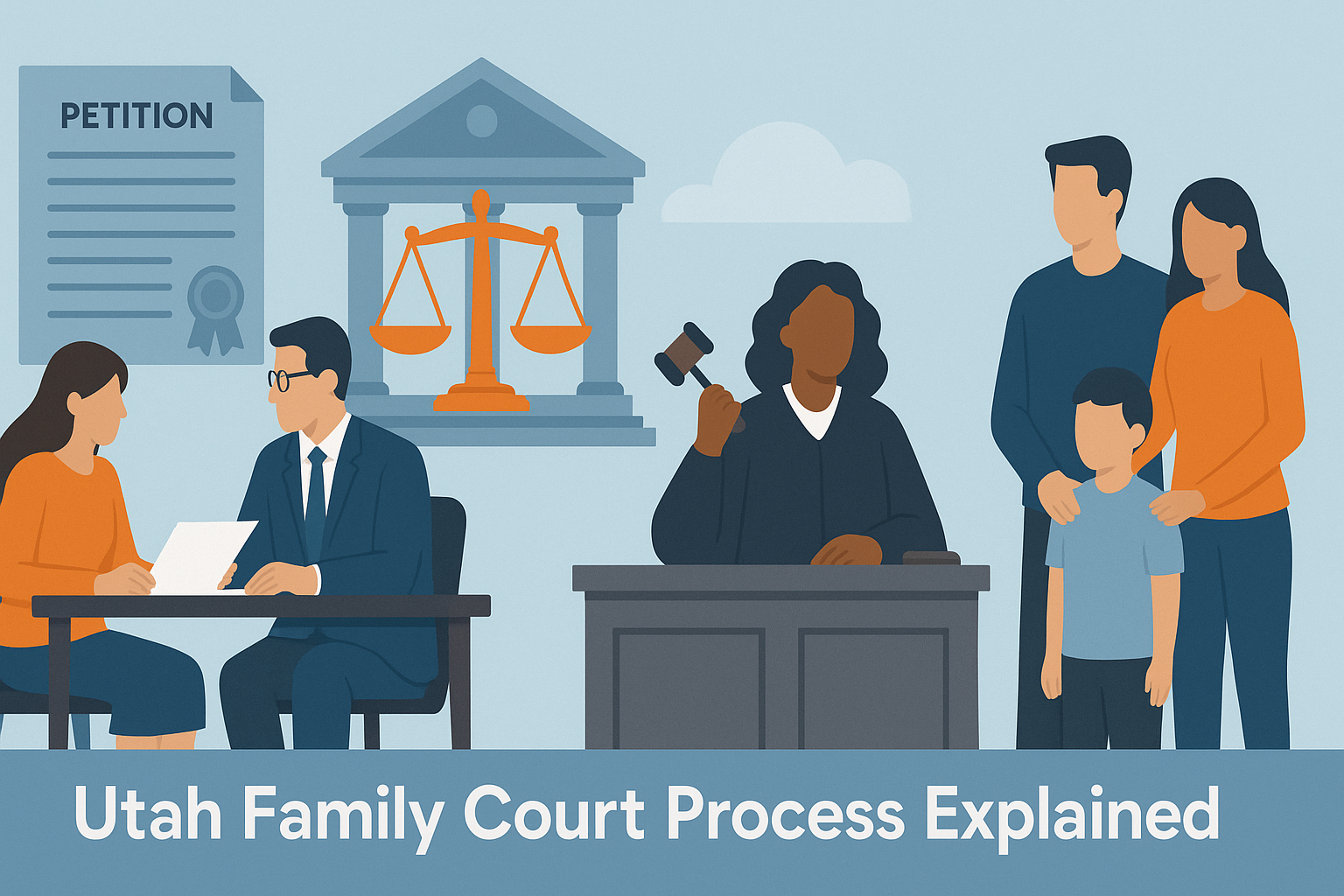
While every case is different, most Utah family court matters move through a predictable set of stages. Some cases resolve early through agreement, and others require more time because of disputed custody, finances, or property issues.
1 Filing and service
A case usually begins when one party files a petition and serves the other party. Service rules and deadlines matter, so it is important to start correctly.
2 Response and early disclosures
The other party typically files an answer. Many cases also require exchanging key financial information early so support and property issues can be evaluated.
3 Temporary orders
If urgent issues exist, either party may ask for temporary orders covering custody, parent-time, support, or use of property while the case is pending.
4 Mediation and settlement
Utah courts often require or strongly encourage mediation, especially in cases involving children, before moving to trial.
5 Final resolution and decree
If the parties do not settle, the court may hold hearings or a trial and then enter final orders. In divorce, the final written decree sets the enforceable terms.
If you want a Utah-focused overview of what can be filed and when, the video below discusses common petitions, deadlines, and procedure in Utah divorce and family law cases.
Watch: What You Can File and When in Utah Divorce Court
For a filing-focused walkthrough, see how to file for divorce in Utah step by step. If you are wondering about timing, review how long a divorce takes in Utah and uncontested divorce in Utah.
Key Definitions and Utah Legal Framework
Utah family law cases are shaped by Utah statutes and court rules. In plain terms, the laws define what the court can order and the rules explain how the case proceeds. You will also see certain terms repeatedly in court paperwork and hearings.
Petitioner and respondent: The petitioner starts the case by filing. The respondent is the other party who answers.
Petition and summons: These documents open the case and notify the other party that a court action has been filed.
Temporary orders: Short-term orders that address urgent issues like custody schedules, child support, or household expenses during the case.
Decree or final order: The final written court order that resolves the case and becomes enforceable.
Best interests of the child: The core standard Utah courts use when deciding custody and parent-time disputes.
Custody terms matter because legal custody determines major decision-making authority. For more background, see understanding child custody in Utah: legal vs physical custody and understanding joint legal custody in Utah.
This reel highlights how Utah courts commonly approach custody and parent-time decisions, which often become central issues as a family court case moves forward.
Typical Court Procedures in Utah Family Law Cases
After the case is filed and served, the court process usually involves deadlines, required disclosures, and scheduled events such as hearings, mediation, and potentially trial. Some steps happen in nearly every case, while others depend on the issues in dispute.
Temporary orders hearings: Courts can address custody schedules, support, and the use of property while the case is pending.
Disclosure and discovery: Parties exchange financial and other relevant information so the case can be resolved fairly.
Mediation and settlement: Many cases attempt resolution through mediation before trial.
To learn how temporary orders work in practice, see temporary orders in Utah divorce cases. For cases involving high conflict, review high conflict divorce in Utah.
If formal evidence gathering is needed, see the divorce discovery process in Utah and how to prepare financial disclosures for Utah divorce.
Required Forms and Filings
Most Utah family court cases involve a set of core forms and filings. The exact documents depend on the type of case and whether children, support, or property division are involved.
Petition and summons: Start the case and provide notice to the other party.
Answer and counterpetition: The responding party typically files an answer and may also file a counterpetition.
Financial declaration and supporting documents: Often needed for child support, alimony, and property-related decisions.
Parenting plan and child support worksheets: Common in cases involving children.
Proposed orders and final documents: Used to present agreed terms or finalize the court’s decisions in writing.
If you are preparing documents, the video below explains how Utah’s Online Court Assistance Program can help generate and file court paperwork for certain case types.
Watch: Preparing Court Documents Through OCAP
If your case involves child support or alimony, these resources can help you understand common calculations and factors: Utah child support calculations explained and alimony in Utah: how spousal support is determined. For property-related issues, see property division in Utah divorce: equitable does not mean equal, marital debt division in Utah, and dividing retirement accounts in Utah divorce.
Mediation and Settlement in Utah Family Court
Many Utah family law cases resolve through agreement rather than trial. Mediation can be especially important when children are involved, because it allows parents to negotiate a parenting plan and related terms in a structured setting.
The video below explains how mediation works in Utah courts and why it is often part of family-related cases before trial.
Watch: Mediation in Utah Family Related Court Cases
To prepare, review Utah divorce mediation: what to expect and how to prepare and mediation vs litigation in Utah divorce.
Common Mistakes to Avoid
People often unintentionally weaken their position in family court by missing deadlines, ignoring required steps, or treating court orders as optional. Avoiding common mistakes can reduce delays and protect your credibility with the court.
Missing deadlines or hearings: Not responding on time or failing to appear can lead to adverse orders and unnecessary complications.
Incomplete financial disclosures: Support and property outcomes depend on accurate information.
Violating temporary orders: Temporary orders are enforceable and can affect later decisions.
Skipping mediation requirements: If mediation is required, failing to participate can delay your case.
Relying on informal agreements: If it is not in a signed court order, it may be difficult to enforce.
This reel discusses how disputes can escalate when court orders are not followed. For enforcement concepts in more detail, see enforcing custody and visitation orders in Utah and contempt of court in Utah family cases.
Next Steps After Final Orders
After the court enters final orders, both parties are required to follow them. If circumstances change over time, Utah law may allow modifications in appropriate cases. If orders are ignored, enforcement options may be available.
Follow the written order: Even if you disagree, the order is enforceable unless and until it is changed by the court.
Document issues early: Keep clear records if disputes arise around schedules, expenses, or communication.
Seek legal guidance before acting: Unilateral decisions can create avoidable legal risk.
This reel explains steps parents can take when a court-ordered parenting plan is not being followed in Utah. If support is involved, see Utah child support enforcement: what to do if payments stop and how to modify child support in Utah.
If your situation involves relocation, evaluations, emergency issues, or enforcement, these resources may be relevant: relocation after divorce in Utah, custody evaluations in Utah, emergency custody orders in Utah, and enforcing custody and visitation orders in Utah.
Talk to Gibb Law Firm About Your Utah Family Court Case
Family court decisions can affect your finances, your parenting schedule, and your long-term stability. If you have questions about filing, responding, mediation, custody arrangements, temporary orders, or enforcement, Gibb Law Firm can help you understand your options and build a practical plan.
Schedule a Consultation