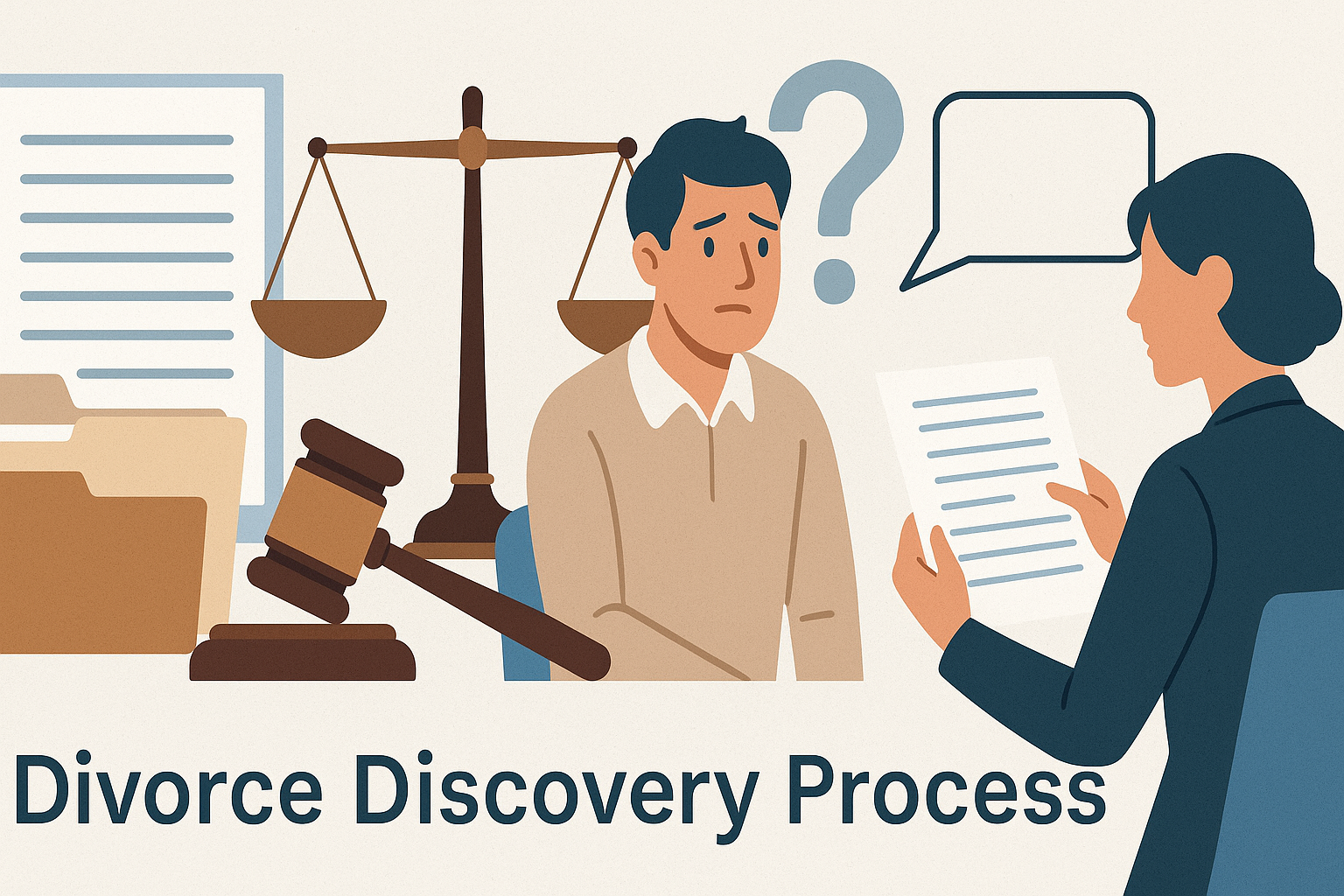
The discovery process is one of the most important stages in a Utah divorce. It is the period when both spouses exchange documents, financial disclosures, and other key information so the court and the parties can work from a complete and accurate picture of the marital estate.
Gibb Law Firm helps Utah clients navigate discovery with practical, plain-English guidance. Whether your case is focused on property division, child support, alimony, or custody, understanding how discovery works under Utah law can make the rest of your divorce smoother and more predictable. For a broader overview of the entire divorce process, you can also review our article How to File for Divorce in Utah: Step-by-Step Guide alongside this page.
Why the Discovery Process Matters in a Utah Divorce
Discovery is the structured information-exchange phase in a Utah divorce. It ensures both spouses have access to the same financial and factual details before resolving issues such as property division, debt allocation, custody, alimony, and child support.
Discovery helps identify all marital assets and debts so the court can divide property equitably, not just based on what one spouse chooses to disclose.
Thorough discovery supports fair child support and alimony calculations by giving a clearer picture of income, expenses, and earning capacity for each spouse.
Access to complete information allows both sides to negotiate or mediate informed settlements, reducing surprises at trial and minimizing long-term conflict.
Discovery obligations are enforced by the court; when a party refuses to cooperate or hides information, judges can impose sanctions or draw negative inferences.
For many clients, simply understanding what “discovery” means and what to expect from it reduces stress. The following video offers a general overview of how discovery works in divorce cases, including what documents are typically exchanged.
Watch: Understanding the Discovery Process During Divorce
Core Discovery Tools in Utah Divorce Cases
Utah family law uses several standard discovery tools to gather information. Each has a specific role and is governed by deadlines and rules under the Utah Rules of Civil Procedure.
Financial Declarations and Initial Disclosures
Each spouse must complete a Financial Declaration and provide supporting documents such as tax returns, pay stubs, bank statements, and loan documents. These are part of the Initial Disclosures required in most Utah divorce cases.
Interrogatories and Requests for Production
Written questions (interrogatories) and document requests (requests for production) allow one spouse to ask the other for specific information and records, such as business records, account histories, or communication related to disputed issues.
Subpoenas and Depositions
Subpoenas can be used to obtain records directly from third parties like banks, employers, or accountants. Depositions are under-oath interviews where attorneys ask questions and a court reporter records the testimony for later use in court.
Not every case uses every tool. Straightforward divorces might rely mainly on financial disclosures and a limited exchange of documents, while more complex cases may require subpoenas, expert witnesses, or extensive depositions.
This Instagram post breaks the discovery process into three simple steps, which can be a helpful visual overview if you are just starting your case and feeling overwhelmed by the terminology.
Key Discovery Definitions and Utah Rules
Several terms appear again and again in Utah divorce discovery. Understanding them will make it easier to read court papers and communicate with your attorney.
Financial Declaration: A mandatory form where each spouse discloses income, monthly expenses, assets, and debts, supported by documents like pay stubs and bank statements.
Initial Disclosures: The early exchange of core documents and information required under Utah Rule 26, including tax returns, income records, and basic financial statements.
Interrogatories: Written questions served on the other party that must be answered in writing, under oath, within set deadlines.
Requests for Production: Formal requests asking the other party to provide documents or electronic records, such as bank statements, emails, or real estate records.
Subpoenas: Court-backed demands that third parties like employers, financial institutions, or accountants provide documents or testimony relevant to your case.
Depositions: Sworn, recorded interviews where attorneys question a party or witness in front of a court reporter. The transcript can be used later in motions or at trial.
These tools operate under Utah’s discovery rules, primarily Rule 26 of the Utah Rules of Civil Procedure, which sets expectations for timing, cooperation, and scope in family law cases.
The next video gives a broader overview of how a typical Utah divorce unfolds from start to finish, including where discovery fits into the timeline.
Watch: Timeline of a Typical Utah Divorce Case
Typical Discovery Timeline in a Utah Divorce
Every case is different, but most Utah divorces with contested issues follow a fairly predictable discovery sequence. Deadlines can be adjusted by the court, especially in more complex cases.
Case Filing and Initial Disclosures
The divorce petition and answer are filed with the court. Shortly after, each party must provide Initial Disclosures and begin gathering the records needed for a complete Financial Declaration. For a step-by-step overview of the filing process, see How to File for Divorce in Utah: Step-by-Step Guide.
Financial Declarations and Core Documents
Both spouses complete their Financial Declarations and exchange supporting documents like tax returns, bank statements, retirement account statements, and loan records.
Written Discovery and Subpoenas
Attorneys may serve interrogatories and requests for production. If necessary, they issue subpoenas to third parties for additional information, such as business or employment records. Temporary support or custody issues during this time may be addressed through Temporary Orders in Utah Divorce Cases.
Depositions, Mediation, and Discovery Cutoff
Depositions may be taken in more complex cases. Discovery generally continues up to a court-ordered cutoff date, after which the focus shifts to mediation, pretrial conferences, and trial preparation. You can learn more about this stage in Utah Divorce Mediation: What to Expect and How to Prepare and How Long Does a Divorce Take in Utah?.
Your attorney can help you map these stages onto your specific case, including how they interact with other requirements such as mediation and temporary orders. The following Instagram reel offers a quick, plain-language breakdown of what “discovery” means in a divorce.
This reel highlights how discovery uncovers information about assets, income, and debt score pieces of the puzzle in any Utah divorce.
Required Forms and Filings in Utah Divorce Discovery
Most Utah divorce cases with contested financial issues will involve several core forms and filings related to discovery. These documents create the paper trail the court will rely on later.
Financial Declaration forms for each party, including detailed income, expenses, assets, and debts, plus supporting documents.
Initial Disclosures under Rule 26, which include tax returns, pay stubs, and other baseline financial records exchanged early in the case.
Certificates of Service that show when and how disclosures and discovery responses were provided to the other side.
Written responses and objections to interrogatories and requests for production, signed under oath where required.
Supplemental disclosures if new information surfaces, such as a change in income, sale of property, or discovery of additional accounts.
Properly completing and updating these documents is critical. Mistakes, omissions, or late filings can hurt credibility and may lead to additional costs or court sanctions.
Common Discovery Mistakes to Avoid in a Utah Divorce
Many discovery problems are preventable with careful attention and early organization. Avoiding the following missteps can save time, money, and stress.
Providing incomplete financial disclosures: Leaving out accounts, income sources, or debts can damage your credibility and lead to penalties or adverse rulings.
Missing court or discovery deadlines: Late responses can delay your case, increase attorney fees, and result in court sanctions.
Giving vague or evasive answers: Courts expect clear, straightforward responses. Evasive answers often lead to further motions and hearings, adding cost and conflict.
Failing to preserve evidence: Deleting texts, emails, or digital files after a case has begun can create serious legal problems and undermine your position at trial.
Not updating disclosures when things change: Utah rules require parties to supplement disclosures. Changing jobs, buying or selling property, or discovering new information should be reported promptly.
Attempting to hide assets or income: Intentional concealment can lead to harsh outcomes, including attorney fee awards, sanctions, and unfavorable property or support decisions.
To see how different discovery tools can be used strategically in divorce and family law cases, the following video offers an attorney’s perspective on why discovery matters and how it can impact the outcome of your case.
Watch: What Is Discovery in a Divorce or Family Law Case?
Next Steps if Your Utah Divorce Discovery Is Complex
Some discovery phases are more involved than others. High-asset cases, self-employment, or disputed valuations often require additional planning and expert input. If your divorce involves any of the following, expect discovery to take more time and coordination.
Ownership of a closely held or family business, or income from self-employment that is not easily verified through standard pay stubs.
Significant retirement accounts, stock options, restricted stock units, or other deferred compensation plans that may require valuation. Our article on Dividing Retirement Accounts in Utah Divorce explains how these assets are commonly handled.
Complex or disputed separate property claims, such as inheritances or premarital assets that may have been mixed with marital funds. Related issues are discussed in Property Division in Utah Divorce: Equitable Doesn’t Mean Equal.
Cryptocurrency or digital assets, which often require specialized records and careful tracing to understand their value and history.
Concerns about hidden income, unusual spending, or undisclosed accounts that might require subpoenas or forensic accounting.
In these situations, Gibb Law Firm may coordinate with financial experts, appraisers, or forensic accountants to ensure you have the information needed to negotiate or present your case effectively. The same discovery principles still apply; the process just requires more careful planning and follow-through.
Understanding the Divorce Discovery Process and Getting Help
Discovery is the backbone of a fair divorce process in Utah. When both parties exchange accurate information, it becomes much easier to reach informed agreements on property division, custody, and support or to present a strong case to the judge if trial is necessary.
By understanding key terms, timelines, and common pitfalls, you can play an active role in your own case rather than feeling like you are reacting to every new request. It can also be helpful to review related resources, such as our article on Property Division in Utah Divorce: Equitable Doesn’t Mean Equal, our guide to Utah Child Support Calculations, and our overview of Alimony in Utah: How Spousal Support Is Determined, to see how discovery information is ultimately used.
If you have questions about what you need to disclose, how to respond to specific discovery requests, or what to do if the other side is not cooperating, Gibb Law Firm can provide tailored, Utah-specific advice focused on your goals and concerns.
To learn more or discuss your situation with an experienced Utah family law attorney, visit GibbLaw.com/contact to schedule a consultation.
Talk to Gibb Law Firm About the Discovery Process in Your Utah Divorce
Have questions about financial disclosures, document requests, or how to handle complex discovery issues in your divorce? Our family law team can explain your options, help you stay organized, and guide you through each step so you know exactly what to expect.
Schedule a Consultation