A Neighbor’s Tree Fell on Your Property in a Utah Storm: Who Is Responsible?
Storm brought a neighbor's tree down on your fence or roof? Here is how responsibility is often analyzed in Utah, how insurance fits in, and what to document.
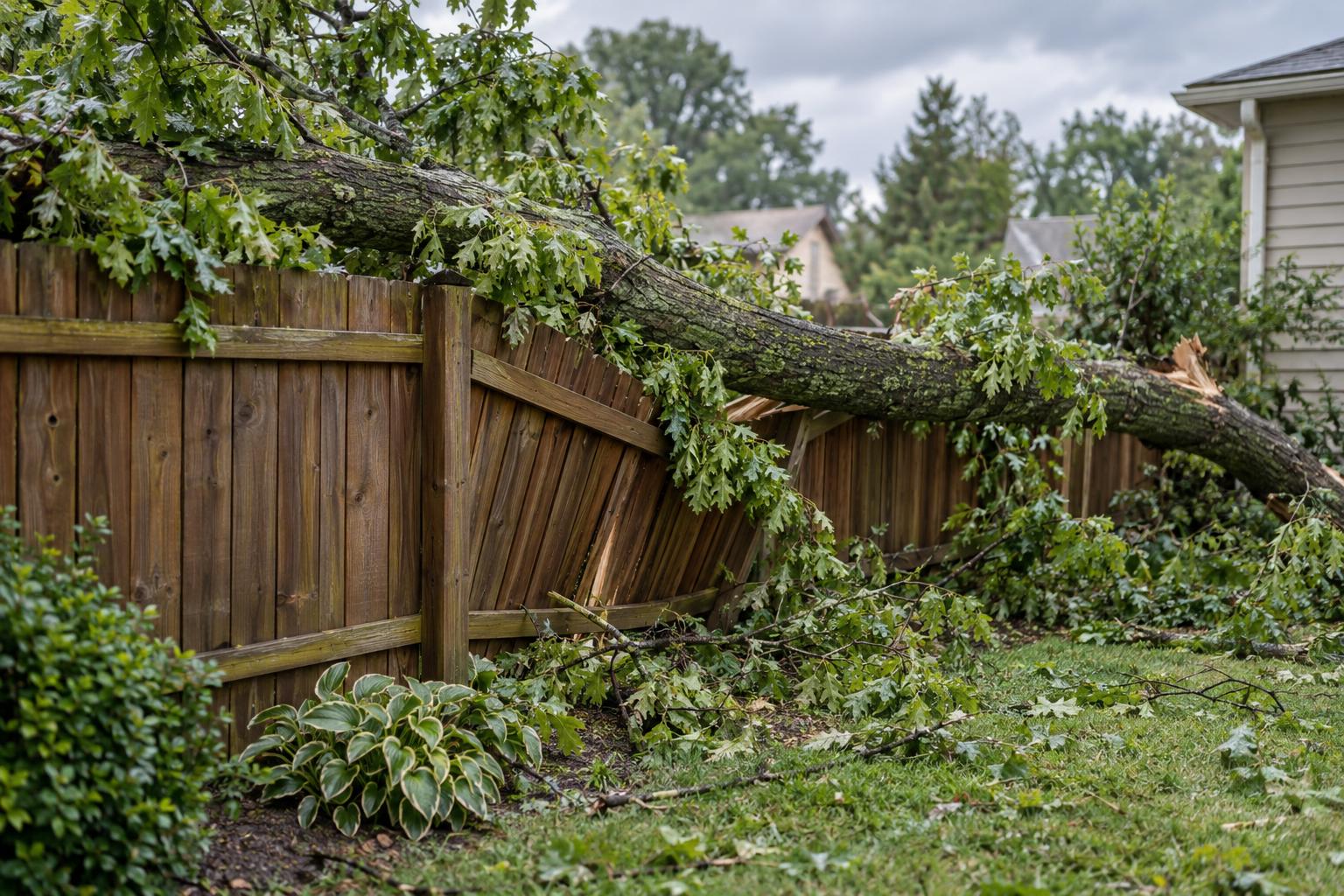
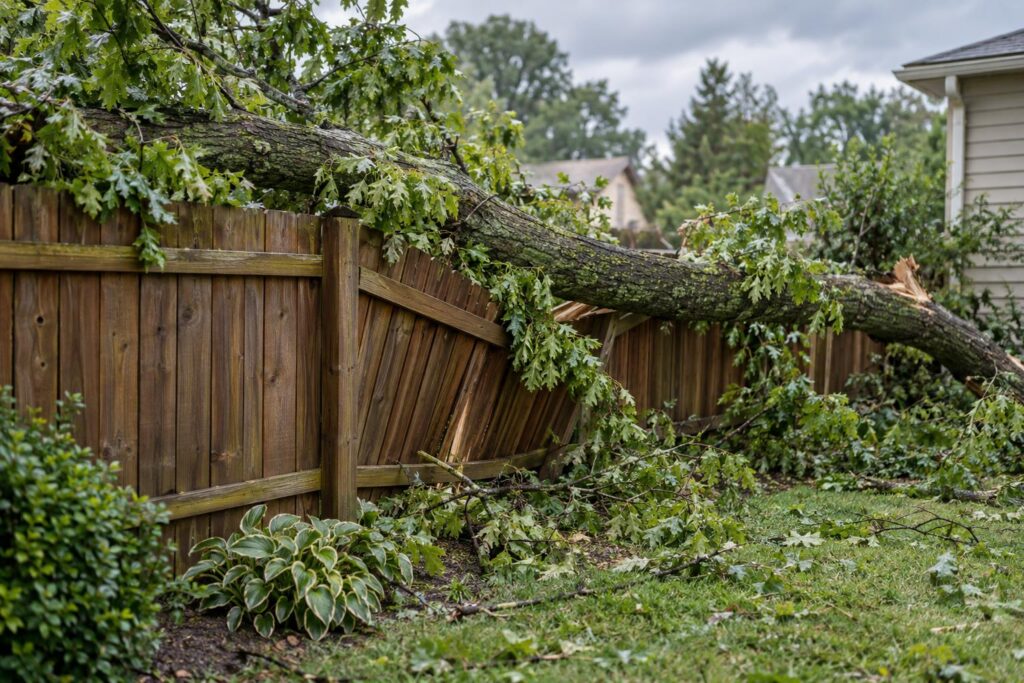
When a neighbor’s tree lands on your roof, fence, or driveway, deal with safety and damage first. The tree’s original location does not automatically decide who must pay. Insurance coverage, the tree’s condition, prior information, and the circumstances of the fall may raise separate questions.
Keep people away from the immediate hazard
A fallen tree can involve unstable limbs, damaged structures, or power lines. Do not approach downed lines, climb onto a damaged roof, or try to move a large trunk yourself. Contact appropriate emergency services or qualified professionals when the situation calls for it.
If safe, photograph the scene before work begins. Include the affected structure, the tree’s location, visible damage, and the surrounding area. Do not enter your neighbor’s property without permission or move evidence simply to create a clearer photograph.
For a Davis County homeowner, the immediate task may be arranging safe access to a driveway or protecting an opening in the house. Keep that practical need separate from the unresolved responsibility question. Necessary protective work can be documented without announcing that the neighbor has agreed to reimburse it.
Open the insurance question early
Contact your insurer and ask what information it needs, what protective steps are appropriate, and how to document expenses. The Utah Insurance Department’s home-claims resources provide a starting point for understanding claims issues. Coverage depends on the policy and facts; a general storm story does not establish what your policy pays.
Ask separately about damage to structures, debris removal, temporary protection, and any other affected property. Do not assume those are all handled under the same coverage or conditions. Keep the claim number and the name of the person you speak with.
Save written coverage explanations. If a phone conversation leaves you uncertain, ask for clarification in writing. An adjuster’s request for an estimate is not necessarily a promise to pay the estimate in full.
The ownership question is only part of responsibility
The fact that a tree stood on a neighbor’s land does not by itself establish negligence. A review may need to consider the tree’s condition, relevant knowledge, reasonable conduct, and the cause of the damage. The legal analysis is different from simply drawing an arrow from the trunk to the damaged fence.
Likewise, calling the storm an “act of God” does not automatically dispose of every possible claim. A severe weather event and evidence of a known tree condition may require different questions. Do not decide either way from the phrase alone.
Utah’s model civil jury instructions provide general negligence and causation concepts. Applying those concepts to a fallen tree requires facts, and potentially qualified evaluation, rather than a universal rule that one neighbor always pays.
Preserve the tree’s history without becoming your own expert
Look for records you already lawfully have: earlier photographs, a written concern sent to the neighbor, prior professional reports, or messages about maintenance. Preserve the complete record, including responses and dates.
A photograph of a cavity or broken limb can be useful, but it is not a professional diagnosis. Ask a qualified arborist or other appropriate professional to describe what can and cannot be determined. A report should distinguish observations from conclusions and identify the material examined.
Do not assume that every unhealthy-looking tree was predictably about to fall. Do not assume the absence of a complaint proves it was safe. The significance of the available evidence needs review.
| Evidence to preserve | Why it may help | Limit to remember |
|---|---|---|
| Earlier photographs | Show visible condition at a known time | They may not reveal internal condition |
| Prior communications | Establish what was actually raised or answered | A general concern may not identify the later failure |
| Professional observations | Explain condition within the expert’s scope | Do not expand the opinion beyond what it says |
| Post-storm photographs | Document damage and position | Later cleanup can change the scene |
| Repair and removal records | Separate work and expenses | An invoice alone does not establish another person’s liability |
Keep two files: the claim and the neighbor issue
The insurance file should contain policy information, claim correspondence, damage estimates, protective-work receipts, and payment explanations. The neighbor file should contain relevant property information, prior communications, and evidence concerning responsibility.
There may be overlap, but the distinction helps. Your insurer may need a contractor’s estimate to assess damage while a lawyer needs earlier records to evaluate the tree’s condition. Sending the same unsorted folder to everyone can obscure the question each person is trying to answer.
A property-dispute consultation can help identify whether the issue concerns responsibility for damage, access for removal, a boundary question, or several matters together. Tell me if the tree’s ownership itself is disputed rather than assuming the boundary is settled.
Communicate about access and cleanup carefully
If safe and appropriate, a calm message can identify the damage, the professionals involved, and the access being requested. Do not treat a neighbor’s willingness to help as an admission of liability. Likewise, do not make an informal promise about all future costs before understanding the work.
If equipment must cross property, identify the proposed route and purpose. A temporary access arrangement should not casually settle a disputed boundary or grant broader rights than intended. Obtain advice if the wording reaches beyond immediate cleanup.
Do not cut standing limbs, remove the remaining tree, or enter disputed ground based on a general belief that you can do whatever is necessary. Property rights and safety concerns require their own review. Emergency professionals can address immediate hazards without this article supplying a blanket right to act.
Document necessary cleanup as it happens
Ask the removal professional to identify the work actually performed and, where appropriate, to photograph relevant conditions before material is removed. Do not direct someone to leave an unsafe limb in place for a future inspection. Explain that you want an accurate record while the hazard is addressed safely.
Keep separate receipts for temporary protection, removal, and repair. If one invoice combines them, request an itemized explanation where available. Note whether work was recommended as necessary, chosen as an improvement, or left unresolved pending another professional’s assessment.
If the remaining tree or another nearby tree raises a concern, treat that as a new safety and professional-evaluation question. The fact that one tree fell does not establish that every other tree is dangerous. A qualified assessment can identify what should be examined without turning a neighbor conversation into an unsupported diagnosis.
Ask the insurer or professional what should be retained before disposing of damaged items, when safe and practical. If an item must be removed promptly, document why and keep available photographs and receipts. Do not preserve debris in a way that creates another hazard.
What people get wrong after a neighbor’s tree falls
“Their tree means their bill.”
Tree ownership is relevant, but legal responsibility and insurance coverage require more analysis. Preserve the evidence before making a demand that assumes the answer.
“A storm means nobody can ever be responsible.”
The weather is part of the circumstances. It does not replace questions about condition, knowledge, conduct, and causation where those questions are relevant.
“My insurer’s payment proves the neighbor was negligent.”
Coverage under your own policy and another person’s legal responsibility are separate issues. A payment may address insured damage without deciding every dispute between neighbors.
“Removing the tree ends every possible problem.”
Structural damage, coverage questions, access arrangements, and the condition of remaining portions may still need attention. Keep the cleanup records and follow qualified advice about unresolved hazards.
Reconcile the estimates before settling
Ask what each estimate includes. Tree removal, stump work, fence repair, roof repair, and optional improvements may appear in different proposals. Keep necessary repairs separate from changes you choose to make at the same time.
If you receive money or a proposed release, understand whether it addresses only a specific item or the whole dispute. Do not assume a short document is narrow simply because the conversation concerned one repair. Bring the actual wording for review.
For homeowners in Kaysville and Clearfield, an ongoing neighbor relationship can make the conversation uncomfortable. That is a reason to keep the communication clear and proportionate, not to abandon documentation. A factual record can reduce misunderstandings even if no lawsuit follows.
What to bring when the answer remains disputed
Bring the damage photographs, insurance correspondence, estimates, prior tree-related records, and any written proposal from the neighbor. Explain what is still unresolved: coverage, reimbursement, removal access, ownership, or a proposed settlement.
If another issue is involved, the firm’s practice areas can help you identify it. Keep the tree incident’s facts distinguishable from a longer history of neighborhood disagreements.
You can protect your property and preserve a workable relationship without pretending the legal answer is already known. Start with safety, accurate records, and a clear question for the next professional involved.