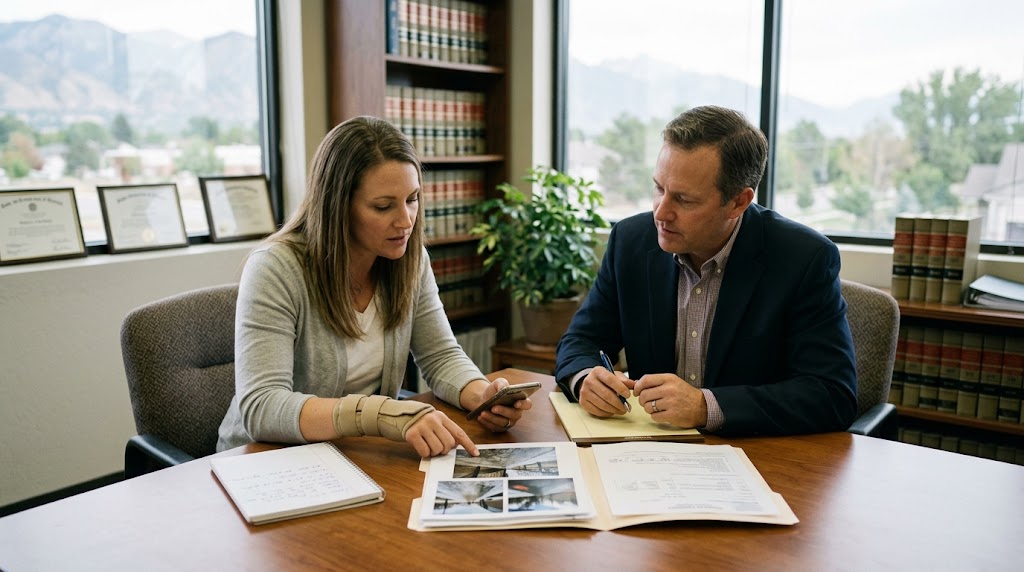
Slip and Fall in Davis County: What Evidence to Bring to a Consultation
Hurt in a fall on someone else's property in Davis County? Here's what evidence to bring to a consultation and what a lawyer will review first.
Slip and Fall in Davis County: What Evidence to Bring to a Consultation
Hurt in a fall on someone else’s property? Maybe it was a wet entry mat at a store, an icy walkway, or a loose stair at a rental. Before a first consultation in Kaysville, Clearfield, or anywhere in Davis County, bring whatever you have: a short written account of the fall, any photos, names of people who saw it, an incident report number if you got one, your medical paperwork, and any letters from an insurance company.
You don’t need a finished case file. Most people walk in with half of that list, and that’s fine. The point of the first conversation is to figure out what happened, who was responsible for that spot, and what still needs to be found.
Tell me what happened, and we’ll start from there.
Grab these if you can
- Your own account, written down.Date, time, the exact spot, what you were doing, and what was on the floor or step. Five sentences is plenty.
- Any photos, even imperfect ones.The area afterward, your shoes, the lighting, a sign or the lack of one.
- Names and numbers.Witnesses, the employee or manager you spoke with, and any incident report number.
- Paper that came after.Medical visit summaries, bills, notes about missed work, and every letter or email from an insurer.
What a first slip-and-fall consultation is really for
People sometimes put off calling because they think a lawyer will want proof before they’ll talk. That’s backwards. The first meeting is where we find out what proof might exist and where it lives.
A fall at a business or a rental feels simple from the inside. You were walking, then you were on the ground. But the legal questions behind it aren’t simple, and an article can’t answer them for you. What I’d be trying to understand in that first hour comes down to a handful of things:
- What exactly was the condition that caused the fall?
- Who controlled that spot: the business, a landlord, a property manager, or someone else?
- Did anyone know, or have reason to know, about the condition before you fell?
- What happened to you afterward, according to your medical records?
- Is there insurance involved, and has anyone from it contacted you?
Every item you bring helps answer one of those questions. That’s the lens to use when you’re deciding what to dig out of the junk drawer.
What people commonly get wrong after a fall
These are assumptions that sound reasonable and often aren’t. Clearing them up early saves a lot of worry, and sometimes a lot of trouble.
“I fell on their property, so they’re responsible.”
Not automatically. Where you fell is only the start of the question. Utah’s comparative fault statute, Utah Code 78B-5-818, lets a fact finder look at the fault of everyone involved, including the person who was hurt. Under that statute, a person’s own fault doesn’t by itself bar recovery, but the analysis depends on the facts. It’s a question to work through with someone, not an assumption to start with.
“The incident report proves what happened.”
An incident report is a record that something was reported. It isn’t a finding that anyone was careless, and it isn’t a medical opinion. It’s still worth getting the report number, the date, and the name of the person who took it, because it can help reconstruct the day.
“My photos don’t show the actual fall, so they’re useless.”
Almost nobody has a photo of the moment they fell. Photos taken afterward of the floor, the stairs, the lighting, a mat that bunched up, or a missing warning sign can show the condition of the area. Photos of your shoes and clothing can help too.
“This works like a car accident claim.”
It doesn’t. Utah’s Personal Injury Protection and underinsured motorist rules are about auto policies. A fall at a store or a rental home is a different kind of claim. Utah Courts sorts these under their own case category, “PL – Premises Liability,” which covers cases alleging injury caused by the condition of a property.
“I already talked to the insurance adjuster, so it’s too late.”
Talking to an adjuster doesn’t mean you’ve lost anything. Write down when you spoke, who called, and what you remember being asked. Bring any letters or emails. That context helps a lawyer see where things stand.
“I should wait until I have every medical record.”
You don’t need them all to have a first conversation. Bring what you have: discharge papers, visit summaries, a list of providers you’ve seen, and bills that have arrived. Records can be requested later.
For an overview of how Gibb Law handles fall injuries more broadly, see our Slip and Fall Injuries in Utah page.
What happened at the property, and who might have records?
Write down the setting while it’s still clear in your mind. The details that seem too small to matter are often the ones a lawyer asks about first.
Describe the spot as if someone has never seen it
- Inside or outside? Store aisle, entryway, parking area, exterior walkway, rental stairway?
- What was on the surface: water, ice, a spill, a torn mat, an uneven edge, a loose board?
- What was the lighting like? Were there signs, cones, or railings?
- What were you carrying, and what shoes were you wearing?
- Roughly what time was it, and what was the weather like?
Think about who controls that area
This is often less obvious than it seems. A shopping center walkway, a store’s interior, and a leased unit’s stairs may each be the responsibility of a different person or company. You don’t have to figure that out. Just note who owns or manages the place as far as you know, and whether you rent from a landlord or a property management company.
Records that may exist, but aren’t yours
Businesses and landlords may have maintenance logs, inspection notes, cleaning schedules, or camera footage. Whether any of that exists for your fall is something to find out, not something to assume. If you saw cameras, or an employee said “we’ve had problems with that,” write it down with the date. Those are leads for a lawyer to follow up on.
If you fell at a rental where you live
Falls at home in a rented house, duplex, or apartment come with their own paperwork. Pull out your lease and look for anything about repairs, maintenance, or common areas like shared stairs and walkways. Then gather any messages to your landlord or property manager about the spot where you fell: repair requests, texts, emails, maintenance portal tickets, or photos you sent before the fall.
Those messages can matter a great deal, because they may help show what was reported and when. If you only ever mentioned the problem in person, write down roughly when, who you told, and what they said. Don’t reach out to the landlord now to try to get them to admit something. Keep what you already have, and bring it in.
| What to bring | Why a lawyer asks for it | If you don’t have it yet |
|---|---|---|
| Your written account | Pins down the date, time, location, and condition while your memory is fresh | Write it before the consultation. A few plain sentences is enough. |
| Photos and video | Shows the condition of the area, lighting, signage, and your shoes or clothing | Bring the originals you do have. Mention any cameras you noticed at the property. |
| Witness details | People who saw the fall or the condition can describe it independently | A first name, a description, or “the cashier on the evening shift” is still useful. |
| Incident report | Records that the fall was reported, when, and to whom | Note who you told, when, and whether they wrote anything down. |
| Medical paperwork | Documents your injuries and treatment, as your providers recorded them | A list of every provider and visit date is a good start. |
| Work and expense records | Shows missed work and out-of-pocket costs after the fall | Keep a simple running list of days missed and receipts. |
| Insurance letters | Shows who has contacted you and what they’ve asked | Write down any calls: date, name, company, and what was said. |
What this checklist is based on: The case category comes from Utah Courts’ case type codes, which list “PL – Premises Liability.” The fault framework comes from Utah Code 78B-5-818. The record categories line up with what Utah Rule of Civil Procedure 26 covers if a case is filed: witnesses, documents, injury evidence, and insurance agreements. The regulator for insurance claim handling is the Utah Insurance Department. None of these sources decides whether any particular fall supports a claim.
Photos, witness details, and incident reports: getting the most from each
Photos
Keep the original files on your phone. Don’t crop, filter, or delete them, even the blurry ones. If you can, back them up somewhere else too. If you take new photos of the area later, note the date, since conditions may have changed since your fall.
Your shoes and the clothes you wore deserve a mention. If you still have them, set them aside rather than tossing or washing them. A lawyer may want to see them, or at least photos of them.
Witnesses
Write down everyone who was nearby: other shoppers, employees, a neighbor, the friend who drove you to urgent care. Phone numbers are ideal. A partial name and a description still help. People are easier to find in the first weeks than months later.
Incident reports
If you reported the fall to a store manager or a landlord, write down who you spoke with and when. If they gave you a copy or a report number, keep it with your photos. If they didn’t, that’s not a problem for the consultation. It’s one more thing to ask about.
Keep the originals, and keep them together
Utah Rule of Civil Procedure 37 addresses what can happen when evidence isn’t preserved and a duty to preserve it exists. That’s a rule for court cases, and it doesn’t mean you’re in trouble for anything. The practical takeaway is simple: keep originals, don’t delete messages about the fall, and put everything in one folder.
The most useful thing you can hand me is usually a plain, honest account of the fall in your own words, written before anyone else has told you what you should remember. Photos and records get easier to find later. Your memory of that afternoon doesn’t.
How medical and missed-work records explain the aftermath
A fall can change your week, or your year. The records that show what happened afterward are what let a lawyer understand the injury without guessing.
Medical records
Bring discharge papers, urgent care summaries, imaging reports if you have copies, prescriptions, physical therapy notes, and bills. If you don’t have paperwork, make a list of every place you’ve been seen and roughly when.
One honest caution. How much pain you feel, or what an injury looks like, doesn’t settle what the fall caused. That’s a medical question, answered through your providers’ records. So keep going to appointments, tell your providers how you got hurt, and keep copies of what they give you.
Work and expense records
- Days or shifts you missed, and any note from your employer.
- Pay stubs from before and after the fall.
- Receipts for prescriptions, braces, rides to appointments, or help at home.
- A short note on what you can’t do now that you could do before.
Insurance letters
Bring every letter or email from any insurer, including requests for a recorded statement or medical authorizations. The Utah Insurance Department lists Rule R590-190 as the rule governing unfair property, liability, and title claims practices. That’s useful background on who regulates claim handling in Utah. It doesn’t mean any particular insurer has done anything wrong.
- Ask which company they work for and whose policy they’re handling.
- Write down the date, the person’s name, and what they asked.
- Don’t guess about your injuries or recovery. “I’m still being treated” is a complete answer.
- Read any medical authorization before signing. Ask what records it covers.
- Bring all of it to your consultation.
What a lawyer needs to evaluate before discussing a claim
I can’t tell you in an article whether you have a claim, and you should be wary of anyone who says they can before seeing your facts. Here’s what actually has to be worked through first.
The condition
What, specifically, caused the fall? “The floor was slippery” is the start of the answer. Water from a leak, a spill near a display, or ice on an unsalted walkway are each different situations.
Control of the area
Who was responsible for that spot? For a rental, it may depend on the lease. For a shopping center, it may depend on who maintains which part.
Notice
Did the property owner or manager know about the condition, or have reason to know? This is where maintenance records, prior complaints, and employee statements come in, if they exist.
Everyone’s conduct
Under Utah’s comparative fault statute, a fact finder can allocate fault among the people involved. That includes questions about the injured person, which is uncomfortable but normal. Being honest about it early is better than being surprised later.
Injury and causation
What do your medical records say about your injuries and how they happened? This comes from your providers, not from an article or a phone call.
Insurance and deadlines
Who has coverage, and what deadlines apply? Filing deadlines can depend on the type of claim and who the property belongs to, so they need to be checked case by case. That’s one more reason to ask early rather than wait.
What if you don’t have every document yet?
Come anyway. Seriously. A consultation with a written account and a phone full of photos is a good consultation. Much of what matters, like footage, maintenance records, or full medical records, isn’t something you’d have access to on your own anyway.
What helps most is being organized about what you do have. Put it in one folder, paper or digital, in roughly this order:
- Your written account of the fall.
- Photos and video, with dates.
- Names and contact details for anyone who saw it or helped.
- Incident report details, if any.
- Medical paperwork and a list of providers.
- Work and expense notes.
- Insurance letters and notes from calls.
Then add a short list of questions you want answered. People forget their own questions in the middle of a conversation. Writing them down fixes that.
What the next step may look like
After a first conversation, there are usually a few possible directions. Sometimes the right answer is to keep treating and keep records while more information comes in. Sometimes it’s to request specific records or follow up with witnesses. Sometimes, after looking at the facts honestly, it’s that a claim doesn’t make sense, and you’ll hear that plainly too.
What you won’t get is a promise about money or timing. Nobody can make one responsibly at the start, and that includes me. What you should get is a clear picture of what’s known, what isn’t, and what it would take to find out.
Questions about slip-and-fall consultations
Can I talk to a lawyer without an incident report?
Yes. Many people never get one. Write down who you told about the fall and when, and bring that instead.
Should I bring photos even if they don’t show the exact moment I fell?
Yes. Photos of the area afterward, the lighting, a mat, a step, or your shoes can all help show the condition. Bring the original files, not edited copies.
What if I don’t know a witness’s full name?
Bring what you know: a first name, what they were wearing, whether they worked there, roughly when you saw them. Partial information is still a lead.
Do I need all my medical records before a consultation?
No. Bring what you have, plus a list of the providers you’ve seen and the dates. Full records can be gathered later if needed.
What if I’ve already talked to an insurance adjuster?
That’s common. Write down when you spoke, who it was, which company they represent, and what they asked. Bring any letters or emails too.
Does Utah blame me if I was partly careless?
Utah Code 78B-5-818 lets fault be allocated among the people involved, including the injured person. How that applies depends entirely on the facts, so it’s something to discuss, not something to guess at.
