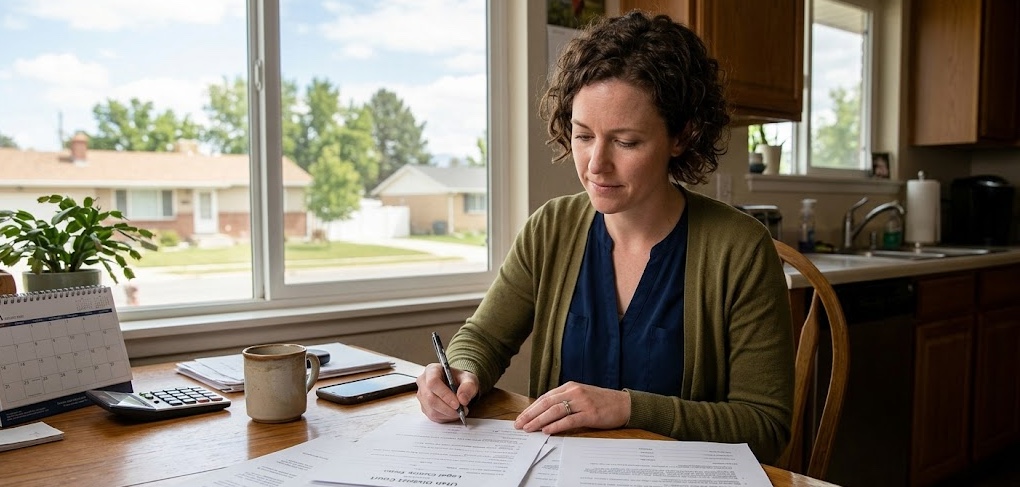
What Utah Courts May Look At When Support Becomes a Dispute
Support disputes can involve income, expenses, parenting time, documentation, and changed circumstances. Learn what to organize before legal review.
For a Clearfield or Davis County family, a responsible starting point is the signed order plus current, complete records showing income, household needs, parenting-time information, childcare, healthcare, and the specific change behind the dispute. Utah alimony and support disputes are fact-specific. One paycheck, one bank statement, or one difficult month rarely explains the whole picture.
The goal is not to calculate a result from an article. It is to organize the right categories, separate child support from alimony, and identify the question you need answered: Is the amount disputed, was a payment missed, is the order being followed, or have circumstances changed enough to require legal review?
- The complete, signed order and any later modification.
- Current income proof and tax records for the relevant household or business situation.
- A realistic budget supported by statements, bills, and recurring obligations.
- Parenting-time, childcare, health-insurance, and uninsured medical information.
- A dated explanation of what changed and which part of the order is now disputed.
Why do support disputes start with the signed order and current facts?
Start with the order because it answers the first practical question: what is each person currently required to do? Read the payment amount, due date, payment method, medical-support terms, childcare provisions, alimony terms, and any conditions tied to the obligation. Include the full decree or order, not only the page containing the number. Definitions and related terms may appear elsewhere.
Then identify the dispute in one sentence. “The current order says X, and the present disagreement is Y” is more useful than “support is unfair.” The issue might be a missed payment, a disagreement about childcare reimbursement, an income change, a parenting-time change, an alimony question, or uncertainty about which process applies. Each question needs a different set of facts.
Child support and alimony should not be collapsed into one category. Child support looks to child-support law and information such as both parents’ gross monthly income and the child’s overnights in each household. Alimony has a different set of considerations, including marital standard of living, the recipient’s needs and earning capacity, the payor’s ability, tax consequences, marriage length, custody responsibilities, and certain contributions made during the marriage. Gibb Law’s alimony and support page provides a place to sort those two questions before assuming they rise or fall together.
The order remains the operating document unless it is changed through an appropriate process. Do not use support and parent-time as pressure against each other. Utah Courts states that a parent may not withhold child support because parent-time is denied, and a custodial parent may not withhold parent-time because support is unpaid. If one obligation is not being followed, preserve the facts and ask about the correct response rather than creating a second violation.
Source basis: the factual categories in this article come from current Utah Courts child-support guidance, current Utah Courts alimony guidance, Utah Courts financial-disclosure materials, and the official Utah Office of Recovery Services child-support page. Those sources explain general inputs and agency roles; they do not calculate your result or select a legal strategy.
| Question | Records that may help clarify it | What the article cannot decide |
|---|---|---|
| Child-support amount | Order, current income proof for both parents where available, tax returns, overnight information, childcare, health insurance, and uninsured medical expenses. | The correct amount, whether income should be imputed, or whether a deviation applies. |
| Alimony amount or continuation | Order and findings, marital and current budgets, income from all sources, debts, earning-capacity information, tax documents, and records tied to the claimed change. | Whether alimony should be awarded, modified, terminated, or continued. |
| Missed or disputed payment | Payment history, receipts, account records, ORS records where applicable, correspondence, and the order’s payment terms. | Arrears, interest, contempt, sanctions, or the correct enforcement remedy. |
| Changed circumstances | Before-and-after income, job records, medical or childcare changes, parenting-time records, dates, duration, and the order’s original findings. | Whether the change meets a legal threshold or which filing route applies. |
Which income records can matter for child support or alimony?
Current income proof is more useful than a remembered annual number. Utah Courts identifies year-to-date pay stubs or employer statements and complete tax returns from at least the most recent year as examples of child-support income proof. A consultation may also require a longer period of records, especially when income changes, includes commissions or overtime, comes from several sources, or does not match the last tax return.
For a wage earner, gather recent pay stubs, the prior year’s complete tax return, W-2s or similar year-end forms, and records showing bonuses, commissions, overtime, or other recurring compensation. Do not edit pages or remove schedules because they seem irrelevant. Flag what you do not understand and let the reviewer decide what matters.
For a self-employed person or business owner, a personal tax return may not tell the whole story. Utah Courts’ financial-declaration guidance identifies profit-and-loss information and other income or asset proof among the categories that may be required in some support matters. Gather current business financial statements, relevant tax returns and schedules, ownership information, records of draws or distributions, and documents showing recurring business-paid personal expenses if they exist. This is an organization step, not a business-valuation conclusion.
Income can also come from more than employment. Preserve records for rental income, investment income, retirement distributions, benefits, or other sources that are actually relevant. Do not assume an item is counted, excluded, taxable, or available for support merely because it appears on a statement. Those conclusions may require legal, tax, or accounting review.
If documents are missing, write a gap list. “March pay stub not available,” “waiting for final business statement,” or “prior return filed jointly and complete copy requested” is better than estimating. The Clearfield family law page can help you frame the issue for an attorney-led discussion without pretending the records already answer it.
How do budgets, parenting time, childcare, and healthcare fit into the picture?
A support discussion is not only about income. The useful file also shows the obligations and child-related expenses connected to the order. Utah’s child-support guidelines include base support, medical care, and childcare components. That makes health-insurance premiums, uninsured medical costs, and work-related childcare records important categories to organize when they are part of the dispute.
Use a realistic monthly budget. List housing, utilities, transportation, insurance, food, debt payments, childcare, healthcare, and other recurring obligations. Support the major entries with statements or bills where possible. Do not inflate a category to make a point, and do not erase an expense because you think it will be criticized. A complete budget allows the question to be discussed honestly.
For child support, parenting-time information matters because Utah uses the child’s overnights in each household as one of the inputs. Keep the current custody order, the ordered schedule, and a neutral calendar of actual overnights if that is part of the concern. Do not turn every late exchange into a different overnight total. Focus on the period and pattern that can be verified.
Parenting-time records can overlap with a custody question, but support and custody remain distinct legal issues. The child custody page explains why a schedule problem, an enforcement problem, and a modification problem should not automatically be treated as the same thing.
For childcare, keep provider invoices, payment records, schedules, and information showing why the care was incurred. For healthcare, keep the insurance premium information attributable to the child, explanation-of-benefits documents, bills, receipts, and proof of payment. Do not publish these documents or send unredacted financial and medical information through insecure channels.
Alimony budgets require a different lens. The current Utah framework includes the marital standard of living, the recipient’s financial needs and earning capacity, and the payor’s ability to provide support. That does not mean every current expense will be accepted or every past expense will be reproduced. It means the budget needs enough context to compare the order, the original circumstances, and the current facts.
What changes — and how long they last — may need closer review?
A job loss, raise, schedule change, health issue, childcare change, move, remarriage, retirement, or business fluctuation may feel significant. An article cannot tell you that any one event automatically changes child support or alimony. The legal question can depend on the type of support, the wording and findings in the existing order, the size and duration of the change, and the process used to ask for review.
Build a before-and-after timeline. Identify the date the change began, what the prior situation was, what the current situation is, the records that support both, and whether the change appears temporary, seasonal, uncertain, or continuing. If income fell, preserve written records showing when the change began, why it occurred, and what the current earnings are. If childcare changed, keep the old and new invoices and schedules. If overnights changed, compare the ordered schedule with a neutral calendar.
Do not choose a legal label before the facts are reviewed. “Substantial material change,” “voluntary underemployment,” “cohabitation,” “retirement,” and similar terms carry legal meaning that cannot be established by a checklist. Do not stop paying an ordered amount because you believe a change qualifies. Start with the order and ask what formal step, if any, is available.
For alimony after a decree, Utah law addresses a substantial material change not expressly stated in the decree or original findings. That is why the original findings can matter as much as the current pay stub. For child support, modification involves technical timing, threshold, and procedure questions. This article deliberately does not reproduce a formula or select between a motion, petition, ORS process, or another route.
When support is part of a divorce, the larger case documents may include property, custody, and disclosure terms that affect how the question is understood. Review the divorce procedures page for a broader process view, then bring the actual decree to the consultation.
Which documents should you gather before a support consultation?
A perfect file is not required. Start with the documents you have and a list of what is missing. Utah’s financial-declaration process can call for substantial supporting material, including tax returns, income evidence, loan and financial statements, real-estate records, and account statements. The exact disclosure duty depends on the case and current rules, so treat this as a preparation list rather than a promise that every item will be required.
Orders and case papers
Bring the complete signed decree or support order, later modifications, findings if available, ORS notices or records, and the case number. Mark the disputed paragraph on a copy.
Income and tax records
Gather current pay evidence, complete returns and schedules, year-end forms, bonus or commission records, and relevant proof of other income. Self-employed readers should add current business records and profit-and-loss information.
Budget and account support
Prepare a realistic monthly budget and collect the statements, bills, debt records, housing documents, and account records that support the major categories.
Child-related records
Include the parenting-time order and calendar, childcare invoices and payments, health-insurance information, medical bills, receipts, and reimbursement communications.
Change chronology
Use one page to state what changed, the date it began, whether it is ongoing, the documents that support it, and the question you need answered.
Keep originals and complete statements. Do not delete transactions, alter dates, omit schedules from a return, or present a partial screenshot as the full record. Financial declarations may need to be updated when information changes, and incomplete disclosure can create serious problems. If privacy is a concern, ask how records should be transmitted and protected rather than withholding them from your own legal review.
Gibb Law’s Clearfield practice-areas page can help you identify whether the support question is part of a larger family-law issue before the first discussion.
How should you label and store financial records?
Keep a clean source folder and a separate working folder. In the source folder, preserve complete statements, tax returns, pay records, invoices, and order documents exactly as received. In the working folder, use copies arranged by category and month. A simple file name such as year-month-document-source makes the sequence easier to review without changing the contents.
Create a one-page record index with columns for the document, date range, source, what question it relates to, and whether anything is missing. Do not place Social Security numbers, account numbers, or a child’s private information into an unsecured summary. Ask how sensitive documents should be transmitted before emailing a large financial file.
When is ORS the right contact, and when is the question for a court or attorney?
Utah’s Office of Recovery Services can establish, change, collect, and enforce child-support orders and handle related medical-support services. ORS can be the right agency for many administrative support needs. Its official page also states important limits: ORS does not provide legal representation or legal advice, does not decide or enforce custody or visitation, and cannot override a judicial order.
That means you should first identify the kind of help you need. A payment-processing or ORS case question may belong with ORS. A question about what an order means, whether facts support modification or enforcement, how alimony differs from child support, or how custody and support interact may require a court process or legal advice.
For a court modification, the matter generally returns to the court that issued the decree under the same case number, but venue and procedure depend on the actual case. Clearfield is in Davis County and the Davis County district courthouse is in Farmington. Do not assume that a courthouse counter, commissioner, or agency employee can give legal advice or predict the outcome.
An attorney can help identify what is established, what is missing, which records matter, and which questions should be asked of ORS, the court, a tax professional, an accountant, or another professional. You can read about Dustin Gibb before deciding whether to bring the file to an attorney-led consultation.
How can you ask a better support question without guessing at the outcome?
Replace “What should support be?” with a narrower question: “The order entered on this date requires this payment. Income changed on this date. Here are the current pay records, tax documents, budget, parenting-time information, and child expenses. Which facts still need verification, and what type of review may apply?”
For alimony, ask which factors in the order and current Utah law relate to the issue you have identified. For child support, ask whether the income, overnight, childcare, healthcare, and order information is complete enough to evaluate the question. For a payment dispute, ask how the payment history should be reconstructed and which official records control.
Also ask what not to do. Should you communicate differently? Should you continue using the ordered payment method? Are there missing records you should request? Does the question require tax or accounting input? Is there a deadline that must be verified? Those questions reduce the risk of making a major decision from an incomplete picture.
Frequently asked questions about Utah alimony and support disputes
What documents should I bring to a Utah child-support or alimony consultation?
Bring the complete signed order, current income proof, complete tax returns, a realistic budget, relevant account and debt statements, parenting-time information, childcare and healthcare records, payment history, and a dated summary of what changed. Add a list of missing items rather than guessing.
Does losing a job automatically lower child support or alimony in Utah?
No automatic conclusion should be drawn from this article. The type of support, order language, cause and duration of the change, current earning information, and required process can matter. Continue following the order unless it is changed through an appropriate process and obtain case-specific review.
Can child support change when parenting-time overnights change?
Overnights are one input in Utah child-support calculations, but a schedule change does not by itself tell you the new amount or whether an order changes automatically. Preserve the order and a neutral overnight calendar and ask which legal process, if any, applies.
What should a self-employed parent gather?
Start with complete personal and business tax records, current profit-and-loss information, bank and credit records relevant to the business, ownership and distribution records, pay or draw history, and documentation of recurring business-paid personal expenses if they exist. Do not draw a valuation or income conclusion from one document.
Can I stop paying support if the other parent is not following parent-time?
Utah Courts states that child support and parent-time cannot be withheld against each other. Preserve the noncompliance facts and ask about the correct enforcement or modification process. Do not create a second problem by unilaterally stopping an ordered payment.
What can ORS do, and what requires an attorney or court?
ORS can provide child-support services such as establishment, change, collection, enforcement, and medical support. It does not provide legal advice, decide custody or visitation, or override a judicial order. Interpretation, alimony, legal strategy, and case-specific route questions may require court or attorney review.