Utah custody and parent-time orders are not frozen in place forever. As children grow, parents relocate, or schedules change, an old order may no longer fit real life. When that happens, Utah law allows parents to seek a formal child custody modification so the legal orders match the family’s current circumstances.
Gibb Law Firm is a Utah-based family law firm that helps parents understand when a modification is possible, what the courts look for, and how to move a case forward. This overview explains when you can request a change, the legal standards involved, and the typical steps in a Utah custody modification case.
When Utah Courts Will Modify Child Custody
Utah courts do not reopen custody orders lightly. To change an existing order, a parent generally must show two things:
Material and substantial change in circumstances: Something significant has changed since the last custody order was entered, not just ordinary day-to-day disagreements.
Best interests of the child: The requested change must support the child’s emotional, physical, and developmental needs under Utah’s best-interest factors.
Examples of material changes: Major changes in a parent’s work schedule, a relocation that affects schooling and parent-time, ongoing safety concerns, or repeated violations of the existing order.
More than simple conflict: Normal co-parenting disagreements usually are not enough. Courts expect some conflict and look for deeper, lasting changes that impact the child.
Understanding this standard is the starting point for any modification request. If the facts in your case do not meet the “material change” threshold, the court is unlikely to change custody or parent-time, even if the current arrangement feels inconvenient or unfair.
Watch: Overview of Utah Custody Modification Standards
Common Reasons Utah Parents Seek Custody Modifications
Every family is different, but certain patterns appear again and again in Utah custody modification cases. Courts pay close attention to how these changes affect the child, not just the parents.
Major Schedule or Work Changes
A parent’s new job, shift work, or loss of employment may make the old schedule unrealistic. Utah courts often review whether a different parent-time plan would better match the child’s routine.
Relocation or School Changes
Moves across town or out of state, or changes in a child’s school, can dramatically affect travel time, extracurriculars, and regular contact with each parent.
Safety Concerns and Chronic Non-Compliance
Substance abuse, domestic violence, neglect, or consistent refusal to follow the existing order can justify a closer look at whether the current custody arrangement still protects the child’s best interests.
Courts will weigh these changes against Utah’s best-interest factors and the history of each parent’s involvement. The focus remains on the child’s stability, safety, and relationship with both parents.
This short reel explains how Utah courts look at parent-time and the child’s needs when deciding whether a change in the schedule is appropriate.
Key Definitions and Utah Custody Statutes
Utah’s custody modification rules grow out of the same statutes that govern original custody decisions. Understanding the language used in your decree helps you see what may need to change and how the judge will analyze your request.
Legal custody: The right to make major decisions about the child’s education, healthcare, religion, and other significant areas of life. Utah recognizes both sole and joint legal custody.
Physical custody: Where the child lives most of the time. A parent may have primary physical custody, or parents may share joint physical custody with the child spending substantial time in each home.
Parent-time: The day-to-day schedule of visits and overnights. Many Utah decrees follow a “minimum parent-time” schedule, but parents are free to agree to more expansive plans.
Modification proceedings: Court cases that seek to change an existing order rather than create one from scratch. These cases apply a higher standard than an original custody determination.
Utah Code: Utah custody and parent-time statutes guide judges on what factors to consider, including each parent’s involvement, the child’s needs, and any history of violence or neglect.
For a broader overview of Utah custody law, you may also want to review:
- Understanding Child Custody in Utah: Legal vs. Physical Custody
- How to File for Divorce in Utah: Step-by-Step Guide
Watch: Legal Standards for Modifying Custody in Utah
Typical Court Procedures in a Utah Custody Modification Case
The specific path of a custody modification depends on whether the parents agree or strongly disagree, but most Utah cases follow a similar set of steps in district court.
Filing a Petition to Modify
The parent requesting the change files a Petition to Modify with the court that issued the original order. The petition explains what parts of legal or physical custody, or parent-time, should change and why.
Serving the Other Parent
The petition and related documents must be properly served on the other parent so they have notice and an opportunity to respond. Utah service rules are strict, and improper service can delay the case.
Mediation and Negotiation
Most Utah custody modification cases require mediation. If parents reach an agreement there, the court may approve a stipulated modification without a trial, saving time and expense.
Discovery, Evaluations, and Hearings
In contested cases, the parties may exchange documents, gather evidence, and sometimes request a custody evaluation. The court may hold temporary hearings or status conferences along the way.
Trial and Final Orders
If settlement is not reached, the judge will hold a trial and decide whether a material change has occurred and, if so, what new custody and parent-time orders are in the child’s best interests.
Understanding these steps in advance helps parents plan ahead, gather the right evidence, and avoid surprises as the case moves through the Utah court system.
This post highlights how changes in support and custody often go hand in hand, and why parents should think through both before they file.
Required Forms and Filings for Utah Custody Modifications
Utah provides standardized forms for many family law matters, including modifications. Using the correct documents and filling them out carefully is critical for keeping your case on track.
Petition to Modify Child Custody or Parent-Time: The main document that asks the court to change specific parts of the existing order.
Summons: Notifies the other parent of the case and sets deadlines for their response.
Financial Declaration and Child Support Worksheets: Required when child support may increase or decrease as part of the modification. These forms tie into concepts covered in Utah Child Support Calculations Explained.
Proposed Parenting Plan: A detailed schedule and set of rules for legal and physical custody, especially important if joint custody is requested. For more on building a schedule, see Parenting Plans in Utah: Building a Schedule That Works.
Motions for Temporary Orders: Optional filings that ask the court to set a temporary schedule and support while the modification case is pending. Related concepts are discussed in Temporary Orders in Utah Divorce Cases.
Depending on your county and the history of your case, there may be additional local forms or specific filing requirements. Working with a Utah family law attorney helps ensure that your paperwork is complete, accurate, and filed on time.
Watch: How to Change or Modify Your Custody Orders in Utah
Common Mistakes to Avoid in Utah Custody Modification Cases
Even well-meaning parents can accidentally weaken their own case. Avoiding a few common pitfalls can make a significant difference in how your modification request is received.
Relying on verbal agreements only: If you and the other parent informally change the schedule without updating the court order, you may have trouble enforcing the new arrangement later. For enforcement issues, see Enforcing Custody and Visitation Orders in Utah.
Assuming minor issues qualify as a material change: Judges expect some conflict in co-parenting. Slight disagreements or isolated incidents usually are not enough to justify a full modification.
Failing to document concerns: Courts decide cases based on evidence, not just statements. Keep records of schedules, messages, missed exchanges, and any safety concerns.
Violating the existing order: Ignoring the current decree because you plan to file a modification can backfire. Judges tend to look more favorably on parents who follow orders while they work through the court process.
Underestimating the impact on the child: Courts focus on stability and the child’s relationship with both parents. Any requested change should be tied directly to the child’s well-being.
Good preparation, realistic expectations, and early legal advice can help you avoid these mistakes and present a clear, well-supported modification request.
This recent co-parenting post discusses how evolving schedules and children’s changing needs can lead to well-founded requests for updated custody and parent-time orders.
Next Steps if You Are Considering a Custody Modification
If you think your situation meets Utah’s standards for a custody modification, it can be helpful to take a few practical steps before filing anything with the court.
Review your existing decree carefully so you understand exactly what it requires and which provisions you want to change. For help understanding final orders, see Utah Divorce Decree: Understanding Final Orders.
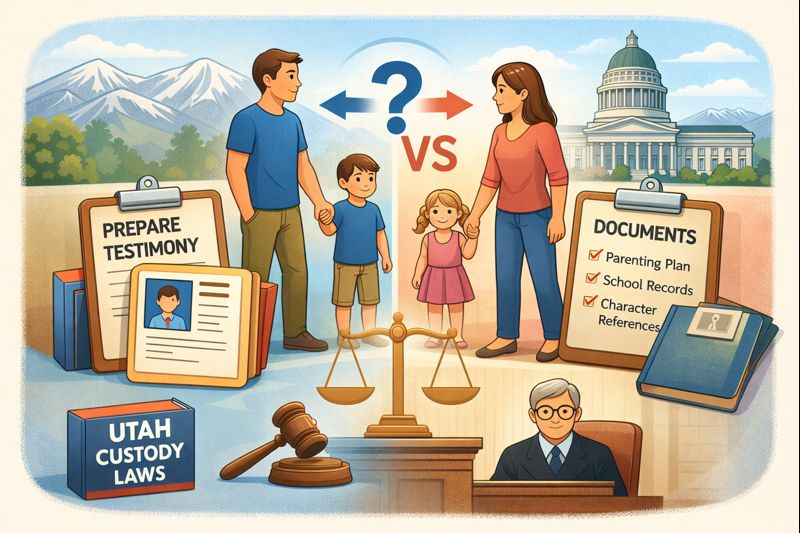
Gather documentation that supports your concerns, such as school records, medical notes, messages, or calendars showing missed parent-time.
Think through a realistic schedule that works with both parents’ work commitments and the child’s schooling and activities. The article Parenting Plans in Utah: Building a Schedule That Works offers additional ideas.
Consider how child support might change and how that connects to your requested custody or parent-time adjustment. For more on this, see How to Modify Child Support in Utah.
Discuss your options with a Utah family law attorney who can evaluate whether the facts in your case meet the legal standard and how a judge is likely to view your request. Process options are explored in Mediation vs. Litigation in Utah Divorce.
Understanding Your Rights in Utah Custody Modifications
Custody modifications exist to protect children when life changes in meaningful ways. Utah courts aim to balance stability with flexibility, updating orders when the facts truly justify a change and when it serves the child’s best interests.
For parents, the process can feel overwhelming, especially when emotions are high and communication with the other parent is strained. Having a clear strategy, realistic expectations, and skilled legal guidance can make a difficult situation more manageable.
Gibb Law Firm provides practical, plain-English advice to Utah parents facing custody and parent-time questions. Whether you are responding to a petition or considering filing one, we can walk you through your options, help you prepare your evidence, and advocate for a plan that supports your child.
To discuss your situation with a Utah family law attorney, visit the Gibb Law Firm contact page to request a consultation.
Talk to Gibb Law Firm About Modifying Custody in Utah
If your current custody or parent-time order no longer fits your family’s reality, you do not have to navigate the process alone. Our team can evaluate whether your case meets Utah’s standards for modification, explain the likely timeline and costs, and help you pursue a result that puts your child’s needs first.
Schedule a Consultation