A custody hearing can feel overwhelming because the stakes are personal and the rules are formal. The goal is not to “win” an argument. The goal is to help the judge (or commissioner) understand the facts that matter and enter orders that support a child’s best interests under Utah law.
Strong preparation usually comes down to three things: organized evidence, clear testimony, and a realistic parenting proposal that fits your child’s needs and your family’s day-to-day life.
If you want foundational background before you focus on hearing prep, start with understanding child custody in Utah, including legal vs physical custody and parenting plans in Utah and how to build a schedule that works.
You may also find it helpful to review temporary orders in Utah divorce cases, since many custody hearings happen early in a case when temporary schedules and decision-making rules are being set.
If you want a visual reference image to place near the top of this article, you can use: Custody hearing preparation image reference.
Note: This article is educational information, not legal advice. Court procedures and deadlines can vary by case type, county, and the specific orders the court makes.
Overview of What a Custody Hearing Covers in Utah
In Utah family cases, custody issues can come up at different points. Some hearings address temporary orders while a case is pending. Others are focused on final custody and parent-time orders. The best way to prepare is to identify exactly what will be decided at your hearing, and what the court expects you to file or exchange beforehand.
Know the purpose of the hearing: Is it temporary orders, a motion hearing, or a final trial? The scope affects what evidence is relevant and how much time you will have to present it.
Stay child-focused: Utah courts center custody decisions on the child’s best interests. Judges typically respond best to practical plans that protect stability, schooling, and safe communication.
Prepare proof, not just stories: A timeline, key messages, school records, calendars, and other documentation often carry more weight than broad claims.
Bring a workable proposal: A parenting plan that addresses schedules, exchanges, decisions, and communication is often the clearest way to show the court what you are asking for and why.
The video below gives a practical overview of how people can prepare for child custody court, including courtroom readiness, evidence organization, and what to expect when presenting your position.
Watch: How to Prepare for Child Custody Court
Key Definitions and Utah Statutes
People often use “custody” as a single concept. Utah law separates custody into decision-making and time-sharing. Knowing the language helps you present your request clearly and avoid confusion in your paperwork and testimony.
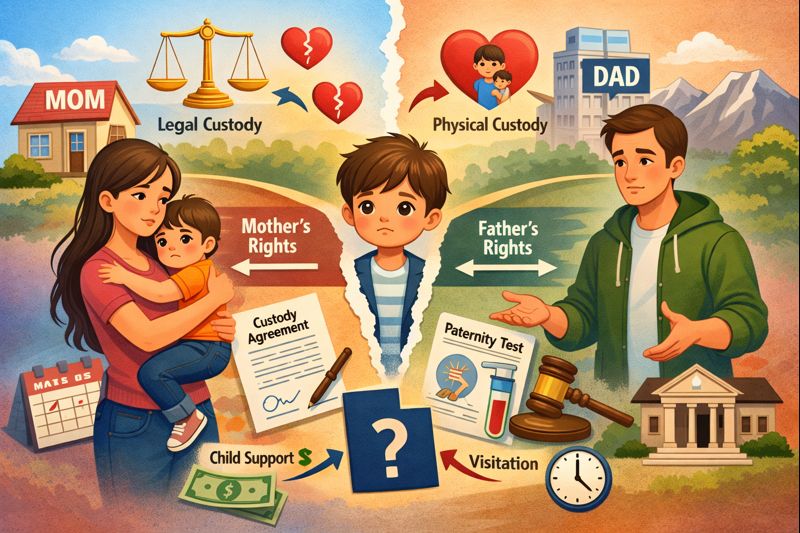
Legal custody: Who makes major decisions about education, medical care, and other significant issues. Legal custody can be joint or sole.
Physical custody and parent-time: Where the child lives and the schedule for time with each parent. Utah often uses “parent-time” instead of “visitation.”
Best interests of the child: Utah courts must consider the child’s best interests when deciding custody and parent-time. Utah’s custody factors are addressed in Utah Code Section 30-3-10: Utah Legislature custody factors link.
Disclosure and trial prep rules: In many cases, there are rules about exchanging witness and exhibit information ahead of trial. Utah’s civil procedure rule on disclosure and discovery is here: Utah Rules of Civil Procedure Rule 26.
The Instagram reel below is a helpful reminder of what judges are typically looking for in custody and parent-time disputes: stability, responsible parenting, and practical proposals that protect the child’s day-to-day life.
Typical Court Procedures and What to Do Before the Hearing
Every case is different, but most custody hearings follow a similar pattern: the court sets deadlines, the parties exchange information, and then each side presents their position within a set time limit. Preparation is easier when you break it into clear steps.
Step 1: Identify what the court will decide
Read the notice of hearing and any prior orders. Write down the exact issues the court is hearing, such as legal custody, parent-time schedule, exchanges, travel, or decision-making.
Step 2: Organize evidence by topic
Build a simple folder system. Group your documents by school, medical, communication, schedules, and safety concerns. Focus on what supports a child-centered plan.
Step 3: Prepare your testimony
Outline the key facts you need to explain in plain language. Practice staying calm, answering the question asked, and tying your request back to the child’s best interests.
Step 4: Bring a realistic parenting proposal
Courts often respond better to a specific plan than a list of complaints. A clear schedule, exchange plan, and communication rules can help the judge see a workable solution.
Step 5: Confirm logistics and courtroom expectations
Know where to go, when to arrive, what to bring, and how exhibits will be handled. If your hearing is remote, confirm the link, your internet connection, and a quiet space.
| Common hearing focus | What preparation usually looks like |
|---|---|
| Temporary custody and parent-time | Provide a short, stable schedule proposal, key documents, and credible testimony focused on routine, school, and communication. |
| Disputed parenting plan terms | Bring a written plan covering decision-making, holidays, exchanges, and communication. Show why your proposal reduces conflict and supports the child. |
| Safety concerns | Focus on specific, documented facts and the safety measures you are requesting. Avoid exaggeration or vague claims. |
| Final custody decision | Follow deadlines, disclosures, and court rules. Prepare witnesses and exhibits in an organized way and connect your request to best-interest factors. |
The video below offers a straightforward guide to preparing for a custody hearing, including learning what law applies and how courtroom conduct affects credibility.
Watch: Preparing for a Custody Hearing
Common Forms and Filings That May Come Up
The exact filings depend on whether your case is a divorce, a parentage case, or a custody modification case, and on what issues are being heard. Many people begin with Utah Courts self-help resources to understand custody concepts and locate the right forms.
Parenting plan materials: A written proposal covering decision-making, parent-time schedules, holidays, transportation, and communication. For guidance, see parenting plans in Utah and building a schedule that works.
Child support information when relevant: If support is part of the hearing, you may need accurate income and expense information and child support worksheet inputs. For background, see Utah child support calculations explained.
Motions and proposed orders: Many hearings require a written motion, a supporting declaration, and a proposed order. If you are addressing short-term stability issues, review temporary orders in Utah divorce cases.
Utah Courts self-help and forms: Start with Utah Courts guidance on child custody and parent-time and the Utah Courts forms page.
Guided forms and help tools: Utah Courts provides an Online Court Assistance Program (OCAP) experience through MyPaperwork for certain family cases: Online Court Assistance Program information.
The video below is Utah-focused and explains how to create and use a parenting plan as part of custody preparation, including what courts typically expect to see in custody arrangements.
Watch: Parenting Plans and Custody Preparation in Utah
The Instagram reel below emphasizes the real-world habits that often matter in court: consistency in parenting, respectful co-parent communication, and keeping documentation that supports your position.
Common Mistakes to Avoid
Custody hearings often turn on credibility. The court is making decisions based on limited time and limited information, so avoid choices that make you seem disorganized, reactive, or focused on adult conflict instead of the child.
Bringing too much irrelevant material: Focus on the few documents that support your parenting proposal, your child’s stability, and any safety concerns the court needs to address.
Using the hearing to attack the other parent: Judges usually want to hear how your plan helps the child, not a long list of personal grievances.
Ignoring deadlines and court rules: Missing required exchanges, disclosures, or filing steps can limit what the court will consider and can hurt your credibility.
Presenting a plan that is not workable: A schedule that does not fit school and work realities can backfire. Practical plans usually land better than “perfect on paper” plans.
Not staying calm and respectful: Interrupting, arguing with the court, or reacting emotionally can distract from your strongest points.
If you are trying to resolve issues without a contested hearing, it may help to understand settlement pathways like mediation. See Utah divorce mediation and how to prepare.
Next Steps: A Practical Checklist for Hearing Preparation
When you feel overwhelmed, go back to a simple checklist. You want to walk into court with a clear request, organized proof, and a plan that shows stability and responsible parenting.
Write your request in one sentence: For example, “I am asking for a joint legal custody order and a parent-time schedule that keeps school nights consistent and reduces exchanges.”
Build a short timeline: Include major dates related to school, medical care, caretaking, exchanges, and key communications. Keep it factual and organized.
Choose your best exhibits: Pick a small set of documents that directly support your points, such as calendars, school records, medical notes, and clear co-parent communications.
Practice your testimony: Prepare to explain your plan and your supporting facts without exaggeration. Stick to the question asked and avoid rambling.
Children’s preferences can be a sensitive topic in custody cases. The reel below explains how children’s voices and preferences may be considered, which can help parents prepare both emotionally and legally for what the court may focus on.
Talk to Gibb Law Firm About Preparing for a Custody Hearing in Utah
Gibb Law Firm is a Utah-based firm focused on clear, practical guidance in high-stakes family matters. If you have an upcoming custody hearing, we can help you understand what the court is likely to focus on, get organized around the facts that matter most, and pursue an approach built on your child’s best interests.
Schedule a Consultation