Mandatory Classes Before Temporary Orders Hearings
If you are asking for temporary orders in a Utah divorce or temporary separation case involving minor children, required divorce and parenting classes can affect whether the court will hear your motion.
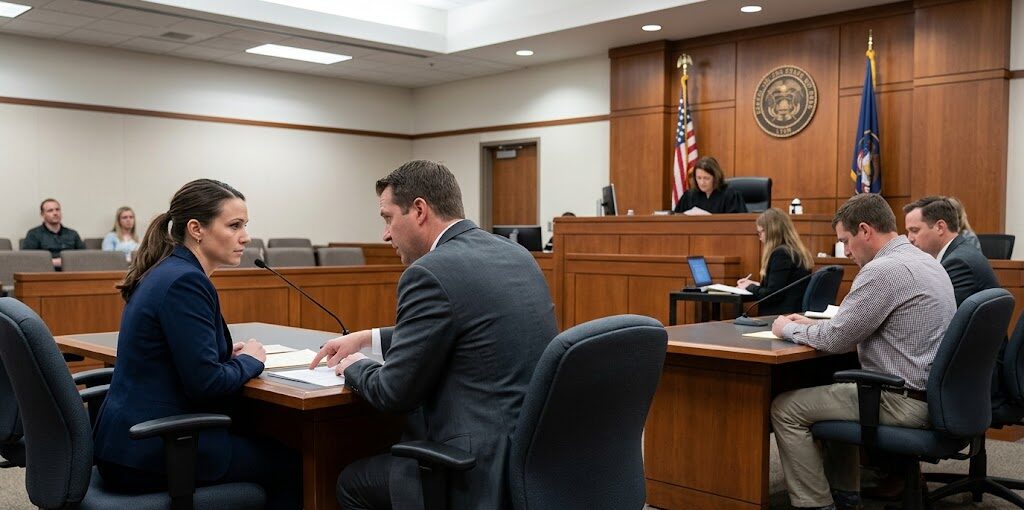
If you are filing a motion for temporary orders in a Utah divorce or temporary separation case involving minor children, the court may not hear your motion until the required classes are completed by the party asking for the motion. In plain English, that means a parent can prepare a strong temporary-orders request and still run into a preventable delay if the required divorce orientation or parenting education requirement has not been handled.
Here is the practical advice I would give you at the kitchen table: do not treat the class like a small administrative detail. If temporary custody, parent-time, child support, temporary alimony, bill payment, or housing issues are urgent, get the class requirement on your checklist early. A missed class requirement can slow down the very hearing you are relying on to create structure for your family.
This article is for educational purposes only and is not legal advice. Class requirements, deadlines, hearing procedures, and available exceptions can depend on the case type, whether minor children are involved, the court, the motion being filed, and the facts of the case.
Mandatory Classes Before Temporary Orders Hearings in Utah
Mandatory classes before temporary orders hearings matter because Utah courts can require certain divorce and parenting education steps before a motion is heard in a divorce or temporary separation case involving minor children. These classes are meant to help parents understand the divorce process, the impact of conflict on children, and the practical responsibilities that come with separating households.
That does not mean the class solves your legal problem. It does not decide custody. It does not calculate support. It does not replace legal advice. But it can affect timing. If you are the person asking the court for temporary orders, and the required class has not been completed, the hearing may be delayed or the court may not be able to proceed with your request.
That is why I tell clients to treat this as part of the temporary-orders strategy, not as an afterthought. If you are filing something urgent, the question is not only “What do we ask for?” It is also “Have we cleared the procedural steps so the court can actually hear us?”
If you are not sure whether your case requires a class before your hearing, talk with Gibb Law before the hearing date. Bring the petition, the motion, the notice of hearing, and any class information you received from the court.
Why Utah Requires Divorce and Parenting Classes
When children are involved, divorce is not just a legal case. It changes schedules, homes, routines, communication, school logistics, medical decisions, holidays, finances, and emotional stability. The required classes are designed to give parents basic orientation before the court process moves too far ahead.
I do not describe these classes to clients as magic. They are not going to fix every problem between two parents. But they do serve a purpose. They help parents understand the court process, reduce avoidable confusion, and focus more clearly on how separation affects children.
They Explain the Process
The orientation class helps parents understand the divorce or temporary separation process so they are not walking into court blind.
They Focus on Children
The parenting class is meant to help parents think about how conflict, scheduling, and communication affect children during separation.
They Affect Hearing Timing
If the moving party has not completed the required class, the temporary-orders hearing may not be able to proceed as expected.
They Create a Clean Record
Completing the class gives the court one less procedural issue to worry about when temporary orders are urgent.
In Davis County, and in family courts generally, small procedural steps can create real delays. A parent may be focused on custody, parent-time, support, or use of the home, but the court still needs the procedural requirements handled. That is why I would rather get the class done early than explain later why the hearing cannot go forward.
Which Classes May Be Required
In Utah divorce and temporary separation cases involving minor children, parents may be required to complete a divorce orientation class and a parenting class. The orientation class focuses on the divorce process and alternatives. The parenting class focuses on children, co-parenting, conflict, communication, and the practical effects of divorce or separation on the child.
The exact requirement can depend on the case type and court notices. The safest approach is to read every notice from the court and confirm which class applies to your case. Do not assume that watching a random online video or reading an article counts. The court needs the required course completed in the proper way and reflected in the case record.
| Class or Requirement | What It Generally Covers | Why It Matters Before Temporary Orders |
|---|---|---|
| Divorce orientation class | The basic divorce or temporary separation process, court expectations, and ways parties may resolve disputes. | The court may require completion before hearing a motion filed by the party requesting temporary orders. |
| Parenting class | How separation affects children, co-parenting communication, conflict reduction, and parenting responsibilities. | Temporary custody and parent-time issues often affect children immediately, so class completion can matter before the hearing. |
| Proof of completion | Confirmation that the class was completed through the approved process. | If completion is not reflected or available, the hearing may become more complicated than it needs to be. |
| Court notice review | Any notice from the court explaining deadlines, class requirements, or hearing limitations. | Parents sometimes miss the requirement because they focus on the motion and skip the notice language. |
If your case involves minor children and you are asking for temporary orders, assume the class issue matters until you confirm otherwise. Do not wait until the week of the hearing to figure it out.
How Mandatory Classes Connect to Temporary Orders
Temporary orders are used because family cases take time. A divorce or custody case may not be finished for months. During that period, families still need rules: where the children stay, when exchanges happen, who pays support, who pays bills, who stays in the home, and how communication should work.
That is why temporary-orders hearings are important. They create short-term structure. But if the court requires a moving party to complete mandatory classes before that hearing, the class becomes part of the strategy. Not because the class wins the motion, but because missing it may stop the motion from being heard.
Here is the mistake I want you to avoid: filing the motion, preparing the declaration, organizing the exhibits, showing up ready to argue custody or support, and then realizing the court cannot proceed because the class requirement was not completed. That is a preventable problem.
Temporary Orders Are Time Sensitive
If you need temporary parent-time, support, housing, or bill-payment rules, delay can make the case harder. Complete procedural requirements early.
The Moving Party Should Be Ready
If you are asking the court for temporary orders, make sure your class requirement, paperwork, declaration, and exhibits are all aligned before the hearing.
Children Make the Requirement More Important
When minor children are involved, the court is not only looking at legal arguments. It is also looking at parenting, stability, and preparation.
Proof Matters
Do not just complete the class and assume the issue is handled. Keep confirmation and make sure completion is reflected in the way the court expects.
What I Would Check Before Filing a Motion for Temporary Orders
If you were sitting across from me and telling me you need temporary orders quickly, I would not start by drafting the motion alone. I would build a checklist around the entire hearing.
First, I would ask whether minor children are involved. Second, I would check the court notices and class requirements. Third, I would look at what relief you need: parent-time, support, bill payment, home possession, communication rules, or something else. Fourth, I would ask what evidence supports the request. And fifth, I would make sure we are not creating a delay by missing a procedural requirement.
- Are there minor children involved? This usually changes the class analysis.
- Who is filing the motion? The moving party’s completion status may matter before the hearing.
- Have you received a notice about required classes? Court notices should be read carefully.
- Have you completed the correct class? Do not assume the wrong course counts.
- Do you have proof? Keep confirmation of completion and bring it to your attorney.
That may sound simple, but simple is often what keeps a case moving. In family law, the frustrating delays often come from overlooked details: missing financial declarations, late responses, unclear proposed orders, or class requirements that were not handled soon enough.
Common Mistakes With Mandatory Classes Before Temporary Orders Hearings
Most class-related problems are avoidable. They usually happen because someone is focused on the emergency and misses the procedure. That is understandable. If your parenting schedule is in chaos or bills are not being paid, a class requirement may feel secondary. But the court process still matters.
Waiting Until the Hearing Is Close
Do not wait until the last minute to complete the class. If there is a scheduling issue, technical issue, or proof problem, you may not have time to fix it.
Assuming the Other Parent’s Class Status Solves Yours
If you are the one asking for temporary orders, focus on your own requirement. Do not assume the court will overlook your class status because the other parent has problems too.
Completing the Wrong Course
Make sure the course is the one required for your case. A general parenting article or private class may not satisfy the court’s requirement.
Forgetting Proof of Completion
Keep your certificate or confirmation. If the court record does not clearly show completion, your attorney needs to know before the hearing.
Treating the Class Like Legal Advice
The class may be useful, but it is not a substitute for case-specific legal strategy. If you need orders, evidence, deadlines, and proposed terms still matter.
This Instagram reel fits here because timing in family law is not about rushing to beat the other person. It is about preparation. Completing required classes before a temporary-orders hearing is one of those preparation steps that can keep you from getting caught off guard.
What If the Hearing Is Urgent?
Some temporary-orders issues feel urgent because they are urgent. A parent may need a schedule. A child may need stability. Bills may be coming due. A spouse may need temporary support. The home may be in dispute. In those moments, the class requirement can feel like one more obstacle.
If the issue is urgent, do not ignore the requirement. Address it directly. Complete the class as soon as possible if it applies. Gather proof. Talk to your attorney about the timing. Review the hearing notice. If there is a safety issue, protective-order issue, or another emergency, the correct legal path may be different, and that should be discussed quickly.
Do the Class Promptly
If the class applies, complete it early so it does not become the reason your motion is delayed.
Check the Hearing Notice
Read the court notice carefully for class language, deadlines, appearance instructions, and filing requirements.
Keep Proof
Save confirmation, certificate information, and any proof that may be needed before the hearing.
Ask About Emergency Options
If there is a safety issue or immediate harm, talk to an attorney about whether a different filing is needed.
How the Class Requirement Fits Into the Larger Case
The class requirement is not the heart of your divorce or custody case. The heart of the case may be your child’s schedule, support, housing, bills, or a safe plan for communication. But the class requirement is one of the gates that may affect whether the court can hear your temporary motion.
That is why I think of it as part of the larger case map. You need the right motion. You need a clear declaration. You need organized exhibits. You need a practical proposed order. You need to be ready for the hearing. And, if required, you need the class completed.
When those pieces are handled together, the court can focus on the real issue instead of a procedural problem. That is the goal: fewer avoidable delays, clearer requests, and a better chance of getting temporary structure in place while the case continues.
If your temporary-orders hearing matters to your child, your finances, or your home, do not let a class requirement become the thing that slows it down. Handle the paperwork, handle the class, and walk into the hearing prepared.
Checklist for Mandatory Classes Before Temporary Orders Hearings
If you are preparing for a temporary-orders hearing in a Utah divorce or temporary separation case, use this checklist before the hearing date.
- Confirm whether minor children are involved: Class requirements are especially important when parents have children under 18.
- Read the court notice: Look for language about divorce orientation, parenting class, deadlines, and hearing requirements.
- Identify who is filing the motion: If you are the moving party, your completion status may affect whether the court can hear your request.
- Complete the required class early: Do not wait until the week of the hearing.
- Save proof of completion: Keep certificates, confirmations, receipts, or any record showing completion.
- Tell your attorney immediately: Let counsel know whether the class is completed and whether proof is available.
- Prepare the motion evidence: Class completion does not replace declarations, financial records, parenting schedules, or exhibits.
- Check for urgent issues: If there is safety, abuse, or immediate harm, ask whether a different legal process is needed.
- Review the proposed order: Be ready to tell the court exactly what temporary structure you are asking for.
Mandatory classes before temporary orders hearings are not just a box to check. They can affect whether your motion is heard when you need it heard. If you are preparing for a temporary-orders hearing in Davis County or another Utah court, get the requirement handled early and make sure your legal strategy is ready too.