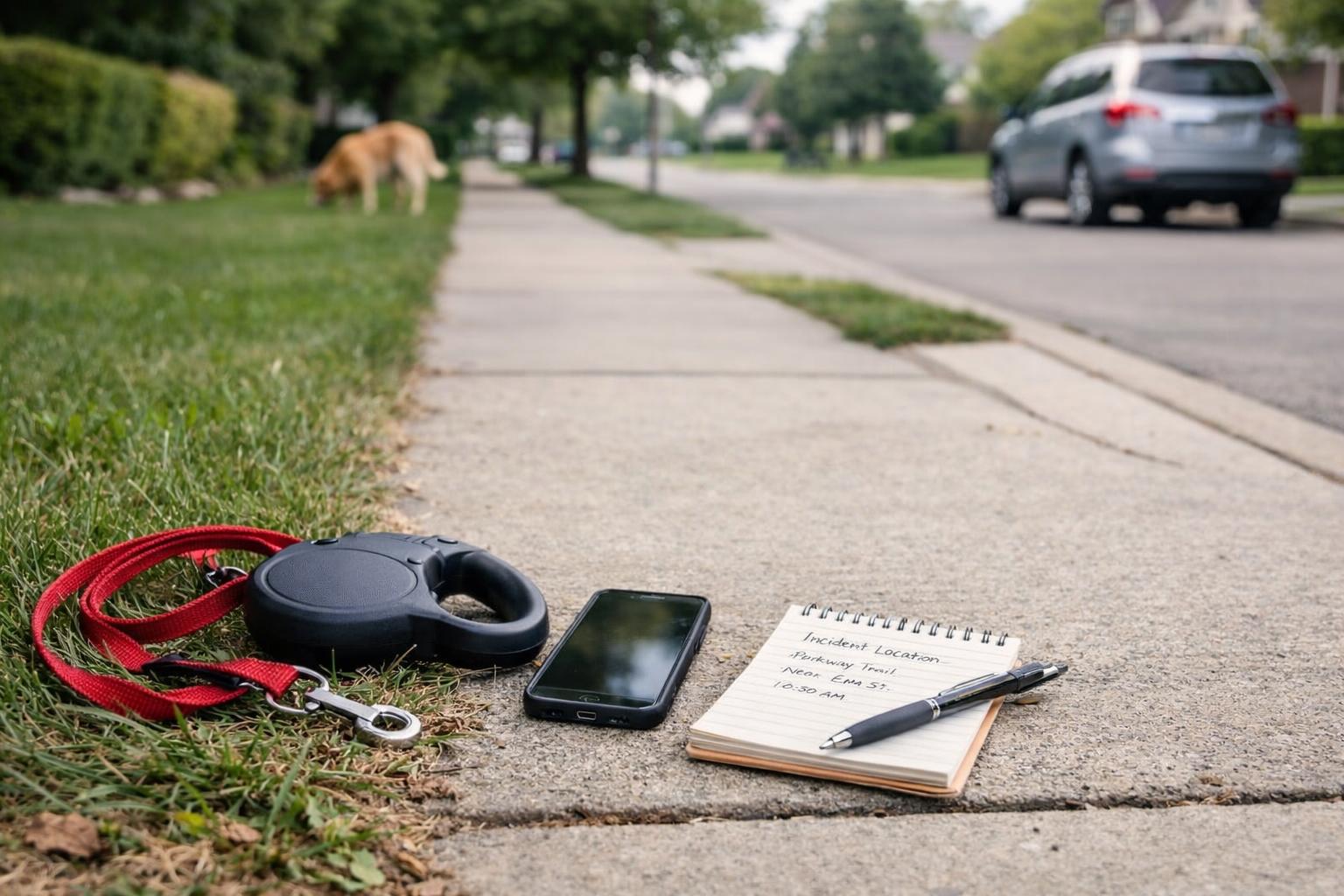

Dog Bite Injuries in Utah
How Utah generally handles dog bite liability and what to do after an incident.
Utah Code 18-1-1 addresses liability of a dog’s owner or keeper for injuries caused by the dog and includes statutory language and exceptions that must be read in full for the particular facts. That is a starting point for questions, not a conclusion about your matter.
I’m Dustin Gibb. I explain dog bite injuries in Utah in plain language, identify which facts and documents matter, and tell you where an answer depends on current law, professional evidence, or a court. This guide gives you a calm way to prepare without giving case-specific legal advice.
- The first priority after a dog injury
- Identify the animal and responsible people
- What Utah’s dog-injury statute generally addresses
- Why prior behavior is not the only question
- What evidence may help explain the event
- How insurance may become involved
- Documenting the effects without exaggeration
- Special care when a child is injured
- Facts that can change the analysis
- What to ask during a legal review
- Frequently asked questions
- Keep the complete document instead of relying on a cropped image or secondhand description
- Write dates, people, places, and events in order without assigning a legal conclusion
- Preserve messages, photographs, reports, correspondence, and other original records
- Follow current court orders, medical instructions, policy duties, and official safety directions
- Ask which deadline, legal rule, or missing fact needs prompt attention in your situation
The first priority after a dog injury
Short answer: Seek appropriate medical attention and follow provider instructions; legal content should not diagnose infection, scarring, or treatment needs.
The useful way to approach this is to separate what you personally know, what a document or witness can establish, and what still needs investigation. Dates, names, original records, complete messages, and the source of each fact make the discussion clearer. A conclusion written in large letters does not become more reliable than the evidence underneath it. For dog bite injuries in Utah, that discipline helps distinguish a useful lead from a fact that can actually be supported.
Before deciding what to do next, ask which source supports the statement, whether the information is complete, and whether a current order, policy, statute, or professional instruction controls. Those questions are simple, but they prevent a lot of avoidable confusion. In Davis County, the local advantage should be a practical conversation with someone who can review the real materials—not a broad promise based only on a ZIP code.
When you prepare, make a separate list of facts, documents, questions, and immediate obligations. That small separation prevents an unanswered legal question from being written down as though it were a proven event. It also makes the first conversation more efficient because I can see what is known and what needs follow-up.
Source basis: this guide uses Utah Code 18-1-1: Dog Injuries, Utah Code 78B-5-818: Comparative Fault together with Gibb Law’s first-party pages. These sources support general process and legal context. They do not decide disputed facts, supply medical opinions, assign fault, predict a court, or replace advice about your circumstances.
Identify the animal and responsible people
Short answer: Record the dog description, owner or keeper information, location, witnesses, and any animal-control or police report number.
This is also where precision protects you. Use the exact name of the court paper, insurer, provider, report, property, or person involved. Keep the original file when possible and note how you received it. If memory is uncertain, say so. A careful record can be corrected; an exaggerated claim can distract from the facts that genuinely matter. For dog bite injuries in Utah, that discipline helps distinguish a useful lead from a fact that can actually be supported.
If another person wants an immediate answer, it is reasonable to ask for the request in writing and time to understand it. Do not sign, delete, edit, post, or send something simply because the moment feels uncomfortable. The right response depends on what the document is and what your obligations require. In Davis County, the local advantage should be a practical conversation with someone who can review the real materials—not a broad promise based only on a ZIP code.
Keep copies in a format you can open and share without changing the original. Use descriptive file names, note the date obtained, and preserve full pages or message threads. Those habits do not prove a claim, but they reduce the chance that important context will be lost while the matter is being reviewed.
Medical question
What care, monitoring, and follow-up the injury needs Verify with: Qualified healthcare provider.
Legal question
Who may be responsible and which damages may be proven Verify with: Statute, facts, evidence, and attorney analysis.
What Utah’s dog-injury statute generally addresses
Short answer: The statute focuses on owner or keeper liability and should be read with its definitions, exceptions, defenses, and related law.
The law applies to details, not labels. Two situations described with the same short phrase can involve different people, duties, documents, deadlines, defenses, and available proof. I would rather identify the unanswered question than give you a confident generalization that does not fit your situation. For dog bite injuries in Utah, that discipline helps distinguish a useful lead from a fact that can actually be supported.
A consultation should narrow the problem. I should be able to tell you which facts appear important, what still needs to be collected, which legal question is actually open, and what the next decision is. I cannot responsibly promise the final result, the exact timeline, or a particular financial outcome. In Davis County, the local advantage should be a practical conversation with someone who can review the real materials—not a broad promise based only on a ZIP code.
If several people or organizations are involved, track each one separately. Record names, roles, contact details, reference numbers, and the date and substance of each communication. That makes it easier to identify who has information, who has authority, and which statement came from which source.
Why prior behavior is not the only question
Short answer: Do not assume that proof of a previous bite is always required; the statutory text and specific facts control.
Organization does not mean turning your life into a litigation project. It means keeping a short chronology, putting related documents together, and recording important calls or letters. That gives an attorney enough structure to spot gaps while leaving medical, factual, and legal conclusions to the people qualified to make them. For dog bite injuries in Utah, that discipline helps distinguish a useful lead from a fact that can actually be supported.
Keep the tone factual, even when the experience has been painful. Calm language does not minimize what happened. It makes the sequence easier to evaluate and helps keep the focus on conduct, records, effects, and the rule that may apply. In Davis County, the local advantage should be a practical conversation with someone who can review the real materials—not a broad promise based only on a ZIP code.
Before the conversation ends, repeat the next step in your own words. Confirm what you will provide, what the office will review, and whether any current instruction controls your conduct. A short written recap is useful because stressful situations make even a careful conversation harder to remember later.
Get appropriate care
Use qualified medical professionals for evaluation and treatment.
Identify and report
Record owner, dog, location, witnesses, and official report information.
Preserve evidence
Save photos, clothing, communications, expenses, and records.
Review law and coverage
Use the exact statutory text and applicable policies.
What evidence may help explain the event
Short answer: Photographs, clothing, location details, witness accounts, reports, communications, and available video can preserve context.
The useful way to approach this is to separate what you personally know, what a document or witness can establish, and what still needs investigation. Dates, names, original records, complete messages, and the source of each fact make the discussion clearer. A conclusion written in large letters does not become more reliable than the evidence underneath it. For dog bite injuries in Utah, that discipline helps distinguish a useful lead from a fact that can actually be supported.
Before deciding what to do next, ask which source supports the statement, whether the information is complete, and whether a current order, policy, statute, or professional instruction controls. Those questions are simple, but they prevent a lot of avoidable confusion. In Davis County, the local advantage should be a practical conversation with someone who can review the real materials—not a broad promise based only on a ZIP code.
When you prepare, make a separate list of facts, documents, questions, and immediate obligations. That small separation prevents an unanswered legal question from being written down as though it were a proven event. It also makes the first conversation more efficient because I can see what is known and what needs follow-up.
How insurance may become involved
Short answer: Homeowner, renter, business, or other coverage may be relevant, depending on the people, place, exclusions, and policy.
This is also where precision protects you. Use the exact name of the court paper, insurer, provider, report, property, or person involved. Keep the original file when possible and note how you received it. If memory is uncertain, say so. A careful record can be corrected; an exaggerated claim can distract from the facts that genuinely matter. For dog bite injuries in Utah, that discipline helps distinguish a useful lead from a fact that can actually be supported.
If another person wants an immediate answer, it is reasonable to ask for the request in writing and time to understand it. Do not sign, delete, edit, post, or send something simply because the moment feels uncomfortable. The right response depends on what the document is and what your obligations require. In Davis County, the local advantage should be a practical conversation with someone who can review the real materials—not a broad promise based only on a ZIP code.
Keep copies in a format you can open and share without changing the original. Use descriptive file names, note the date obtained, and preserve full pages or message threads. Those habits do not prove a claim, but they reduce the chance that important context will be lost while the matter is being reviewed.
Assumption
A dog must have bitten someone before for any claim to exist.
More accurate
Utah’s statute should be read directly; prior knowledge is not the only issue.
Assumption
The owner’s apology proves every legal element.
More accurate
Statements may matter, but responsibility, causation, damages, exceptions, and coverage still need review.
Documenting the effects without exaggeration
Short answer: Keep medical records, expenses, work information, photographs over time, and a factual account of daily limitations.
The law applies to details, not labels. Two situations described with the same short phrase can involve different people, duties, documents, deadlines, defenses, and available proof. I would rather identify the unanswered question than give you a confident generalization that does not fit your situation. For dog bite injuries in Utah, that discipline helps distinguish a useful lead from a fact that can actually be supported.
A consultation should narrow the problem. I should be able to tell you which facts appear important, what still needs to be collected, which legal question is actually open, and what the next decision is. I cannot responsibly promise the final result, the exact timeline, or a particular financial outcome. In Davis County, the local advantage should be a practical conversation with someone who can review the real materials—not a broad promise based only on a ZIP code.
If several people or organizations are involved, track each one separately. Record names, roles, contact details, reference numbers, and the date and substance of each communication. That makes it easier to identify who has information, who has authority, and which statement came from which source.
Special care when a child is injured
Short answer: Protect the child’s privacy, follow medical advice, avoid repeated questioning, and let appropriate adults handle claim communication.
Organization does not mean turning your life into a litigation project. It means keeping a short chronology, putting related documents together, and recording important calls or letters. That gives an attorney enough structure to spot gaps while leaving medical, factual, and legal conclusions to the people qualified to make them. For dog bite injuries in Utah, that discipline helps distinguish a useful lead from a fact that can actually be supported.
Keep the tone factual, even when the experience has been painful. Calm language does not minimize what happened. It makes the sequence easier to evaluate and helps keep the focus on conduct, records, effects, and the rule that may apply. In Davis County, the local advantage should be a practical conversation with someone who can review the real materials—not a broad promise based only on a ZIP code.
Before the conversation ends, repeat the next step in your own words. Confirm what you will provide, what the office will review, and whether any current instruction controls your conduct. A short written recap is useful because stressful situations make even a careful conversation harder to remember later.
Facts that can change the analysis
Short answer: Trespass, provocation, work activity, property control, multiple keepers, government involvement, and policy exclusions may matter.
The useful way to approach this is to separate what you personally know, what a document or witness can establish, and what still needs investigation. Dates, names, original records, complete messages, and the source of each fact make the discussion clearer. A conclusion written in large letters does not become more reliable than the evidence underneath it. For dog bite injuries in Utah, that discipline helps distinguish a useful lead from a fact that can actually be supported.
Before deciding what to do next, ask which source supports the statement, whether the information is complete, and whether a current order, policy, statute, or professional instruction controls. Those questions are simple, but they prevent a lot of avoidable confusion. In Davis County, the local advantage should be a practical conversation with someone who can review the real materials—not a broad promise based only on a ZIP code.
When you prepare, make a separate list of facts, documents, questions, and immediate obligations. That small separation prevents an unanswered legal question from being written down as though it were a proven event. It also makes the first conversation more efficient because I can see what is known and what needs follow-up.
What to ask during a legal review
Short answer: Ask which statute applies, who may be legally responsible, what evidence is missing, which coverage exists, and what deadline governs.
This is also where precision protects you. Use the exact name of the court paper, insurer, provider, report, property, or person involved. Keep the original file when possible and note how you received it. If memory is uncertain, say so. A careful record can be corrected; an exaggerated claim can distract from the facts that genuinely matter. For dog bite injuries in Utah, that discipline helps distinguish a useful lead from a fact that can actually be supported.
If another person wants an immediate answer, it is reasonable to ask for the request in writing and time to understand it. Do not sign, delete, edit, post, or send something simply because the moment feels uncomfortable. The right response depends on what the document is and what your obligations require. In Davis County, the local advantage should be a practical conversation with someone who can review the real materials—not a broad promise based only on a ZIP code.
Keep copies in a format you can open and share without changing the original. Use descriptive file names, note the date obtained, and preserve full pages or message threads. Those habits do not prove a claim, but they reduce the chance that important context will be lost while the matter is being reviewed.
If you want a broader view of the firm’s work, use the Dog Bite, practice areas, and contact information. Those pages explain where this topic sits within the firm’s services. They do not expand the facts or turn general information into advice for your matter.
| Question | Why it matters |
|---|---|
| What is the most important source document? | It anchors the discussion in the actual order, report, policy, record, or statute. |
| Which fact is disputed or still missing? | It shows where more investigation or professional evidence may be needed. |
| What should be preserved now? | Original records, video, messages, and witness information can become difficult to recover. |
| What decision am I being asked to make? | It separates immediate action from questions that can wait for a fuller review. |
Frequently asked questions about dog bite injuries in Utah
Do I need medical care for a small bite?
That is a medical decision. Contact an appropriate provider and follow professional guidance. The best answer may change with the controlling document, current law, and evidence in your matter, so treat this as general information rather than a prediction.
Should the incident be reported?
Ask local animal control or law enforcement about applicable reporting and safety procedures. The best answer may change with the controlling document, current law, and evidence in your matter, so treat this as general information rather than a prediction.
Does the dog need a prior bite history?
Do not rely on a one-bite slogan. Utah’s statute and case-specific facts require direct review. The best answer may change with the controlling document, current law, and evidence in your matter, so treat this as general information rather than a prediction.
What if the dog belongs to someone I know?
The relationship can make the conversation harder, but evidence and policy issues still need careful handling. The best answer may change with the controlling document, current law, and evidence in your matter, so treat this as general information rather than a prediction.
Can insurance cover a dog injury?
Some policies may respond, but insured status, location, exclusions, limits, and notice matter. The best answer may change with the controlling document, current law, and evidence in your matter, so treat this as general information rather than a prediction.
How is scarring valued?
No article can value an injury. Medical evidence, photographs, prognosis, circumstances, and law may be relevant. The best answer may change with the controlling document, current law, and evidence in your matter, so treat this as general information rather than a prediction.
What should I bring to a consultation?
Bring reports, photos, owner information, witness contacts, medical records, bills, correspondence, and a dated timeline. The best answer may change with the controlling document, current law, and evidence in your matter, so treat this as general information rather than a prediction.
Tell me what happened. I can talk it through with you.
If you have questions about dog bite injuries in Utah, call (801) 725-6035. I can help you identify the records, questions, and next step that deserve attention.
Contact Gibb Law about dog bite injuries in Utah