What to Do After Receiving Divorce Papers in Utah
Have divorce papers landed on your kitchen counter? Start with the paper in front of you, not the fear in your chest. The service date, the deadline, and the specific requests in the petition matter more than anything your spouse says in a text that night.

What should I do first?
Find the summons, write down the date you were served, and put the petition, proposed orders, financial papers, and any hearing notices in one folder.
How long do I have to respond?
In many Utah divorce cases, a respondent served in Utah has 21 days to file an answer. If served outside Utah, the deadline is commonly 30 days. Count carefully.
Do I need a counterpetition?
Maybe. An answer responds to what the other side requested. A counterpetition is how you ask the court for your own relief, such as custody, support, property, or debt terms.
What would Dustin look at first?
The service date, the deadline, the petition, any temporary-order request, the children’s schedule, the financial picture, and what decision has to be made next.
If you have just been served, you do not need to solve the whole divorce today. You need to understand the next step. That usually starts with the summons, the petition, and the deadline to respond.
In Davis County and Kaysville divorce cases, I like to slow the room down. What were you served with? When were you served? Is there a hearing already set? Are temporary orders being requested? Are children, support, the house, retirement, or a business involved? Once those questions are clear, we can talk through options without guessing.
Start with the service date
The service date is not a small detail. It is the anchor for your response deadline. The day you receive the summons is usually day zero, and the counting starts the next day. Weekends and holidays still matter when you count, but if the deadline lands on a day the court is closed, the deadline may move to the next open court day.
Do not rely on memory for this. Write the date on the front of your folder. Save the envelope, the summons, the proof of service if you have it, and any message from the process server or the other side. If you are not sure whether service was done correctly, bring the papers to a consultation and we can look at it together.
Here’s what I’d do first
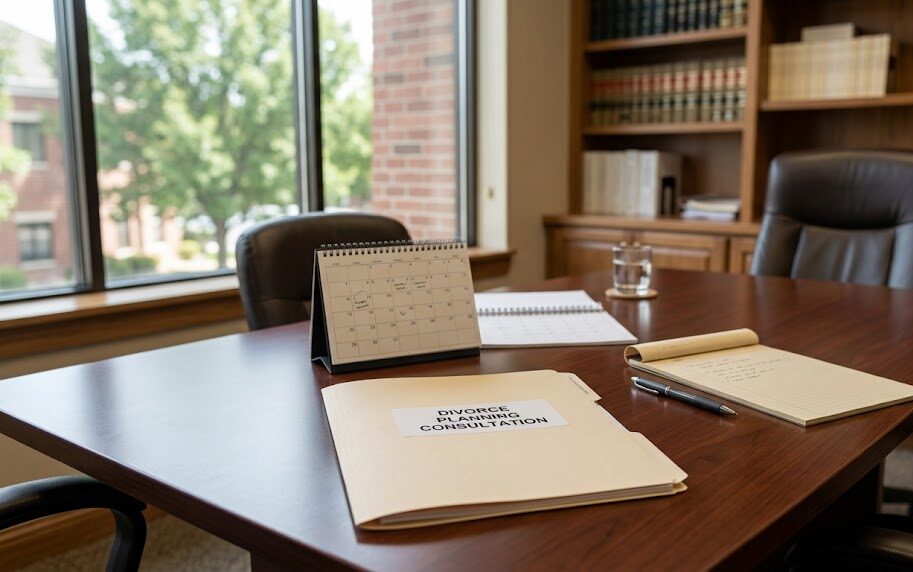
Make one folder. Put the summons on top, then the petition, any temporary-order paperwork, any parenting-plan proposal, financial documents, and every court notice. Then write one page with three dates: the day you were served, any hearing date, and the date you think your answer is due.
Read what your spouse is asking the court to do
The petition is not just an announcement that a divorce case has started. It usually tells the court what the petitioner wants on custody, parent-time, child support, alimony, property, debts, retirement, attorney fees, and sometimes the use of the home or vehicles while the case is pending.
Read it once for the big picture. Then read it again with a pen. Mark anything that is wrong, incomplete, or missing. If the petition says the children have been living one way and the real schedule is different, note that. If income, business money, debts, or the house are described in a way that does not match your records, note that too.
If you are still trying to understand how the case usually begins, this step-by-step guide to filing for divorce in Utah can help you see the other side of the process without treating their version as the final word.
Decide whether you need an answer, a counterpetition, or both
An answer tells the court where you disagree with the petition. It is not the place for a long emotional history of the marriage. It is the place to respond clearly and protect your ability to be heard.
A counterpetition may be needed when you want the court to grant relief to you, not just deny what the other side requested. That may include a different custody arrangement, different support terms, a different property division, or other orders that matter to your future.
This is where a short conversation can save trouble later. Some people want to respond quickly just to get it over with. I would rather make sure the response fits the case before it is filed.
Check for temporary orders
Temporary orders can shape the months before the divorce is final. They may deal with custody, parent-time, child support, alimony, who stays in the home, who pays certain debts, and how expenses are handled while the case is pending.
If you were served with a motion for temporary orders, do not bury it behind the petition. Put it near the top of your folder and check whether there is a separate hearing date or response deadline. Temporary orders are not the final divorce decree, but they can set the practical rhythm of the case. For a deeper look at early case orders, you can read Gibb Law’s guide on how temporary orders shape the early months of a Utah divorce.
Start organizing financial disclosures now
Financial disclosures are where many divorce cases get messy. Start gathering pay stubs, tax returns, bank statements, retirement account statements, credit-card records, mortgage information, business income records, loan applications, insurance information, and proof of major monthly expenses.
If you own a business, work overtime, receive bonuses, have rental property, or support children from another relationship, tell me that early. Those details can affect support, alimony, property division, and settlement strategy. If the case moves into formal document requests later, this explanation of the divorce discovery process in Utah can help you understand why organized records matter.
Be careful with texts, money, and quick agreements
Divorce papers can make people react. That is normal. But the first few days are not the time for threats, long late-night messages, cash withdrawals, account changes, or quick side deals that do not match what the court will need to see.
- Keep communication short, calm, and factual.
- Do not hide, transfer, or drain money because you are angry or afraid.
- Do not agree to a parenting schedule you cannot actually follow.
- Do not sign a settlement, stipulation, or waiver until you understand what it changes.
- Do not ignore a hearing notice just because you hope the case will settle.
If there is a protective order, intimidation, or unsafe communication, do not try to “work it out” by text before checking the rules. Safety and court orders come first.
Understand where mediation fits
If an answer is filed and issues are still contested, mediation is usually part of the Utah divorce process before the case moves forward. Mediation can be helpful, but only if you know your records, your priorities, and the terms you can actually live with.
Going into mediation without financial records or a clear parenting proposal can leave you reacting to the other side’s version of the case. Going in prepared gives you a steadier voice. If your main worry is timing, our article on how long a divorce takes in Utah gives a plain-English overview of what can speed a case up or slow it down.
What Gibb Law checks before choosing the next step
When you sit down with me, I am not looking for the loudest story. I am looking for the next decision. That usually means checking:
- the service date and response deadline;
- what the petition asks the court to order;
- whether temporary orders or a hearing are already pending;
- the children’s current schedule, school situation, and exchange pattern;
- income, debts, accounts, business interests, and major expenses;
- any safety concern, protective order, or communication restriction;
- what documents are missing and who likely has them.
From there, we can decide whether the next move is an answer, a counterpetition, a temporary-order response, mediation preparation, a financial-record plan, or a direct negotiation. We’ve got options. The point is to choose the one that fits the facts.
Three Utah divorce resources worth keeping open
You do not need to read every court page before you ask for help. But these three Utah resources are useful if you want to understand the basic process, response deadlines, and financial-disclosure expectations before we talk.
FAQ
Can I ignore the papers if we are still talking?
No. Talking is fine if it is safe and practical, but the court deadline still matters. If you miss it, the other side may be able to ask for orders without your response.
Do I need every financial document before I call?
No. Bring what you have. A first conversation can help you decide what else to gather and which records matter most.
What if I agree with some parts of the petition?
You can agree with some things and disagree with others. The important part is responding clearly and making sure the written record matches what you actually want the court to understand.
Will mediation solve the divorce?
Sometimes. Mediation can resolve many cases, but it works best when both sides have enough information to make informed decisions. Some cases still need temporary orders, discovery, or a court decision.
When should I contact Gibb Law?
Call when you have been served, have a hearing date, need to respond to temporary orders, are worried about custody or support, or are unsure what to do before the answer deadline.
This article is general information about Utah divorce procedure. It is not legal advice for your specific case and does not create an attorney-client relationship. Deadlines and court requirements can change depending on the documents you were served and the facts of your case.
Tell me what happened
If you have divorce papers in front of you, let’s slow it down and look at the next step. Free call: (801) 725-6035. Bring the papers, the dates, and the questions you cannot stop thinking about.
Free call: (801) 725-6035