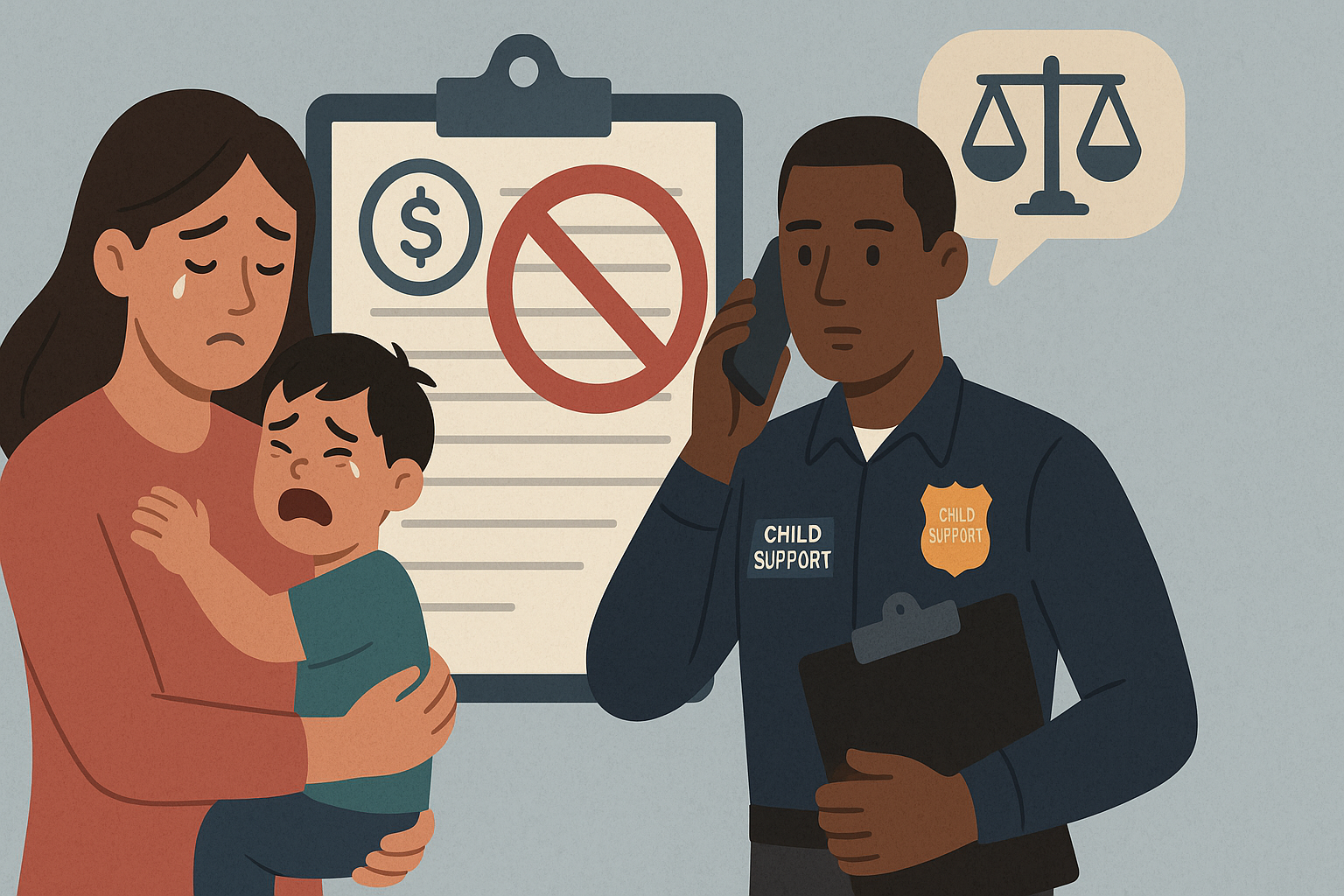
When court-ordered child support suddenly stops, it can put real financial strain on the parent who relies on those payments to cover everyday expenses for a child. Utah law does not treat child support as optional. There are specific tools you can use to collect overdue support and enforce the existing order.
Gibb Law Firm helps Utah parents understand how child support enforcement works, what to do when payments stop, and how to use both the courts and the Utah Office of Recovery Services (ORS) to secure the support a child is owed. This overview explains key terms, enforcement options, timelines, and practical steps so you know where to start and how to protect your rights.
How Utah Handles Child Support Enforcement
Child support in Utah is a court-ordered financial obligation. When a parent does not pay, the missed payments become “arrears,” and the law gives you several ways to collect what is owed. Enforcement can move through the courts, through ORS, or through a combination of both.
Arrears: Unpaid child support that continues to accumulate until it is paid in full. Interest may also be added in some situations.
Income withholding: Having child support taken directly from wages, disability benefits, or other income sources before the paying parent receives the money.
Utah Office of Recovery Services (ORS): The state agency that can help establish, collect, and enforce child support orders, including garnishing wages and intercepting tax refunds.
Civil contempt: A court finding that a parent willfully failed to follow a child support order, which can lead to fines, wage garnishment, or even jail time in serious cases.
In many cases, the first step is confirming what is owed and then deciding whether enforcement is better handled through ORS, the courts, or both working together.
Watch: Options When Your Ex Is Not Paying Child Support
Key Definitions and Utah Statutes
Understanding a few core legal terms makes Utah child support enforcement much easier to navigate. These concepts show up repeatedly in court paperwork and ORS communications.
Utah child support guidelines: Set out in Utah Code Title 78B, Chapter 12, these rules explain how support is calculated based on income, number of children, and custody arrangements. For a deeper dive, see our article on Utah child support calculations.
ORS enforcement authority: Utah Code Title 62A, Chapter 11 gives ORS power to collect support, garnish wages, intercept tax refunds, and use other tools when a parent is behind on payments.
Contempt for nonpayment: Under Utah contempt statutes, a judge can find a parent in contempt if they have the ability to pay but refuse to obey a child support order. For more on how contempt works generally, see our resource on contempt of court in Utah family cases.
Judgment for arrears: A formal court judgment confirming the total amount of unpaid support, which can then be collected through wage garnishment, liens, and other collection tools.
This Instagram post highlights a key point: failing to pay court-ordered child support, especially when it is willful, can result in serious penalties, including jail in some cases.
What to Do Right Away If Child Support Payments Stop
If a payment is late or stops altogether, it is understandable to feel anxious or angry. Taking calm, organized steps early can make enforcement faster and more effective.
Confirm the Amount Owed
Start by reviewing your divorce decree, custody order, or child support order, plus any later modifications. Compare the ordered amount to what has actually been paid. If ORS processes your payments, you can use their records to confirm arrears.
Check Whether ORS Is Involved
If your case is already with ORS, they may already be tracking missed payments and preparing enforcement actions. If your case is not with ORS, you can usually open a case so the agency can help with ongoing enforcement.
Keep Written Records
Maintain a simple log of payments received, missed payments, and any communication with the other parent about support. Documentation will matter whether you work through ORS, the courts, or both.
Talk with an Attorney About Strategy
An attorney can help you decide whether to rely on ORS, file a motion to enforce in court, pursue contempt, or consider a modification if the paying parent’s finances have genuinely changed. For background on changing support, see our guide on how to modify child support in Utah.
Watch: How Child Support Orders Are Established and Enforced
This video explains how ORS helps set up and enforce child support orders, which is especially useful if payments have stopped or the order was originally created through the ORS administrative process.
Court and ORS Enforcement Options in Utah
Once you know how much is owed and have gathered records, the next step is deciding which enforcement tools to use. Utah parents often rely on both ORS and the courts at different stages.
Working with ORS
ORS can garnish wages, intercept tax refunds and certain government payments, place liens on property, suspend licenses, and coordinate with other states if the paying parent moves. Many parents start here because enforcement is ongoing and systematized.
Motion to Enforce in Court
A motion to enforce asks a judge to confirm the arrears, order payment, and require income withholding. In some cases, the court may also award attorney fees and costs if enforcement was necessary due to nonpayment.
Contempt and Judgments for Arrears
If nonpayment is willful, you may seek a contempt finding. The court can impose fines, order jail time in serious cases, and enter judgments for arrears. A judgment can then be collected using wage garnishment, bank levies, or liens on property.
These tools are meant to secure support for the child, not simply to punish the other parent. The right mix of strategies depends on the paying parent’s work situation, financial reality, and history of compliance.
Watch: Dealing With Child Support Arrears and Back Payments
This video walks through the practical realities of dealing with back child support, why arrears build up, and the types of tools that can be used to collect overdue payments.
This reel highlights the practical options for collecting overdue child support, including garnishment, judgments, and using child support enforcement agencies.
Required Forms and Filings for Child Support Enforcement
Which documents you use will depend on whether you are working through ORS, the courts, or both. Getting the forms right at the start saves time and reduces the chance of delays.
Motion to enforce child support: Asks the court to confirm arrears, require payment, and often impose income withholding. It may also request attorney fees if you had to go to court to secure compliance.
Order to show cause or contempt paperwork: Used when you are asking the court to find that the other parent willfully disobeyed the support order and should face contempt sanctions. For more on how these cases work, see our article on contempt in Utah family cases.
Affidavit of arrears: A sworn statement listing the ordered amount, payments made, and the total balance owed. ORS records, bank statements, and payment histories are often attached as support.
ORS applications and enforcement forms: If your case is not yet with ORS, you may complete their intake and enforcement forms so the agency can begin or ramp up collection efforts.
Petition to modify child support: If the paying parent truly cannot meet the current amount due to a substantial, lasting change, a modification may be appropriate. Learn more in our guide on modifying child support in Utah.
Because enforcement and modification can sometimes overlap, it is important to understand whether you are trying to collect what is already owed, change the amount going forward, or both.
Common Mistakes to Avoid in Utah Child Support Enforcement
Many problems in child support enforcement can be avoided with early action and good documentation. Being aware of frequent mistakes can help you protect both your child and your case.
Waiting too long to act: Letting arrears grow for months or years can make collection harder. It is usually better to address missed payments early, even if you try informal communication first.
Relying only on verbal agreements: Side deals where you informally lower support or trade support for extra parenting time can cause confusion later. Only the court can change the official support amount.
Not keeping receipts or records: Cash payments without receipts, scattered transfers, and missing logs make it harder to prove what has and has not been paid if a dispute arises.
Withholding parent-time as punishment: Child support and parent-time are separate legal issues. Refusing court-ordered parent-time because support is late can expose you to your own enforcement or contempt problems. For enforcement options on the parenting side, see our guide on enforcing custody and visitation orders in Utah.
Assuming support ends automatically at 18: Utah law has specific rules about when child support ends, including high school graduation and support for multiple children. Do not just stop paying or assume an obligation has ended without checking the order or talking with an attorney.
This reel offers practical advice on when and how to claim overdue child support and why it is important to formally file your petition or motion instead of waiting and hoping the problem resolves on its own.
Next Steps and When to Get Legal Help
When child support stops, you do not have to figure everything out alone. Utah’s enforcement tools are strong, but using them effectively often requires a strategy tailored to your situation.
Review your existing orders so you understand exactly what is required, how long support is supposed to last, and whether there are any prior modifications.
Gather records of payments, missed payments, and communications so you are ready to work with ORS, file a motion, or meet with an attorney.
Consider whether the main issue is enforcement, modification, or both. Our guides on mediation vs. litigation in Utah divorce and high-conflict divorce strategies can help you think through the broader context of your case.
Schedule a consultation with a Utah family law attorney to talk through enforcement options, possible contempt actions, and whether a change in support might be appropriate based on current circumstances.
For a broader picture of how child support fits into divorce and custody, you may also find it helpful to review our articles on how to file for divorce in Utah and Utah child custody modifications, which explain how financial and parenting issues often move together in Utah family law cases.
Understanding Your Rights Under Utah Child Support Law
Child support is about making sure children have the resources they need, not about rewarding or punishing either parent. When payments stop, it can feel overwhelming, but Utah law gives you real tools to address the problem.
Whether you choose to work primarily through ORS, the courts, or both, the key is to act promptly, stay organized, and get clear advice about your options. Gibb Law Firm provides practical, Utah-focused guidance for parents facing missed payments, large arrears, or long-standing enforcement issues.
To talk through your situation with an experienced Utah family law attorney, visit our contact page to schedule a consultation.
Talk to Gibb Law Firm About Child Support Enforcement in Utah
If child support payments have stopped or fallen behind, our team can help you understand Utah’s enforcement options, coordinate with ORS, and decide whether to seek court orders, contempt findings, or modifications. We focus on clear advice, realistic strategies, and protecting your child’s financial stability.
Schedule a Consultation