Driving in Utah comes with specific financial responsibilities. To legally register and drive a vehicle in the state, you must carry minimum amounts of liability coverage and personal injury protection (PIP). These rules ensure that if a crash happens, there is funding available to cover medical bills and property damage.
This guide breaks down Utah car insurance requirements and minimum coverage, defines the mandatory policy limits, and explains how recent changes to Utah law impact drivers. Understanding these rules is the first step toward protecting yourself and your assets on the road.
Note: This article is for educational purposes. Insurance needs vary by individual, and this information is not a substitute for legal or professional insurance advice.
Overview of Utah Insurance Requirements
Utah is a “No-Fault” state for car accidents. This means every driver must carry their own insurance to pay for initial medical expenses, regardless of who caused the crash. However, you also need liability insurance to pay for damage you cause to others.
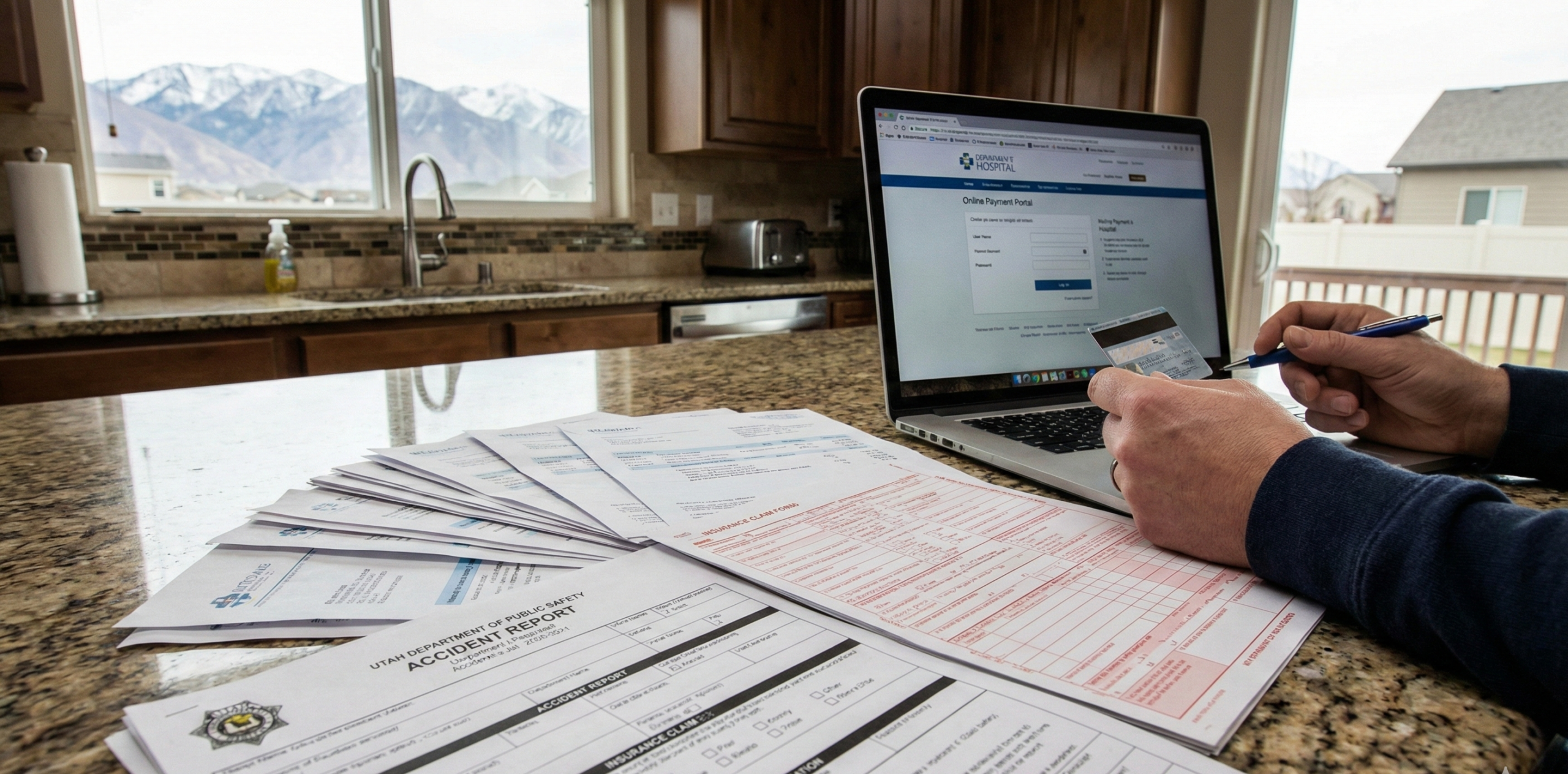
If you are involved in a collision, navigating the claims process often involves dealing with both your own PIP coverage and the at-fault driver’s liability insurance. For a deeper look at how these claims work, see our guide to filing insurance claims after an accident in Utah, and our overview of negotiating settlements with Utah insurers.
The video below features Attorney Giancarlo Cellini explaining the fundamentals of what drivers must legally carry in Utah.
Watch: Minimum Car Insurance Requirements Explained
Key Definitions and Coverage Types
Insurance policies use specific terms that define what gets paid. In Utah, your policy is generally made up of three main parts: Liability, Personal Injury Protection (PIP), and optional coverages like Uninsured Motorist (UM).
Liability Coverage: Pays for injuries and property damage you cause to other people. This does not pay for your own car or injuries.
Personal Injury Protection (PIP): Mandatory in Utah. Pays for your own medical bills, lost wages, and household services up to the policy limit (minimum $3,000), regardless of who was at fault.
Property Damage Liability: A specific part of your liability coverage that pays to repair or replace another person’s vehicle or property (like a fence or guardrail) if you hit it.
Uninsured/Underinsured Motorist (UM/UIM): Optional but highly recommended. This covers you if you are hit by a driver who has no insurance or not enough insurance to pay your bills.
As discussed in the video below, state minimum requirements are subject to change by the legislature. It is important to stay updated, as recent adjustments aim to reflect the rising costs of medical care and vehicle repairs.
Watch: Changes to State Minimum Requirements
The table below outlines the coverage limits. Note that while “25/65/15” has been the standard for years, Utah law has moved toward higher limits (such as 30/65/25) to better protect drivers.
| Coverage Type | Minimum Limit (Standard Reference) | What it Pays For |
|---|---|---|
| Bodily Injury Liability (Per Person) | $25,000 | Medical costs for one person you injure in an accident. |
| Bodily Injury Liability (Per Accident) | $65,000 | Total medical costs for all people you injure in a single accident. |
| Property Damage Liability | $15,000 | Repairs to the other driver’s car or property. |
| Personal Injury Protection (PIP) | $3,000 | Your own immediate medical bills (No-Fault benefit). |
Maintaining Valid Coverage in Utah
Driving without insurance is a Class B misdemeanor in Utah. The state maintains a database called Insure-Rite that compares vehicle registrations against insurance records. If you drop coverage, the state knows almost immediately.
Step 1: Purchase a Policy
You must buy a policy from a provider licensed in Utah. Out-of-state policies must meet Utah’s minimum liability and PIP requirements.
Step 2: Carry Proof of Insurance
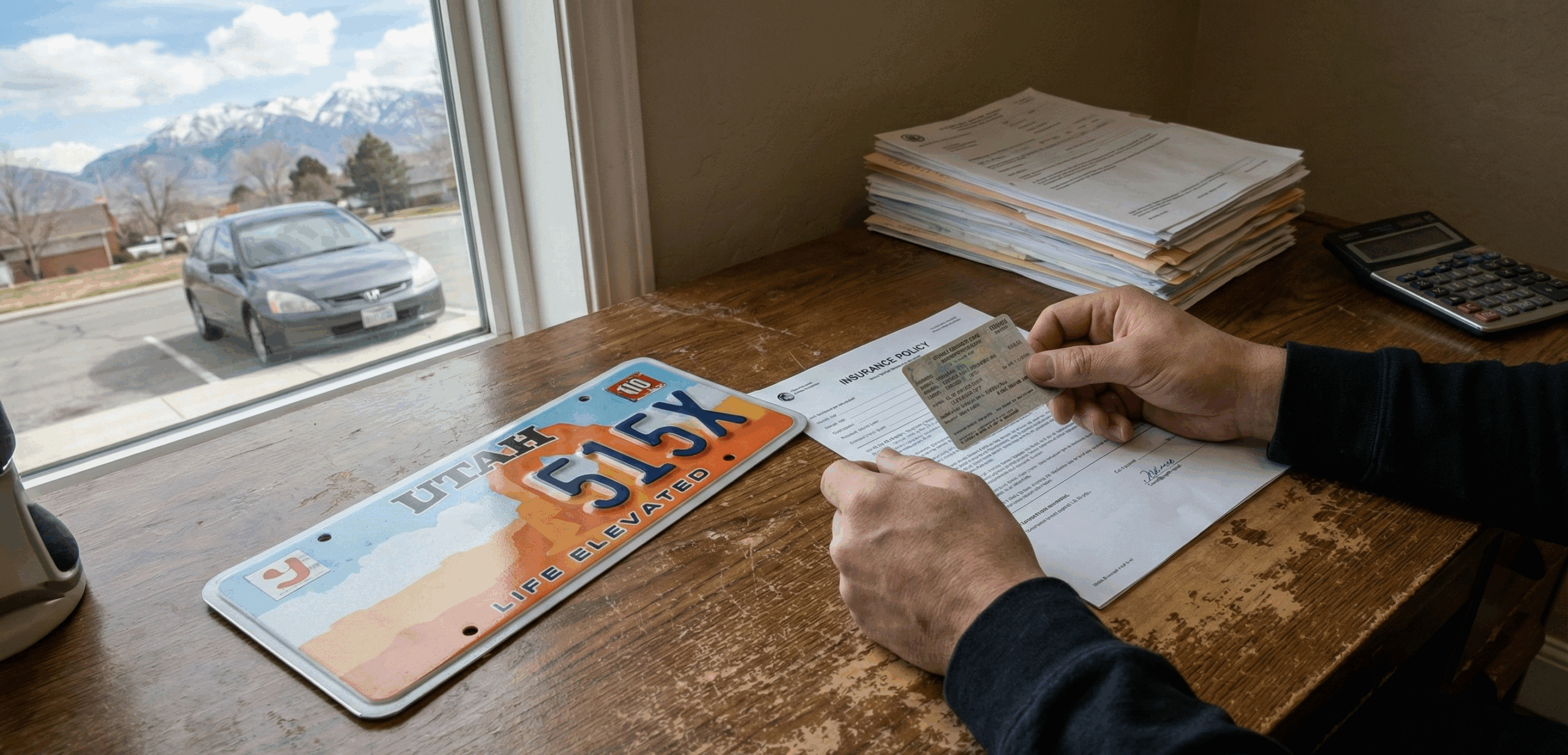
You must carry proof in your vehicle at all times. This can be a physical card or a digital version on your smartphone.
Step 3: Keep Records Current
If you move or change vehicles, notify your insurer immediately. A lapse in coverage can lead to registration revocation and fines.
Step 4: Review Limits Annually
Medical costs rise every year. Reviewing your policy ensures you aren’t carrying outdated limits that leave you personally liable.
The following Instagram post highlights the legal necessity of insurance coverage to drive on Utah roads.
Required Forms and Documentation
When dealing with Utah car insurance requirements and minimum coverage, you will encounter specific documents. Recognizing them helps you verify you are compliant.
Declarations Page (“Dec Page”): The front page of your policy summarizing your coverages, limits, deductibles, and the time period the policy is active.
SR-22 Certificate: A form required for high-risk drivers (often after a DUI or driving without insurance) proving to the state that you have coverage.
Utah ID Cards: The standard proof of insurance card issued by your carrier, listing the insured vehicle and policy number.
Local law enforcement emphasizes that ignorance of the law is not a defense. The clip below from St. George Police reinforces the penalties for driving without proper insurance.
Common Mistakes Regarding Minimum Coverage
Meeting the state minimum is the legal requirement, but it is not always the best financial strategy. A serious accident can easily exceed the $25,000 or $65,000 liability limits, putting your personal assets (home, savings, wages) at risk.
Watch: Quick Breakdown of Liability Limits
Waiving UM/UIM Coverage: You can waive Uninsured Motorist coverage in writing, but this is risky. If an uninsured driver hits you, you may have no way to pay your medical bills.
Assuming PIP covers everything: The $3,000 PIP minimum is very low for modern emergency room visits. Many drivers opt for higher PIP limits.
Lapsing on payments: Missing a payment by even a few days can trigger a cancellation notice to the state, leading to potential impoundment if you are pulled over.
Forgetting to list all drivers: If a household member regularly drives your car but isn’t listed on the policy, the insurer may deny a claim if they crash.
What to Do After an Accident
If a crash occurs, your insurance coverage shifts from a document in your glovebox to a critical financial safety net. Following the right steps ensures your coverage is triggered correctly.
Exchange Information
Get the other driver’s name, insurance carrier, and policy number. Take photos of their insurance card.
Report to Your Insurer
Notify your agent to open a claim. This triggers your PIP benefits for immediate medical needs.
Seek Medical Care
Use your PIP claim number at the doctor or hospital. Utah law generally requires you to use PIP before your health insurance kicks in for auto accidents.
Consult a Professional
If injuries are significant, the minimum policy limits may not be enough. A legal professional can help identify all available coverage.
Navigating these options can be confusing. The Instagram reel below offers additional perspective on handling insurance choices in Utah.
Contact Gibb Law Firm for Insurance Questions
Gibb Law Firm is dedicated to helping Utah families navigate the complexities of insurance law and personal injury claims. We provide clear, plain-English advice to help you make informed decisions.
Schedule a Consultation