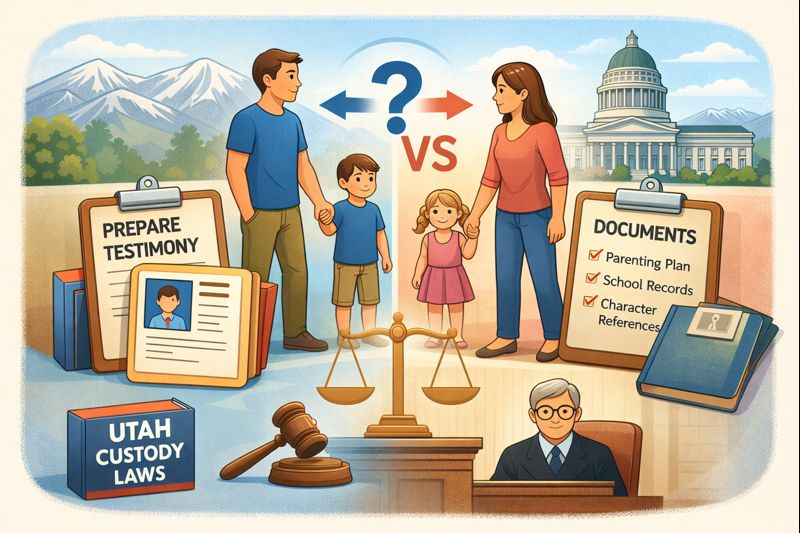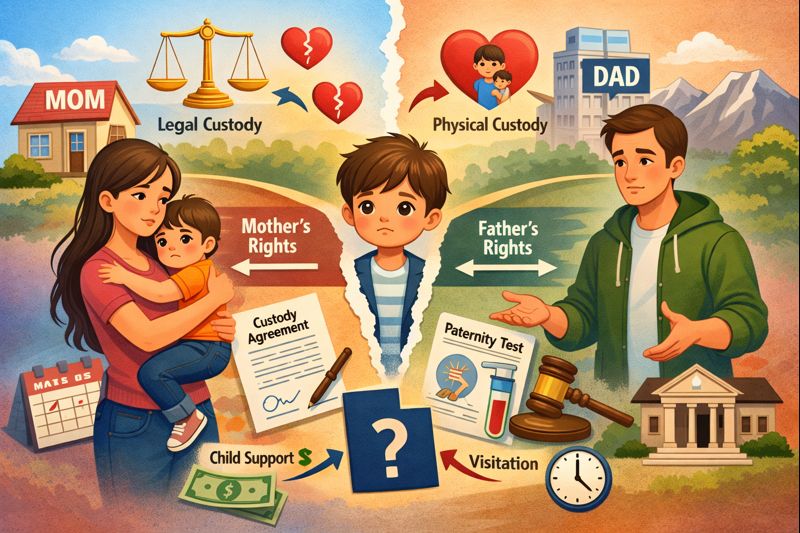
Joint legal custody is one of the most common arrangements in Utah custody cases. It reflects Utah’s policy that, whenever it is safe and appropriate, children should benefit from both parents sharing in the major decisions about their upbringing.
Gibb Law Firm helps Utah parents understand what joint legal custody really means day to day, how it is decided under Utah law, and what to expect when working through a custody case or modification. This overview explains the basics of joint legal custody, typical court procedures, key Utah statutes, and practical next steps if you are considering or currently sharing joint legal custody.
Why Joint Legal Custody Matters in Utah
Joint legal custody focuses on who makes major decisions for a child, not where the child sleeps on a given night. When both parents share legal custody, they are expected to work together on big-picture issues that shape the child’s future.
Joint legal custody allows both parents to have a voice in major choices about education, health care, religion, and important activities.
It reflects Utah’s starting point that, in most cases, children benefit from the involvement of both parents in key decisions, even if one parent has more physical time.
A clear joint legal custody order reduces conflict by outlining how decisions should be made and what happens when parents disagree.
Joint legal custody can give both parents a greater sense of security and responsibility, which often leads to more stable routines for the child.
The following video offers a plain-English explanation of how Utah courts think about custody overall, including the difference between physical and legal custody.
Watch: How Is Child Custody Determined in Utah?
This post highlights a common fear (“my spouse is taking the kids”) and explains that Utah law often starts from the idea that both parents share custody, which includes shared legal decision-making.
How Utah Courts Approach Joint Legal Custody
Utah courts start from a presumption that joint legal custody is in a child’s best interest, unless there is evidence showing that shared decision-making would be harmful or unworkable. Judges look at how well the parents communicate, their history of involvement, and whether joint decision-making will support or disrupt the child’s stability.
When Joint Legal Custody Is Preferred
Courts often favor joint legal custody when both parents have been involved in the child’s life, can communicate at least minimally, and are willing to put the child’s needs ahead of ongoing conflict.
When Sole Legal Custody May Be Ordered
Sole legal custody may be ordered where there is severe conflict, domestic violence, substance abuse, or a pattern of one parent refusing to communicate or act in the child’s best interests.
Joint Legal Custody with One Parent Having Final Say
In some cases, parents share joint legal custody but the court gives one parent final say in specific areas (such as medical or education) if they cannot agree, to prevent ongoing stalemates.
For a broader look at how Utah defines and separates custody types, see our guide on understanding child custody in Utah. You can also review the main Utah Child Custody & Parenting Time Guide for additional context on how custody, parent-time, and decision-making fit together.
Watch: Utah Parenting Plans and What to Include
This reel explains how Utah courts work toward fair custody and parent-time allocations, which frequently include joint legal custody even when physical custody is not 50/50.
Key Definitions and Utah Statutes
Understanding how Utah defines different types of custody helps you read court documents and talk with your attorney more confidently.
Legal custody: The right and responsibility to make major decisions about the child’s life, such as education, health care, religious upbringing, and significant activities.
Joint legal custody: Both parents share decision-making authority. They must consult one another and try to reach agreement before making major decisions that affect the child.
Sole legal custody: One parent has the final decision-making authority for major issues. The other parent may still be informed or consulted but does not have equal decision power.
Physical custody: Where the child primarily lives and which parent handles day-to-day care most of the time. Legal and physical custody can be structured differently in the same case.
Best-interest factors: A list of considerations in Utah law (including Utah Code § 30-3-10 and related sections) that judges use to decide what custody arrangement best serves the child’s needs and safety.
This short explainer breaks down the two main types of custody in Utah, legal and physical, and reinforces why joint legal custody is about decision-making, not necessarily equal overnights.
Typical Court Procedures for Joint Legal Custody in Utah
Joint legal custody is usually addressed as part of a larger divorce, paternity, or custody case. If parents already have orders in place, it can also come up when one parent asks the court to modify custody.
Filing a Case or Request
Legal custody is first decided in a divorce, paternity, or custody petition. If orders already exist, a parent must file a petition or motion asking the court to modify legal custody and explain what has materially changed.
Mediation and Negotiation
Utah courts often require mediation before a full hearing. Many parents reach agreements on joint legal custody, including how they will communicate and what happens if they cannot agree on a decision.
Temporary Orders
In active cases, judges may enter temporary custody orders so the child has some structure while the case is pending. Temporary orders can specify who makes decisions in the short term while the court gathers more information.
Final Custody and Decision-Making Orders
After hearings or a settlement, the court enters final orders that define legal custody, physical custody, and any tie-breaking rules for major decisions. These orders control until they are modified by the court.
Your parenting plan plays a big role in how joint legal custody functions in real life. For more detail on building that plan, see our article on parenting plans in Utah, which explains how to translate legal custody into day-to-day routines and communication rules.
Watch: What to Include in a Utah Child Parenting Plan
Required Forms and Filings
The specific forms you need depend on whether you are establishing custody for the first time or asking to change existing orders. Common Utah filings related to joint legal custody include:
Petition for divorce, custody, or paternity asking the court to establish legal and physical custody, parent-time, and support for the first time.
Parenting plan when joint legal or joint physical custody is requested, explaining how major decisions will be made and what happens when parents disagree.
Motion or petition to modify if a parent is asking the court to change legal custody due to a substantial and material change in circumstances.
Stipulations and proposed orders if parents reach an agreement on joint legal custody and want the judge to sign off and make it enforceable.
Supporting documents (such as school records, counseling reports, or evidence of communication patterns) that show how the proposed custody structure serves the child’s best interests.
Because these forms become part of a binding court order, it is important that they clearly reflect how joint legal custody is supposed to work, rather than relying on informal side agreements.
Common Mistakes to Avoid with Joint Legal Custody in Utah
Joint legal custody can work very well when parents understand their roles and expectations. Many conflicts arise from avoidable misunderstandings.
Assuming joint legal custody means equal time: Legal custody is about decision-making, not the exact number of overnights. Physical custody and parent-time schedules are separate issues.
Failing to communicate in writing: Courts prefer clear, respectful communication. Using email or text to document important decisions can prevent confusion and create a helpful record if disputes arise.
Making major decisions alone: Unilateral decisions on schools, doctors, or major activities can violate a joint legal custody order. Parents are expected to consult each other except in emergencies.
Not sharing key information: Withholding report cards, medical updates, or schedules undermines joint legal custody and can harm a parent’s credibility if the case returns to court.
Confusing disagreement with “non-cooperation”: Courts understand that parents will not always agree. What matters is whether each parent makes a good-faith effort to listen, problem-solve, and follow the court’s process when there is a stalemate.
If one parent repeatedly ignores joint legal custody or blocks reasonable decision-making, enforcement tools may be needed. Our article on enforcing custody and visitation orders in Utah explains options like mediation, make-up time, and contempt proceedings.
Next Steps for Utah Parents Considering Joint Legal Custody
If you are weighing whether joint legal custody is right for your family or trying to make an existing order work better, there are several practical steps you can take now.
Review your current or proposed orders so you understand exactly how legal and physical custody are defined and how decisions are supposed to be made.
Start tracking important communication about school, health, and activities so you can show the court or mediator how you participate in joint decision-making.
Consider whether adjustments are needed to your parenting plan to clarify communication methods, timelines for responses, and what to do when you cannot agree.
If your current orders are outdated or unworkable, learn more about the process for updating them by reviewing our resource on Utah child custody modifications.
When you are ready to look at the big picture of custody and parent-time options, the main Utah Child Custody & Parenting Time Guide provides a helpful overview of how legal custody fits together with schedules, holidays, and financial responsibilities.
Joint Legal Custody and Your Rights in Utah
Joint legal custody is more than a box checked on a court form. It shapes how you and your co-parent make decisions that will affect your child for years to come. When it is structured carefully and supported by a realistic parenting plan, joint legal custody can give your child the benefit of both parents’ involvement while reducing day-to-day conflict.
Whether you are seeking joint legal custody, responding to a request to change it, or trying to enforce an existing order, it helps to have clear advice from someone familiar with Utah courts and local practices.
Gibb Law Firm provides practical, Utah-focused guidance for parents navigating custody disputes and modifications. Our goal is to help you understand your options, protect your relationship with your child, and build a long-term plan that serves your child’s best interests.
To talk through your situation with an experienced Utah family law attorney, visit our contact page to schedule a consultation.
Talk to Gibb Law Firm About Joint Legal Custody in Utah
If you have questions about joint legal custody, decision-making authority, or updating an existing custody order, our team can help you understand the law, review your options, and build a strategy that prioritizes your child’s needs while protecting your rights as a parent.
Schedule a Consultation