Understanding Child Custody in Utah: Legal vs. Physical Custody
When Utah parents separate or divorce, one of the most important and emotional questions they face is how custody will be shared or divided. Utah’s child custody laws are designed to protect the best interests of the child above all else. However, understanding the difference between legal custody and physical custody—and how courts make those determinations—can help parents prepare and make informed decisions.
At Gibb Law, we help parents across Northern Utah navigate these issues with clarity and compassion. This guide explains how Utah defines and applies custody law, what factors courts consider, and how parents can approach this process constructively.
Key Definitions and Utah Statutes
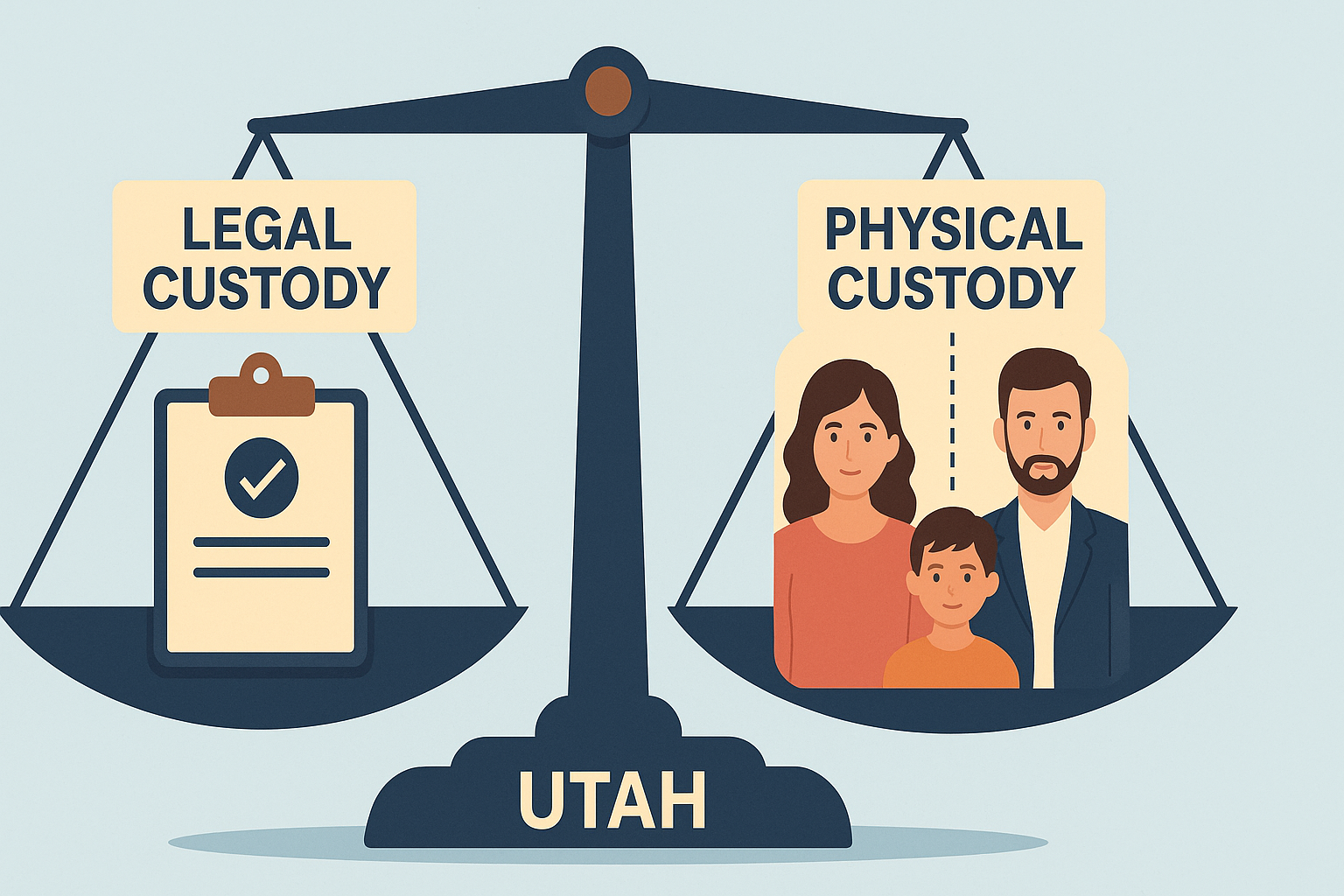
Utah recognizes two main types of custody: legal custody and physical custody. Both can be either joint (shared between parents) or sole (held by one parent).
Legal Custody refers to the right to make major decisions for a child, including education, health care, religion, and general welfare.
Physical Custody refers to where the child primarily lives and how much time each parent spends with the child.
These concepts are governed by Utah Code § 30-3-10 and related statutes, which outline how custody arrangements are structured in the child’s best interests.
Custody isn’t all-or-nothing: Utah law allows combinations (e.g., joint legal custody with one parent having primary physical custody).
Watch: What Is the Difference Between Legal and Physical Custody?
How Utah Courts Determine Custody
Utah courts evaluate custody based on what serves the best interests of the child. Judges weigh multiple factors, including:
The child’s emotional bond with each parent.
Each parent’s ability to meet the child’s physical and emotional needs.
The willingness of both parents to encourage a healthy relationship with the other parent.
Stability of the home environment.
Any history of domestic violence, neglect, or substance abuse.
Utah law favors arrangements that allow meaningful involvement from both parents whenever possible. However, if shared custody would be detrimental—such as in cases of abuse or instability—the court may award sole custody.
Watch: How is Child Custody Determined in Utah
Physical Custody and Parenting Time
In Utah, physical custody determines where a child primarily lives and how parenting time (visitation) is scheduled. Courts may grant:
Sole physical custody, where the child lives primarily with one parent.
Joint physical custody, where both parents share significant overnight time.
Schedules vary by distance, school needs, and each parent’s ability to provide care. Even with joint physical custody, one parent often has more overnights, which can affect child support.
Watch: Understanding Physical Custody in Utah
Required Forms and Filings
Start the Case
File a Petition for Custody (if unmarried) or include custody terms within a Petition for Divorce (if married).
Parenting Plan
Outline schedules, decision-making authority, communication, and dispute-resolution methods.
Child Support Worksheet
Complete the worksheet based on income and overnights (even if custody is the primary issue).
Mediation & Stipulations
If parents agree, submit a stipulated agreement for court approval. Otherwise, proceed to mediation or trial.
Common Mistakes to Avoid
Not documenting involvement: Keep records of communication, caregiving, and schedules.
Speaking negatively about the other parent: Especially in front of the child.
Violating temporary orders: Follow all temporary custody/visitation orders strictly.
Refusing to cooperate in mediation: Courts value co-parenting and flexibility.
Assuming it can’t be modified: Custody can change if circumstances shift significantly.
Next Steps
Custody orders can evolve over time. As children grow, move, or start new schools, parents may request modifications under Utah Code § 30-3-10.4. Courts only approve changes if they serve the child’s best interests and reflect a significant change in circumstances.
Before pursuing changes, consult an attorney familiar with Utah family law to assess whether your case meets modification standards and to guide you through the process efficiently.
Key Utah Custody Statutes
Custody determinations and modifications are primarily governed by Utah Code § 30-3-10 (custody in the child’s best interest) and Utah Code § 30-3-10.4 (modifications). These statutes guide how courts evaluate legal vs. physical custody, joint vs. sole arrangements, and changes over time.
Talk to Gibb Law About Utah Child Custody
Have questions about legal vs. physical custody, parenting plans, or modifications? Our family law team can help you protect your child’s best interests and move forward with clarity.
Schedule a Consultation