A slip and fall can feel minor at first, but the steps you take in the first hours and days can matter a lot later. Medical records, incident reports, and simple photos often become the evidence that supports (or weakens) an insurance claim.
In Utah, most slip and fall cases fall under premises liability. That usually means the question becomes whether a property owner or manager failed to use reasonable care to keep the area safe or warn people about hazards.
If you want broader guidance from the firm, start with Gibb Law’s slip and fall page and Gibb Law’s personal injury practice page.
Note: This article is educational information, not legal advice. Deadlines and notice requirements can apply, and the right approach depends on the facts of the fall and the available evidence.
Steps to Take After a Slip and Fall in Utah
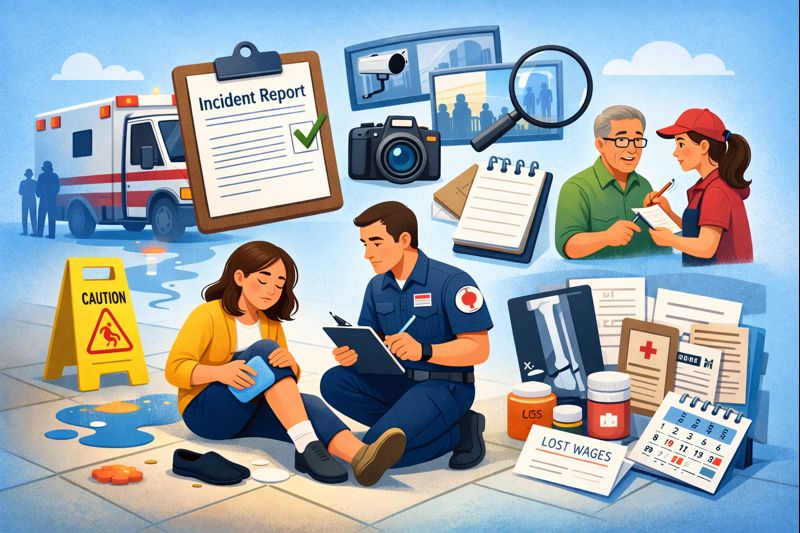
People often ask what they should do immediately after a fall. The goal is simple: protect your health first, then preserve reliable proof of what happened. Many slip and fall claims are denied because the documentation is thin, the hazard is not clearly identified, or there is no way to show how long the dangerous condition existed.
Health comes first: Get checked out, even if you think you are fine. Some injuries show up later.
Document early: Photos and video taken the same day can be more persuasive than memories weeks later.
Report the incident: A written incident report creates a timeline and helps confirm where and when the fall occurred.
Preserve the “why”: The hazard matters. It could be ice, liquid, uneven flooring, poor lighting, missing handrails, or a broken step.
The video below walks through common practical steps after a slip and fall, including documenting the scene and protecting your legal rights.
Watch: What to Do After a Slip and Fall Accident
Key Definitions and Utah Laws That Often Matter
Most slip and fall claims come down to negligence. In plain terms, negligence is failing to use reasonable care and causing harm. In a premises case, the focus is often whether the property owner knew (or should have known) about a dangerous condition and failed to fix it or warn people in time.
Premises liability: The area of law that covers injuries caused by unsafe property conditions.
Duty of care: The responsibility to act reasonably to keep property safe for others.
Notice: Many cases turn on whether the hazard existed long enough that the owner or staff should have discovered and addressed it.
Comparative fault: Utah generally reduces compensation if a person is partly responsible for their own injury. This is commonly discussed under Utah Code Section 78B-5-818.
The reel below reinforces a common point in premises cases: reporting and documenting early can protect your claim later.
Typical Claim Steps After a Utah Slip and Fall
Most cases start as an insurance claim. The property owner or business may have liability insurance, and an adjuster will usually request details, records, and sometimes a statement. If the claim cannot be resolved, the dispute may move into a lawsuit. Either way, the quality of the early evidence often shapes the outcome.
Step 1: Get medical care and follow up
Prompt care helps your health and creates records that connect the injury to the fall.
Step 2: Report the fall to the right person
Ask for an incident report or written confirmation of the date, time, and location.
Step 3: Photograph the hazard and the scene
Capture wide shots and close ups. Include lighting, warning signs, floor texture, and surrounding context.
Step 4: Gather witness names and contact info
Neutral witnesses can help if the property owner disputes what happened.
Step 5: Preserve evidence and keep a simple timeline
Save shoes and clothing, track symptoms, keep receipts, and store texts or emails connected to the incident.
| Evidence to collect | Why it helps in a slip and fall claim |
|---|---|
| Photos and video of the hazard | Shows what caused the fall and whether any warning signs or barriers were present. |
| Incident report or written notice | Creates a timeline and helps confirm the location and conditions reported at the time. |
| Witness contact information | Supports your version of events if the property owner disputes the hazard or the fall. |
| Medical records and follow up notes | Connects injuries to the incident and documents the severity and treatment plan. |
| Receipts and wage records | Helps document financial impact such as out of pocket costs and missed work. |
The video below gives additional guidance on early investigation steps and why talking to counsel early can help preserve evidence.
Watch: Steps After a Slip and Fall or Trip and Fall
The reel below highlights why documentation matters. In many cases, the outcome depends on whether you can show the hazard clearly and connect it to your injury.
Records and Paperwork That Often Matter
There is no single universal form for every slip and fall claim. The paperwork usually depends on where the fall happened and who carries insurance. What matters is keeping records organized and consistent so your claim has a clear storyline supported by documents.
Incident report confirmation: Ask for a copy if available, or at least a written acknowledgment that the report was made.
Medical records and itemized bills: Keep treatment notes, imaging results, referrals, and billing summaries.
Claim communications: Save claim numbers, adjuster names, emails, and letters so you can track what was requested and when.
Loss documentation: Receipts, mileage, pharmacy costs, and wage verification can help document financial impact.
For a broader overview of how claims are usually evaluated, see understanding personal injury claims in Utah and what factors determine the value of a personal injury claim.
Common Mistakes to Avoid After a Slip and Fall
Most problems are avoidable. People either fail to document the hazard, delay medical care, or provide inconsistent details that allow the insurance company to argue the fall was unrelated to the injuries.
Not documenting the hazard right away: Hazards can be cleaned up or repaired quickly. If you do not capture it, you may not be able to prove it later.
Skipping an incident report: Without a report, the property owner may dispute when or where the fall happened.
Waiting too long for medical care: Delays can make it easier to argue the injury came from something else.
Throwing away shoes or clothing: Items you wore can become evidence if the surface, traction, or contamination is disputed.
Giving inconsistent details: Small changes in the story can hurt credibility, especially if a claim becomes contested.
This video focuses on practical medical and documentation steps, including why early care and clear notes matter after a fall.
Watch: Practical Advice After You Slip and Fall
Next Steps if You Think the Property Owner Was Responsible
If the fall caused more than a short lived bruise, it is usually worth taking a structured approach. The goal is to preserve evidence, keep treatment consistent, and avoid gaps in documentation that insurers often rely on to deny liability.
Keep a simple symptoms log: Track pain levels, limitations, missed work, and follow up appointments.
Ask about video retention: If a business has cameras, footage can be overwritten quickly. Prompt requests can matter.
Stay consistent in reporting: Describe the hazard and injuries the same way in medical visits and any written reports.
Be cautious with recorded statements: If you are unsure what to say, guidance first can help avoid accidental inconsistencies.
Talk to Gibb Law About a Utah Slip and Fall Injury
Gibb Law is a Utah-based firm focused on clear, practical guidance for clients facing real-world legal problems. If you were injured in a slip and fall, we can help you understand what evidence matters, how liability is evaluated, and what next steps may fit your situation.
Schedule a Consultation