Same-Sex Divorce and Custody in Utah
Utah courts handle same-sex divorce and custody under the same family-law framework used for any other divorce. That includes the same filing process, the same focus on a child’s best interests, and the same expectation that parents follow court rules and deadlines.
Where same-sex cases can feel different is not the standard the court applies, but the details that may need extra attention. The biggest one is often legal parentage, especially when a child is biologically related to only one spouse, or when a child was born through assisted reproduction, surrogacy, or before the marriage.
If you are looking for foundational background, start with how to file for divorce in Utah step by step and understanding child custody in Utah, including legal vs physical custody.
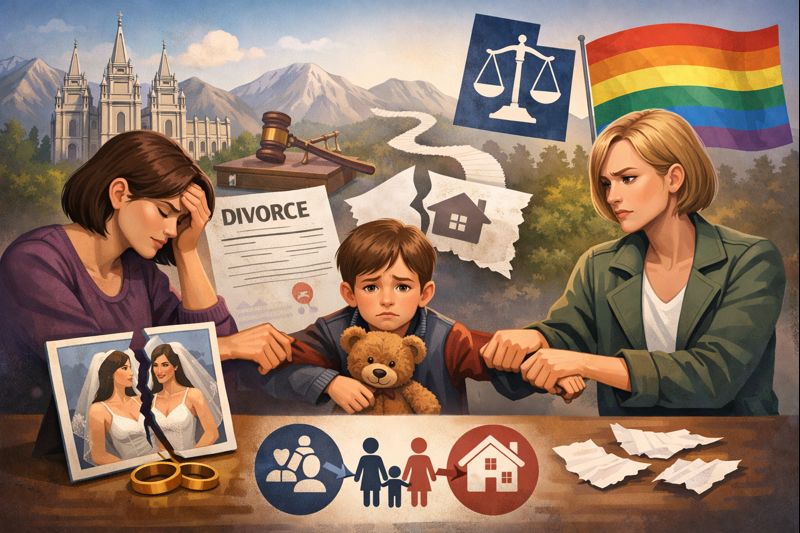
If you want a visual reference image to place near the top of this article, you can use: Same-sex divorce and custody image reference.
Overview of How Utah Handles Same-Sex Divorce and Custody
Most divorce cases follow a similar path: filing, the required waiting period, disclosures, temporary issues (if needed), negotiation or mediation, and then final orders. Custody and parent-time decisions are made using Utah’s best-interest standard, not assumptions about gender roles.
The custody standard is the same: The court’s job is to enter custody and parent-time orders that serve the child’s best interests.
Parentage can be the key issue: If one spouse is not a legal parent, the case can shift from “custody between two parents” to “how parentage is established or confirmed.”
Good paperwork matters: Birth certificates, adoption orders, court decrees, and parentage documents often carry more weight than informal understandings between adults.
Temporary stability matters: In a stressful transition, courts generally want parenting proposals that protect routine, school consistency, and a child’s emotional safety.
The video below covers big-picture custody considerations that often come up for same-sex couples, including legal rights and the best-interests lens the court applies.
Watch: Key Custody Considerations for Same-Sex Couples
Key Definitions and Utah Statutes
In a custody case, people often use everyday terms like “custody,” “visitation,” or “parent rights.” Utah law uses more specific language. Knowing the basics makes it easier to communicate clearly with the other parent, the court, and your attorney.
Legal custody: Decision-making authority for major issues like education, medical care, and religious upbringing. Legal custody can be joint or sole.
Physical custody and parent-time: Where the child lives and the schedule for time with each parent. Utah often uses “parent-time” instead of “visitation.”
Best interests of the child: Utah courts must consider the child’s best interests when deciding custody and parent-time. Utah’s custody factors are addressed in Utah Code Section 30-3-10: Utah Legislature custody factors link.
Legal parentage: A child can have a biological parent and a legal parent, but those are not always the same. Utah’s parentage framework is addressed in the Utah Uniform Parentage Act (Title 78B, Chapter 15): Utah Uniform Parentage Act overview.
The Instagram reel below connects directly to the practical question many families face in these cases: how Utah handles parental rights and what it can mean if a parent is trying to step away from those responsibilities.
Typical Court Procedures in Same-Sex Divorce and Custody Cases
Every case has its own facts, but most Utah divorce cases move through a similar structure. If custody is contested, the court may set deadlines for disclosures, require parenting plans, and schedule hearings to address temporary or final issues.
Step 1: File and confirm basic eligibility
Utah has residency rules for divorce filing, and the court will also need proper service and initial paperwork before the case can move forward.
Step 2: Address urgent custody and stability issues
If there is conflict about school, exchanges, travel, or the day-to-day schedule, temporary orders may be needed while the case is pending.
Step 3: Gather evidence and disclosures
In custody disputes, the strongest cases are usually the ones built on consistent documentation and credible, child-focused proposals.
Step 4: Negotiate a parenting plan or litigate custody
Many parents resolve custody through negotiated parenting plans. If agreement is not possible, the court decides custody and parent-time under Utah’s best-interest standard.
The video below explains how custody issues are commonly resolved in same-sex divorce and separation cases, including how courts stay focused on a child’s welfare rather than a parent’s gender.
Watch: How Custody Issues Are Resolved in Same-Sex Relationships
Common Forms and Filings That May Come Up
The exact forms depend on your facts, your county, and whether parentage is disputed. Many people start with Utah Courts self-help resources to understand the overall process and generate the correct paperwork.
Divorce case filings: The petition, required supporting documents, and service paperwork that officially opens the case.
Parenting plan documents: In contested cases, the court often expects a clear proposal that covers decision-making, schedules, holidays, transportation, and communication.
Parentage-related filings when needed: In some same-sex cases, a spouse may need to confirm or establish legal parentage through appropriate legal steps before custody can be addressed as a two-parent dispute.
Guided forms and help tools: Utah Courts provide an Online Court Assistance Program (OCAP) experience through MyPaperwork for certain family cases. Learn more here: Online Court Assistance Program information.
If parentage questions are central to your case, you may also find it helpful to read paternity in Utah and how legal fatherhood is established. Even in same-sex cases, the core idea is the same: custody orders are built on legal parent status, not just biology or intent.
The Instagram reel below speaks to the moment many people enter this process: leaving a relationship and realizing legal steps may be needed to protect stability, clarify rights, and reduce long-term conflict.
Common Mistakes to Avoid
Same-sex divorce and custody cases can move fast emotionally. These are mistakes that can create long-term problems, even when someone feels certain the court will “see what is fair.”
Assuming the non-biological parent automatically has custody rights: In many cases the deciding issue is whether that parent is a legal parent under Utah law.
Relying on informal agreements: Verbal understandings about schedules, decision-making, or travel are hard to enforce if conflict increases.
Turning the case into an adult fairness argument: Utah courts are focused on the child’s best interests, not “who deserves to win.” Child-centered proposals usually land better.
Ignoring proof and timelines: Waiting periods, service rules, disclosures, and documentation can affect what the court can do and when.
The video below highlights a hard truth that comes up in some same-sex cases: when legal parentage is unclear or not formally established, a parent can face serious risk of losing rights they assumed were secure.
Watch: How Legal Parent Status Can Affect Custody Rights
Next Steps
If you are facing a same-sex divorce involving children, the best next move is usually to slow the chaos down and get organized around the facts that matter: legal parentage, a realistic schedule, and a child-focused plan.
Collect documents that show legal and caregiving history, such as birth certificates, adoption orders, parentage rulings, school records, medical information, and shared parenting communications.
Write down a stable proposed schedule that fits school and work realities. The best proposals usually protect consistency and reduce unnecessary exchanges.
Consider how decisions will be made going forward, including medical care, education, travel, and communication between parents.
If parentage is not clear, address it early. Waiting can make negotiations harder and can increase risk if the other party disputes legal parent status.
This Instagram reel focuses specifically on same-sex divorce and parental rights and is a helpful reminder that parentage and custody are legal issues with real consequences, not just relationship issues.
Talk to Gibb Law About Same-Sex Divorce and Custody in Utah
Gibb Law is a Utah-based firm focused on clear, practical guidance in high-stakes family matters. If you are navigating a same-sex divorce involving children, we can help you understand the legal landscape, identify the issues that matter most, and pursue a plan that supports your child’s best interests.
Schedule a Consultation