Prenuptial and postnuptial agreements allow Utah couples to clearly define how property, debt, and financial responsibilities will be handled if the marriage ends in divorce or death. When drafted correctly, these contracts are enforceable under Utah law and can reduce conflict, protect separate property, and provide predictability during emotionally difficult times.
Gibb Law Firm helps Utah clients understand, negotiate, and formalize these agreements in plain English, with a focus on fairness, full disclosure, and long-term stability. The sections below walk through how these agreements work under Utah family law, key requirements, common pitfalls, and what to consider before signing.
How Prenuptial and Postnuptial Agreements Work in Utah
In Utah, prenuptial (premarital) and postnuptial (marital) agreements are recognized under the Utah Uniform Premarital and Marital Agreements Act. Courts will generally enforce these contracts if they are entered into voluntarily, with full financial disclosure, and are not unconscionable at the time they were signed or at the time they are enforced.
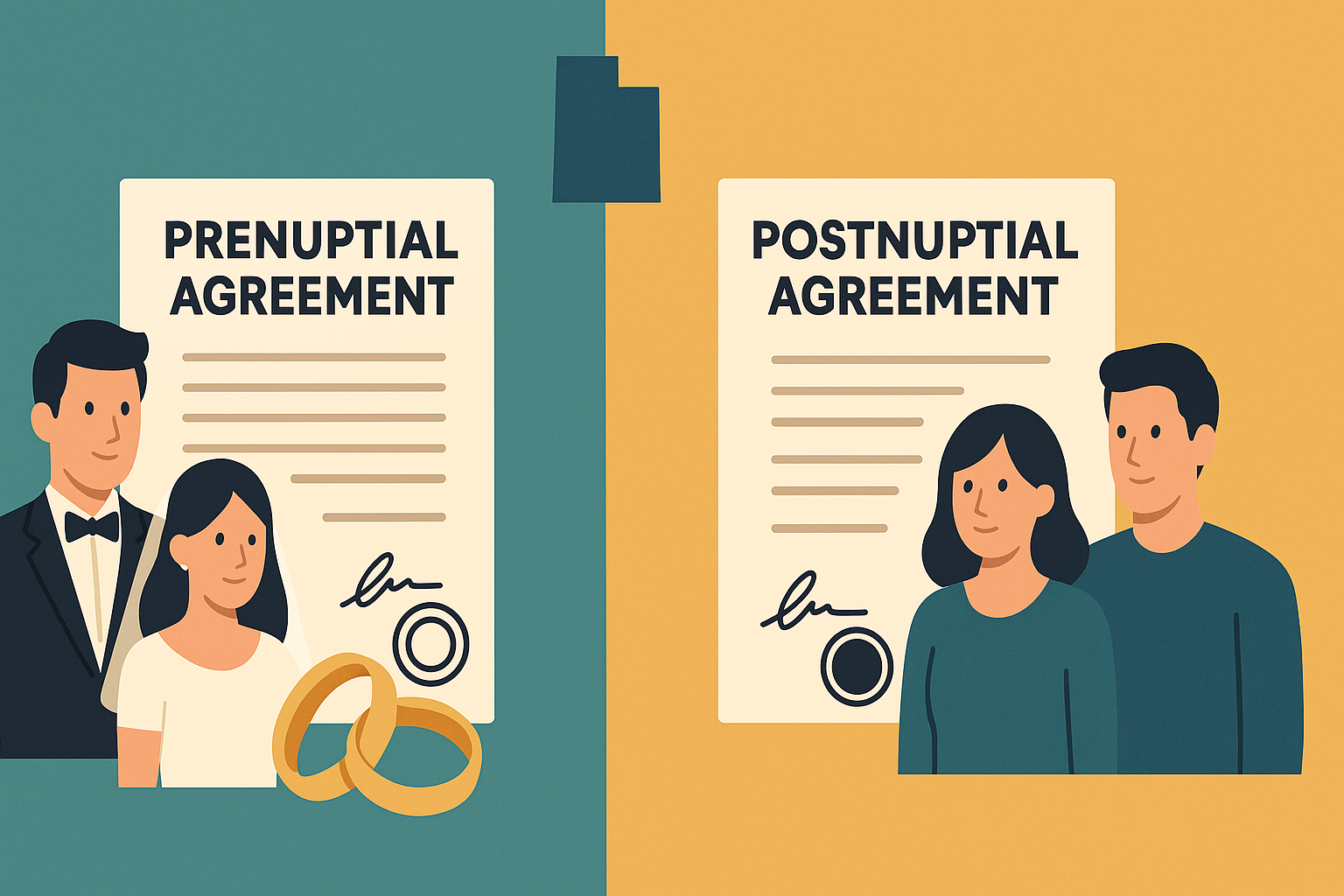
Prenuptial Agreement: A written contract signed before marriage, addressing how assets, debts, and financial issues will be handled during the marriage and upon divorce or death.
Postnuptial Agreement: A similar contract signed after the couple is already married, often used when financial circumstances change or when spouses want added clarity and protection.
Utah’s Approach: Utah courts look closely at whether each spouse had time to review the agreement, access to independent legal advice, and complete information about the other spouse’s finances.
For many couples, these agreements are less about expecting the marriage to fail and more about having an honest, structured conversation about money, property, and expectations before a dispute ever arises.
Watch: Prenuptial Agreements and Asset Protection in Utah
This video gives a practical overview of how prenuptial and postnuptial agreements can be used in Utah to safeguard assets and clarify expectations.
Key Definitions and Utah Statutes
Utah’s rules for marital contracts are grounded in statute. Understanding the terminology used by courts and attorneys makes it easier to evaluate whether an agreement is appropriate for your situation.
Separate Property: Property owned by one spouse before marriage, or received by gift or inheritance. Prenups and postnups often confirm that these assets will remain separate.
Marital Property: Property and income acquired during the marriage that may be subject to equitable division in a Utah divorce, unless a valid agreement states otherwise.
Utah Uniform Premarital and Marital Agreements Act: The statutory framework guiding what prenuptial and postnuptial agreements can cover, and when they are enforceable or subject to challenge.
Unconscionable Agreement: A contract so one-sided or unfair that a Utah court may refuse to enforce it, especially if one spouse lacked meaningful choice or adequate information at the time of signing.
This Instagram reel walks through the basics of prenups, including full disclosure, independent counsel, and informed consent—key elements Utah courts consider when deciding whether to enforce an agreement.
Steps to Create a Valid Prenuptial or Postnuptial Agreement in Utah
While every couple’s situation is unique, effective and enforceable agreements tend to follow a similar process. Rushing or skipping steps increases the risk of later disputes or invalidation.
Exchange Full Financial Disclosure
Each spouse should provide a clear picture of income, assets, debts, and ongoing financial obligations. Hidden accounts or undisclosed liabilities are a common reason courts question fairness later.
Consult Independent Legal Counsel
Although not always required, it is strongly recommended that each spouse have their own Utah family law attorney review the agreement. Independent advice helps ensure both sides understand the terms and potential outcomes.
Draft Clear, Specific Terms
The agreement should clearly state which property is separate, how marital assets and debts will be divided, and whether alimony or spousal support will be modified or waived under certain conditions.
Sign Voluntarily and in Advance
A prenup should be signed well before the wedding, not at the last minute. For postnups, avoid pressure tactics and give each spouse time to review and ask questions before signing.
Watch: How to Make a Utah Prenup
This step-by-step video walks couples through the process of drafting a Utah prenuptial agreement and helps visualize the sequence of disclosure, drafting, and signing.
This reel reinforces the idea that a prenup can protect both spouses and should be seen as a proactive financial planning tool rather than a sign of mistrust.
How Utah Courts Review and Enforce Marital Agreements
Marital agreements usually come under scrutiny during divorce, annulment, or probate proceedings. Utah judges will review the document and surrounding circumstances to decide whether to enforce it as written, enforce part of it, or set it aside.
Voluntariness and Timing
Court review often focuses on whether either spouse was pressured, rushed, or lacked a realistic choice about signing, especially when presented with a prenup immediately before a wedding.
Disclosure and Fairness
Judges look at whether each spouse received sufficient information about the other’s finances and whether the resulting terms are unreasonably one-sided.
Public Policy Limits
Utah courts will not enforce terms that violate public policy, such as attempts to waive child support or restrict a court’s ability to protect a child’s best interests.
Watch: Utah Lawyer Explains Prenup Enforcement
In this video, a Utah divorce attorney walks through how courts analyze prenups and what factors increase the likelihood that your agreement will be respected.
Required Forms, Disclosures, and Filings
Unlike divorce petitions, prenuptial and postnuptial agreements are generally not filed with the court when they are signed. Instead, they are kept by the spouses and their attorneys and are introduced later only if a dispute arises.
Written list of each spouse’s assets, debts, income sources, and ongoing financial obligations at the time of signing.
Drafts of the agreement exchanged between the spouses and their attorneys, reflecting negotiation and revisions where applicable.
Final signed agreement, ideally notarized or witnessed, showing that each party signed voluntarily and with sufficient time to review.
Supporting documents, such as business valuations, retirement account statements, and real estate records, kept with the file for future reference.
This Instagram post highlights how postnuptial agreements can be used by already-married couples to clarify financial expectations and protect each partner’s interests when circumstances change.
Common Mistakes to Avoid
Many disputes over marital agreements could have been avoided with better planning and clearer communication up front. Being aware of common mistakes makes it easier to structure a durable, enforceable agreement.
Waiting until the last minute: Presenting a prenup days or hours before the wedding can invite claims of pressure and may undermine enforceability.
Failing to disclose assets or debts: Leaving out accounts, business interests, or significant liabilities can be grounds for a court to question the agreement later.
Not using independent counsel: Relying on one lawyer to “represent both sides” can create conflicts and weaken the appearance of fairness.
Overreaching on support or property terms: Attempts to completely strip one spouse of reasonable property or support can backfire and provoke closer court scrutiny.
Assuming the agreement covers children’s issues: Utah courts retain the power to decide child custody and support based on a child’s best interests, regardless of what a prenup says.
Next Steps for Utah Couples Considering a Prenup or Postnup
If you are engaged, already married, or entering a second marriage, it may make sense to discuss a marital agreement with a Utah attorney. The right time is usually when you are both calm, able to talk openly about money, and willing to work toward a mutually fair plan.
Clarify your goals: asset protection, debt allocation, business ownership, estate planning, or all of the above.
Gather documentation: account statements, property records, business documents, and any prior divorce decrees or support orders.
Schedule a consultation with a Utah family law attorney who regularly drafts and reviews prenuptial and postnuptial agreements.
Allow enough time for negotiation, revisions, and careful review so neither spouse feels rushed or pressured.
Gibb Law Firm provides detailed, Utah-specific guidance at every step, helping couples create agreements that reflect their real-world needs while complying with Utah law.
Understanding Your Rights Before You Sign
Prenuptial and postnuptial agreements are powerful tools that can shape your financial future. They should never be signed lightly or without understanding the short- and long-term consequences. When done correctly, they can reduce conflict, protect family-owned businesses and inheritances, and give both spouses clear expectations about money and property.
Before signing any agreement that affects your property or support rights, it is wise to talk with a Utah attorney who can explain how the terms would play out in a divorce or estate proceeding.
For personalized advice and help drafting or reviewing an agreement, Gibb Law Firm offers practical, client-centered representation grounded in Utah family law and local court practice.
Talk to Gibb Law Firm About Prenuptial and Postnuptial Agreements
Considering a prenup before marriage or a postnup after your relationship has evolved? Our team can walk you through your options, explain Utah’s requirements, and draft an agreement that reflects both your goals and your legal rights.
Schedule a Consultation