Establishing paternity in Utah is an important legal step for parents who want to clarify rights, secure parent-time, and ensure long-term stability for their children. Whether parents are separated, never married, or facing disputes about legal fatherhood, Utah law provides clear pathways to establish paternity and determine each parent’s rights and responsibilities.
Gibb Law Firm focuses on helping Utah families navigate this process with clarity and practical guidance based on local law and real-world experience. Below is a full overview of how paternity works in Utah, the steps involved, and what parents should understand before beginning the process.
Why Paternity Matters in Utah
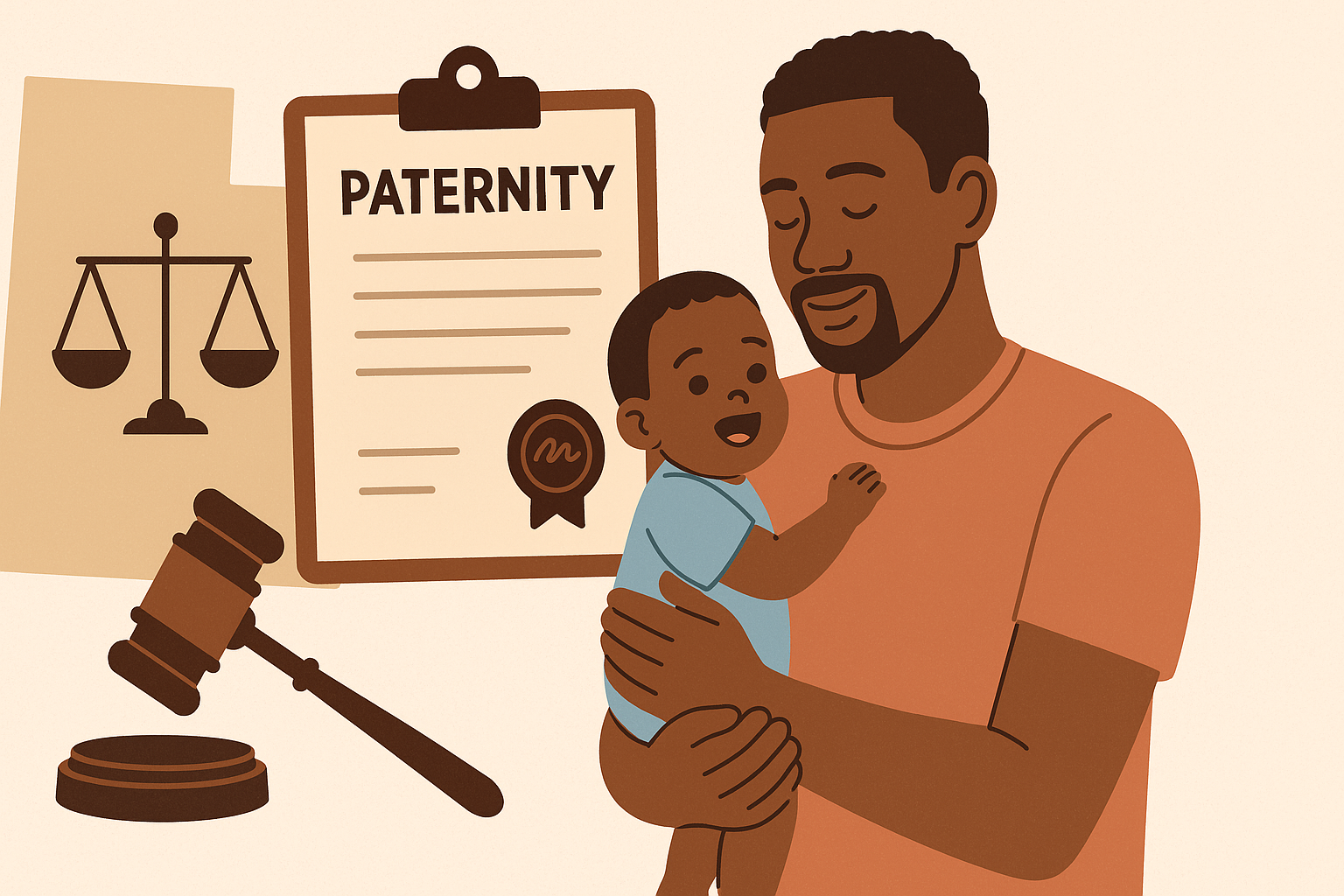
Paternity is the legal recognition of a child’s father. In Utah, establishing paternity gives both parents enforceable rights and duties. Without legal fatherhood, a father does not automatically receive parent-time, joint custody rights, or decision-making authority. Likewise, Utah cannot order child support or enter enforceable parenting plans until paternity is legally established.
Without legal paternity, a father does not automatically receive parent-time or custody rights, even if he is involved in the child’s life.
Once paternity is established, the court can issue enforceable orders on custody, parent-time, and legal decision-making authority.
Child support obligations and rights depend on a legal determination of fatherhood, whether by agreement, administrative order, or court ruling.
Establishing paternity helps secure long-term stability for children, including inheritance rights, access to benefits, and clarity about each parent’s role.
To give context on how Utah paternity actions work, the following video provides a practical overview of fathers’ rights and the steps involved in establishing parentage.
Watch: Utah Paternity and Fathers’ Rights Overview
How Utah Handles Paternity Establishment
Utah family law provides three primary paths to establish legal fatherhood. Each method creates a legally binding determination of fatherhood if completed correctly under Utah’s Uniform Parentage Act.
Voluntary Declaration of Paternity (VDP)
Signed by both parents, usually at the hospital or later through the Utah Office of Vital Records. A properly executed VDP has the same effect as a court order once it becomes final.
Administrative Paternity Order
Issued by the Utah Office of Recovery Services (ORS), often after DNA testing. This route is common when child support is already in question or when the state is involved.
Judicial Paternity Order
A court process where a judge establishes fatherhood, often involving genetic testing, hearings, and temporary orders. Judicial cases can address paternity, custody, parent-time, and child support together.
Each route has its own procedures, timelines, and legal consequences. Parents should understand what they are signing and how it will affect future custody and support decisions.
This short Instagram explainer shares essential tips on establishing paternity in Utah from a father-rights perspective, including what to do before signing any long-term agreement.
Key Definitions and Utah Statutes
Under the Utah Uniform Parentage Act (UUPA), several legal terms play a central role in paternity cases. Understanding these labels helps parents make sense of what the court and agencies are talking about.
Presumed Father: A man married to the mother at the time of birth or conception, or shortly before or after, may be treated as the presumed father under Utah law.
Alleged Father: A man claimed to be the biological father but without legal status. Alleged fathers often participate in genetic testing and formal proceedings.
Acknowledged Father: A man who signs a valid Voluntary Declaration of Paternity that complies with Utah’s statutory requirements.
Adjudicated Father: A man legally determined to be the father by a court order, usually after DNA testing or a formal hearing.
Utah Code Ann. §§ 78B-15: The Utah Uniform Parentage Act, which governs paternity, including rules for genetic testing, voluntary declarations, rescission, and court procedures.
For a broader view of what filling out paternity-related paperwork looks like, the next video uses another state’s forms but illustrates many of the same concepts that apply in Utah.
Watch: Paternity Forms and Paperwork Walk-Through
Typical Court Procedures in Utah Paternity Cases
When paternity is not voluntary or the parents disagree on rights and responsibilities, a judicial paternity action is filed in district court. While every case is different, most Utah paternity disputes follow a predictable pattern.
Filing a Petition
A parent, alleged father, or the state files a petition asking the court to establish paternity. The petition may also request custody, parent-time, and child support orders.
Genetic (DNA) Testing
When paternity is disputed, Utah courts typically order DNA testing through accredited laboratories, with results that usually meet or exceed a 99% accuracy standard.
Temporary Orders
While the case is pending, the court may enter temporary orders for custody, parent-time, and child support so that the child’s needs are met and contact is structured.
Final Orders
After paternity is confirmed, the court issues final orders addressing legal fatherhood, custody, parent-time schedules, child support, and decision-making for the child.
In some situations, parents settle their disputes before trial, and the court approves a stipulated parenting plan and support orders once paternity is legally established.
This reel is a cautionary reminder not to sign paternity acknowledgments or parenting plans without confirming biological fatherhood and understanding the long-term legal impact.
Required Forms and Filings
Depending on the route taken, Utah paternity cases may require several key forms. Each carries legal consequences, so accuracy and completeness are important.
Voluntary Declaration of Paternity (VDP) through the Utah Office of Vital Records.
Office of Recovery Services (ORS) child support and administrative paternity forms when the state is involved.
District Court Petition to Establish Paternity when a judicial case is filed in district court.
Child Support Worksheet and related financial forms so that support can be calculated under Utah guidelines.
Parenting Plan if joint legal or physical custody is requested, including detailed parent-time schedules.
Motion for Temporary Orders when interim custody or support orders are needed while the case is pending.
DNA test compliance forms and related documentation confirming completion of court-ordered genetic testing.
Errors or omissions in paternity filings can delay the case or affect parental rights. Working with experienced counsel helps ensure that the forms are completed correctly and submitted on time.
Common Mistakes to Avoid in Utah Paternity Cases
Many Utah parents unintentionally complicate their cases by acting too quickly or relying on informal arrangements. Avoiding a few common mistakes can save time, money, and stress.
Signing a VDP without genetic testing when paternity is uncertain: Once a Voluntary Declaration becomes final, undoing it can be difficult and time sensitive.
Assuming rights exist automatically: A biological connection alone does not guarantee custody or parent-time. Legal orders are still required to make rights enforceable.
Failing to file a parenting plan: If a parent is asking for joint legal or physical custody, Utah courts typically expect a detailed parenting plan, not just informal promises.
Ignoring ORS notices or deadlines: Missing deadlines in support or paternity proceedings can lead to default orders that are harder to change later.
Believing child support cannot be ordered without custody orders: In practice, Utah can establish child support once paternity is established, even if custody is still being worked out.
Trying to resolve everything informally: Private agreements without legal documentation are hard to enforce and can leave both parents and children unprotected.
To better understand fathers’ rights once paternity is established, the following video offers a practical breakdown of what legal fatherhood means day to day.
Watch: Fathers’ Rights After Paternity Is Established
Next Steps After Paternity Is Established
Once legal fatherhood is confirmed, the focus shifts to building a clear parenting framework and ensuring that the child’s financial needs are met. Utah law allows parents and courts to put several important protections in place.
Creating or modifying a custody and parent-time order that reflects the child’s best interests and each parent’s circumstances.
Establishing child support through ORS or directly through the court, using Utah’s support guidelines and worksheets.
Securing legal decision-making rights so that both parents understand who makes decisions about education, health care, religion, and other major issues.
Updating the birth certificate to reflect the legal father, when required or requested, consistent with Utah Vital Records procedures.
Ensuring ongoing compliance with Utah’s parent-time rules and any specific requirements in the court’s orders.
Seeking modification later if circumstances change significantly, such as a major relocation, change in work schedule, or shift in the child’s needs.
Gibb Law Firm regularly helps Utah parents with these follow-up steps so that paternity orders, parenting plans, and child support obligations all work together smoothly and remain compliant with Utah statutes.
Understanding Paternity and Your Rights in Utah
Establishing paternity in Utah is a meaningful step for children and parents. Whether through voluntary acknowledgment, administrative action, or a court proceeding, the outcome affects custody, support, and a child’s long-term stability.
Understanding the rules, timelines, and legal consequences helps parents make informed decisions and avoid missteps. Utah’s paternity laws are detailed, but with clear guidance, families can move forward with confidence and a concrete plan.
For Utah-specific guidance, tailored strategy, or help filing the correct paperwork, Gibb Law Firm offers straightforward, client-centered support for families navigating paternity and custody matters.
To learn more or discuss your situation with an experienced Utah family law attorney, visit GibbLaw.com/contact to schedule a consultation.
Talk to Gibb Law Firm About Paternity in Utah
Have questions about establishing paternity, protecting your rights, or creating a parenting plan that works for your family? Our family law team can explain your options, prepare the right filings, and guide you through the process so you know exactly where you stand.
Schedule a Consultation