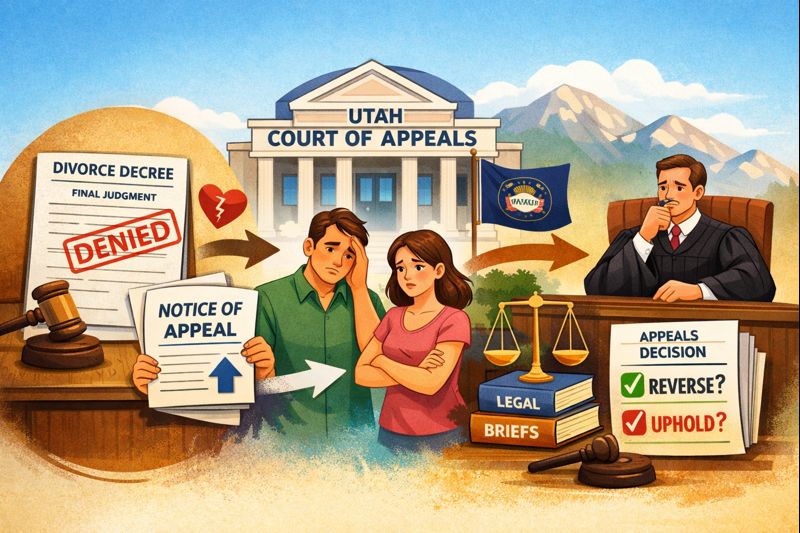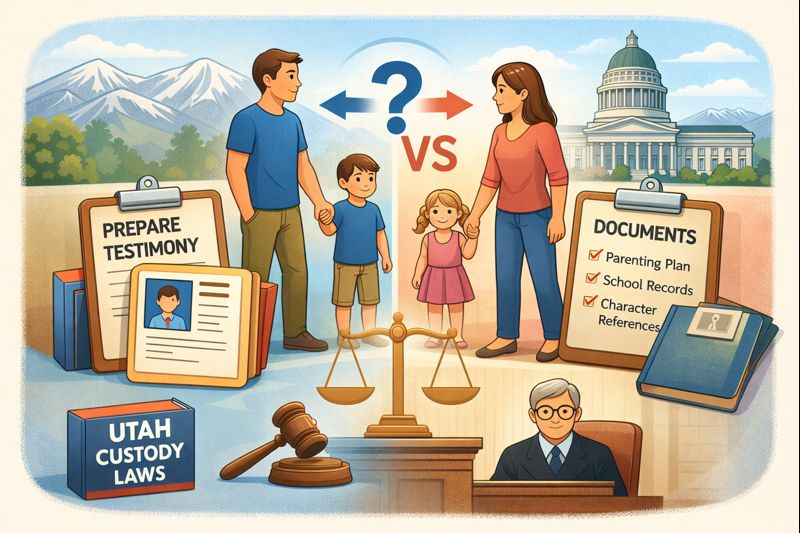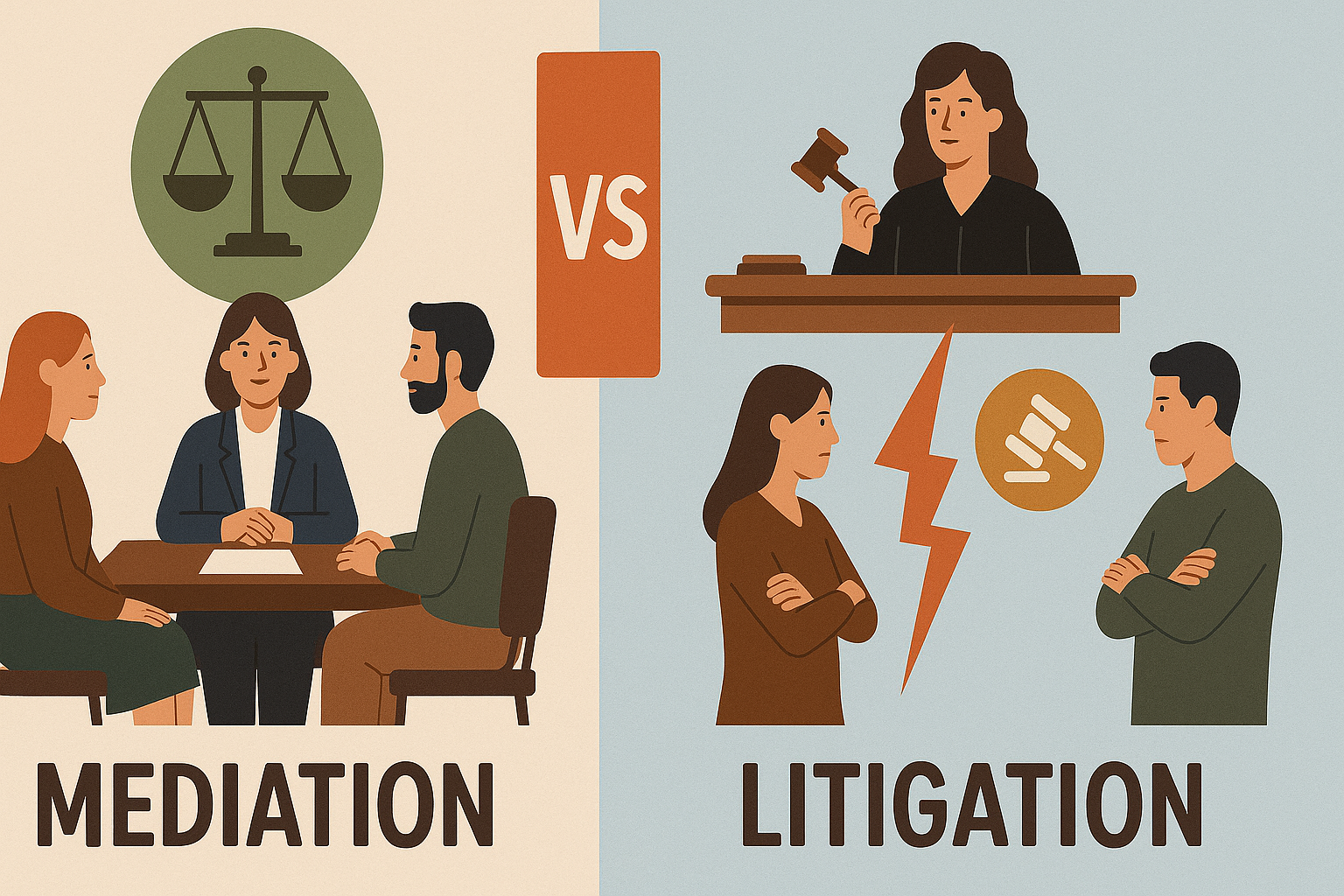
Divorce in Utah can be resolved in two primary ways: mediation or litigation. Each path comes with different timelines, costs, levels of conflict, and degrees of control over the outcome.
Gibb Law Firm helps Utah families understand how these options work under local law so they can choose the approach that best protects their children, finances, and future. This guide explains the differences between mediation and litigation in Utah divorce, the steps involved in each, and when it might make sense to move from negotiation to a court-based process.
Disclaimer: Gibb Law assists clients through the mediation process but does not act as a certified mediator. Gibb Law can help you with your mediation, guide you through each step of the process, and leverage extensive experience in helping resolve cases through mediation.
Why Mediation vs. Litigation Matters in Utah Divorce
The decision to resolve a divorce through mediation or litigation will shape almost every part of your case, from how long it takes to how much you spend and how much say you have in the final outcome. Under Utah law, mediation is required in most divorce cases before a judge will schedule a trial, but litigation remains a critical option when settlement is not possible.
Mediation focuses on private negotiation with a neutral mediator, allowing spouses to craft their own agreements on custody, support, and property.
Litigation places decisions in the hands of a Utah judge who applies state law and court rules after hearing evidence and arguments from both sides.
Utah Code § 30-3-39 generally requires parties in a divorce to attempt mediation before trial unless the court finds good cause to waive it (for example, in serious safety or domestic violence situations).
The right path often depends on the level of conflict, the complexity of finances and parenting issues, and whether both spouses are bargaining in good faith.
For a practical description of how mediation actually feels in a Utah divorce, this video by a Utah divorce attorney walks through what happens in a typical mediation session and why many cases settle before trial.
Watch: Utah Divorce Mediation Explained
How Utah Handles Mediation vs. Litigation
Utah family courts rely on both mediation and litigation to resolve divorce cases. Many families resolve all issues in mediation and never see the inside of a courtroom. Others require judicial oversight and a formal trial because agreement is not possible or not safe.
Mediation in Utah Divorce
Spouses meet with a neutral mediator to work through issues such as custody, parent-time, child support, alimony, and division of marital property. Everything said in mediation is generally confidential, and if a full agreement is reached, it can be submitted to the court as a proposed settlement.
Litigation in Utah Divorce
When negotiation fails, the court formally decides contested issues. Litigation follows the Utah Rules of Civil Procedure, including discovery, motion practice, temporary orders, and, if needed, a trial where the judge issues binding orders.
Arbitration and Other Alternatives
Some Utah couples agree to resolve parts of their divorce through arbitration, which is more formal than mediation but still private and typically faster than a full court trial. This can be useful in complex property or support disputes where a binding decision is needed without going through the full public trial process.
If you are trying to picture the difference between working with a mediator and taking your case to court, the following overview explains the basic mechanics of divorce mediation and how it contrasts with litigation.
Watch: What Is Divorce Mediation and How Does It Work?
Key Definitions and Utah Statutes
Utah divorce law relies on several core concepts that help frame the mediation-versus-litigation decision. Knowing how these terms are used in the courthouse can make the process easier to follow.
Mediation (Utah Code § 30-3-39): A confidential process where a neutral mediator helps divorcing spouses reach voluntary agreements. Most Utah divorces must attempt mediation before trial unless the court waives it for good cause.
Litigation: A court-based process governed by the Utah Rules of Civil Procedure and Utah Rules of Evidence, in which a judge decides disputed issues after hearings and trial.
Equitable Distribution (Utah Code § 30-3-5): Utah divides marital property “equitably,” which usually means fairly, but not always 50/50. Agreements reached in mediation must still be consistent with this standard for the judge to approve them.
Best Interests of the Child (Utah Code § 30-3-10): Any custody or parent-time decision whether by agreement in mediation or by court order after litigation, must place the child’s needs first.
Arbitration: A private, binding process where a neutral arbitrator (rather than a judge) decides specific issues. Utah courts may enforce valid arbitration agreements in divorce cases, as illustrated in cases like Taylor v. Taylor.
If you want to see how arbitration can fit into real-world Utah divorce disputes, the following case discussion highlights how some couples use arbitration instead of a full public trial.
Watch: Taylor v. Taylor and Arbitration in Utah Divorce
Typical Court Procedures in Utah Divorce
While each case is unique, Utah divorces that involve both mediation and litigation generally follow a predictable sequence. Understanding this sequence can help you prepare and set realistic expectations.
Filing and Response
One spouse files a Petition for Divorce in Utah district court. The other spouse is served and files an Answer (and sometimes a Counterclaim). The case is now formally before the court.
Financial Disclosures and Temporary Orders
Both sides exchange required financial declarations and supporting documents. Either party may ask the court for temporary orders on issues like custody, support, and who stays in the home while the case is pending.
Mediation Session
The parties participate in at least one good-faith mediation session, as required in most Utah divorces. Many cases settle fully or partially at this stage, and agreements are written up as stipulations to be submitted to the judge.
Trial and Final Decree
If full agreement is not reached, the remaining issues proceed to trial. The judge hears testimony, reviews evidence, and issues a final Divorce Decree and related orders that both parties must follow.
Even when litigation is necessary, mediation often narrows the issues significantly. Utah courts encourage parties to use mediation to resolve as many disputes as possible before using trial time for the hardest remaining questions.
This Utah-focused reel emphasizes that courts generally require a meaningful attempt at mediation before they will set a divorce for trial, underscoring how central mediation is in the overall process.
Required Forms and Filings in Utah Divorce
Whether your case settles in mediation or proceeds to litigation, the core paperwork is similar. The difference is how contested the issues are when those forms reach the judge.
Petition for Divorce and Summons, which start the case and notify the other spouse that a Utah divorce has been filed.
Answer (and any Counterclaim), which outline areas of agreement and disagreement on custody, support, and property issues.
Financial Declaration and supporting documents, required in both mediated and litigated cases so that support and property can be addressed accurately.
Parenting Plan and Child Support Worksheets when minor children are involved, detailing custody, parent-time, and financial support under Utah guidelines.
Stipulation and Settlement Agreement if mediation is successful, summarizing all agreed-upon terms to be signed by both parties and submitted to the court.
Findings of Fact, Conclusions of Law, and Final Divorce Decree, which the judge signs to officially finalize the divorce, whether by agreement or after trial.
Errors or incomplete information in these filings can delay your case or cause confusion later. Working with experienced counsel can help ensure the paperwork supports your long-term goals, whether you are settling or litigating.
Common Mistakes to Avoid When Choosing Between Mediation and Litigation
Many divorcing spouses misunderstand what mediation can and cannot do, or they approach litigation without a clear strategy. Avoiding a few common mistakes can make the process smoother and more predictable.
Assuming mediation means “giving in”: Mediation is about negotiation and problem solving, not surrender. You can still set boundaries and say no to unfair proposals.
Going into mediation unprepared: Showing up without financial documents, a parenting proposal, or a clear sense of priorities makes it harder to reach a fair agreement and may push the case toward litigation unnecessarily.
Using litigation to “punish” the other spouse: Utah judges focus on fairness, the best interests of the children, and efficient resolution, not on punishing either party for personal grievances.
Failing to pivot when needed: If one spouse refuses to negotiate honestly, or if serious safety or control issues are present, it may be necessary to stop pushing mediation and proceed with stronger court involvement.
Waiting too long to involve an attorney: Both mediation and litigation benefit from early legal advice so you understand your rights, the likely range of outcomes, and the tradeoffs on the table.
To see how mediation can serve as an efficient alternative to drawn-out private negotiations or high-conflict litigation, the following reel explains why many practitioners recommend court-based mediation in divorce cases.
This post reinforces that a structured mediation process , anchored by Utah court rules and deadlines often moves cases forward more quickly than informal back-and-forth.
Choosing the Right Path and Planning Your Next Steps
There is no single “right” answer for every Utah divorce. The best path depends on your goals, safety concerns, communication patterns, and the complexity of your finances and parenting issues.
Consider focusing on mediation if: Both spouses can communicate respectfully, are willing to share financial information, and want to keep costs and conflict as low as possible.
Consider preparing for litigation if: There is a history of domestic violence, financial secrecy, or persistent refusal to negotiate reasonably, or if complex legal questions require a judge’s decision.
In many cases, the most realistic plan is a blended approach, using mediation to settle as many issues as possible and reserving litigation for the few disputes that truly require a judge’s ruling.
A Utah family law attorney can help you map out a strategy that makes sense for your specific situation, including when to push for settlement and when to insist on court protection.
Talk to Gibb Law Firm About Mediation vs. Litigation in Your Utah Divorce
If you are unsure whether to lean on mediation, prepare for litigation, or use a mix of both, Gibb Law Firm can help you understand your options under Utah law. Our team offers clear advice, practical negotiation support, and strong courtroom representation when trial becomes necessary.
Schedule a Consultation