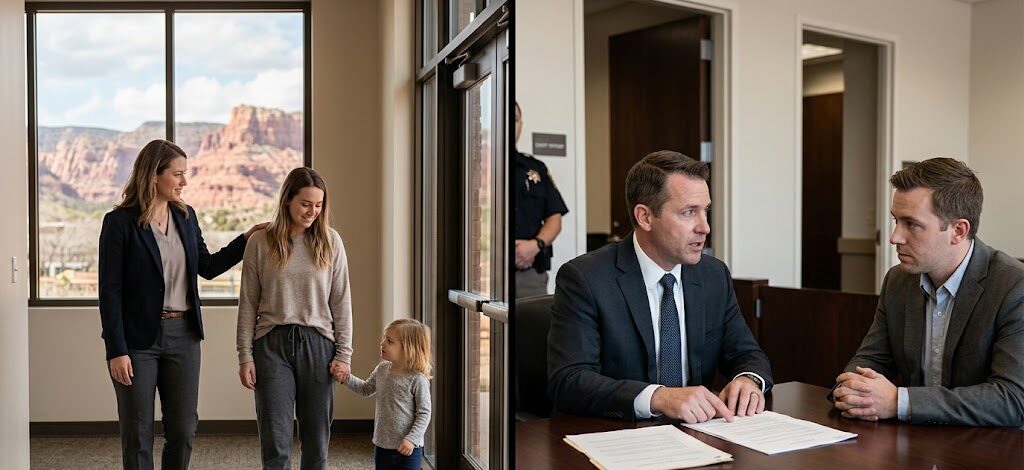

How to Prepare for a Protective Order Hearing
How to Prepare for a Protective Order Hearing. Give practical guidance on what to prepare before a Utah protective order hearing.
Utah Code provides procedures for protective-order petitions, ex parte orders, notice, and hearings. The court papers in your case control the hearing date and the restrictions currently in force. That is a starting point for questions, not a conclusion about your matter.
I’m Dustin Gibb. I explain a Utah protective order hearing in plain language, identify which facts and documents matter, and tell you where an answer depends on current law, professional evidence, or a court. This guide gives you a calm way to prepare without giving case-specific legal advice.
- Start with every page of the court papers
- Read the current restrictions literally
- Identify what the hearing is actually about
- Organize evidence so its context is visible
- Prepare a clear chronology
- Expect direct questions from the judge
- Plan for safety and courthouse logistics
- Avoid contact that could violate an order
- Understand what happens after the hearing
- Know what to bring to a consultation
- Frequently asked questions
- Keep the complete document instead of relying on a cropped image or secondhand description
- Write dates, people, places, and events in order without assigning a legal conclusion
- Preserve messages, photographs, reports, correspondence, and other original records
- Follow current court orders, medical instructions, policy duties, and official safety directions
- Ask which deadline, legal rule, or missing fact needs prompt attention in your situation
Start with every page of the court papers
Short answer: The petition, temporary order, notice, hearing information, and proof of service answer different questions and should be kept together.
The useful way to approach this is to separate what you personally know, what a document or witness can establish, and what still needs investigation. Dates, names, original records, complete messages, and the source of each fact make the discussion clearer. A conclusion written in large letters does not become more reliable than the evidence underneath it. For a Utah protective order hearing, that discipline helps distinguish a useful lead from a fact that can actually be supported.
Before deciding what to do next, ask which source supports the statement, whether the information is complete, and whether a current order, policy, statute, or professional instruction controls. Those questions are simple, but they prevent a lot of avoidable confusion. In Davis County, the local advantage should be a practical conversation with someone who can review the real materials—not a broad promise based only on a ZIP code.
When you prepare, make a separate list of facts, documents, questions, and immediate obligations. That small separation prevents an unanswered legal question from being written down as though it were a proven event. It also makes the first conversation more efficient because I can see what is known and what needs follow-up.
Source basis: this guide uses Utah Code 78B-7-603, Utah Code 78B-7-604, Utah State Courts: Family Law together with Gibb Law’s first-party pages. These sources support general process and legal context. They do not decide disputed facts, supply medical opinions, assign fault, predict a court, or replace advice about your circumstances.
Read the current restrictions literally
Short answer: Do not rely on what another person says the order permits; follow the signed order unless the court changes it.
This is also where precision protects you. Use the exact name of the court paper, insurer, provider, report, property, or person involved. Keep the original file when possible and note how you received it. If memory is uncertain, say so. A careful record can be corrected; an exaggerated claim can distract from the facts that genuinely matter. For a Utah protective order hearing, that discipline helps distinguish a useful lead from a fact that can actually be supported.
If another person wants an immediate answer, it is reasonable to ask for the request in writing and time to understand it. Do not sign, delete, edit, post, or send something simply because the moment feels uncomfortable. The right response depends on what the document is and what your obligations require. In Davis County, the local advantage should be a practical conversation with someone who can review the real materials—not a broad promise based only on a ZIP code.
Keep copies in a format you can open and share without changing the original. Use descriptive file names, note the date obtained, and preserve full pages or message threads. Those habits do not prove a claim, but they reduce the chance that important context will be lost while the matter is being reviewed.
Court paper
States current restrictions, hearing information, and requested relief Verify with: Read the signed document.
Personal account
Explains events within the witness’s knowledge Verify with: Support with lawful, contextual records.
Identify what the hearing is actually about
Short answer: Build preparation around the claims, requested protections, and questions the judge can decide at that hearing.
The law applies to details, not labels. Two situations described with the same short phrase can involve different people, duties, documents, deadlines, defenses, and available proof. I would rather identify the unanswered question than give you a confident generalization that does not fit your situation. For a Utah protective order hearing, that discipline helps distinguish a useful lead from a fact that can actually be supported.
A consultation should narrow the problem. I should be able to tell you which facts appear important, what still needs to be collected, which legal question is actually open, and what the next decision is. I cannot responsibly promise the final result, the exact timeline, or a particular financial outcome. In Davis County, the local advantage should be a practical conversation with someone who can review the real materials—not a broad promise based only on a ZIP code.
If several people or organizations are involved, track each one separately. Record names, roles, contact details, reference numbers, and the date and substance of each communication. That makes it easier to identify who has information, who has authority, and which statement came from which source.
Organize evidence so its context is visible
Short answer: Keep complete messages, dates, photographs, records, witness information, and lawful source details.
Organization does not mean turning your life into a litigation project. It means keeping a short chronology, putting related documents together, and recording important calls or letters. That gives an attorney enough structure to spot gaps while leaving medical, factual, and legal conclusions to the people qualified to make them. For a Utah protective order hearing, that discipline helps distinguish a useful lead from a fact that can actually be supported.
Keep the tone factual, even when the experience has been painful. Calm language does not minimize what happened. It makes the sequence easier to evaluate and helps keep the focus on conduct, records, effects, and the rule that may apply. In Davis County, the local advantage should be a practical conversation with someone who can review the real materials—not a broad promise based only on a ZIP code.
Before the conversation ends, repeat the next step in your own words. Confirm what you will provide, what the office will review, and whether any current instruction controls your conduct. A short written recap is useful because stressful situations make even a careful conversation harder to remember later.
Secure the packet
Keep the petition, orders, notices, and service documents together.
Build the timeline
List relevant events by date with a source for each entry.
Sort the evidence
Use clear file names and preserve complete context.
Confirm logistics
Verify the court, time, appearance method, and safety procedures.
Prepare a clear chronology
Short answer: A dated sequence of events is usually easier to understand than a speech built around conclusions or labels.
The useful way to approach this is to separate what you personally know, what a document or witness can establish, and what still needs investigation. Dates, names, original records, complete messages, and the source of each fact make the discussion clearer. A conclusion written in large letters does not become more reliable than the evidence underneath it. For a Utah protective order hearing, that discipline helps distinguish a useful lead from a fact that can actually be supported.
Before deciding what to do next, ask which source supports the statement, whether the information is complete, and whether a current order, policy, statute, or professional instruction controls. Those questions are simple, but they prevent a lot of avoidable confusion. In Davis County, the local advantage should be a practical conversation with someone who can review the real materials—not a broad promise based only on a ZIP code.
When you prepare, make a separate list of facts, documents, questions, and immediate obligations. That small separation prevents an unanswered legal question from being written down as though it were a proven event. It also makes the first conversation more efficient because I can see what is known and what needs follow-up.
Expect direct questions from the judge
Short answer: Listen fully, answer the question asked, distinguish personal knowledge from assumption, and say when you do not know.
This is also where precision protects you. Use the exact name of the court paper, insurer, provider, report, property, or person involved. Keep the original file when possible and note how you received it. If memory is uncertain, say so. A careful record can be corrected; an exaggerated claim can distract from the facts that genuinely matter. For a Utah protective order hearing, that discipline helps distinguish a useful lead from a fact that can actually be supported.
If another person wants an immediate answer, it is reasonable to ask for the request in writing and time to understand it. Do not sign, delete, edit, post, or send something simply because the moment feels uncomfortable. The right response depends on what the document is and what your obligations require. In Davis County, the local advantage should be a practical conversation with someone who can review the real materials—not a broad promise based only on a ZIP code.
Keep copies in a format you can open and share without changing the original. Use descriptive file names, note the date obtained, and preserve full pages or message threads. Those habits do not prove a claim, but they reduce the chance that important context will be lost while the matter is being reviewed.
Assumption
A temporary order predicts what the judge will decide later.
More accurate
An ex parte stage and a noticed hearing involve different procedures and information.
Assumption
A dramatic screenshot explains the whole event.
More accurate
The court may need date, participants, surrounding messages, source, and authentication.
Plan for safety and courthouse logistics
Short answer: Use official court or law-enforcement channels for safety concerns and ask about arrival, waiting, remote appearance, or support procedures.
The law applies to details, not labels. Two situations described with the same short phrase can involve different people, duties, documents, deadlines, defenses, and available proof. I would rather identify the unanswered question than give you a confident generalization that does not fit your situation. For a Utah protective order hearing, that discipline helps distinguish a useful lead from a fact that can actually be supported.
A consultation should narrow the problem. I should be able to tell you which facts appear important, what still needs to be collected, which legal question is actually open, and what the next decision is. I cannot responsibly promise the final result, the exact timeline, or a particular financial outcome. In Davis County, the local advantage should be a practical conversation with someone who can review the real materials—not a broad promise based only on a ZIP code.
If several people or organizations are involved, track each one separately. Record names, roles, contact details, reference numbers, and the date and substance of each communication. That makes it easier to identify who has information, who has authority, and which statement came from which source.
Avoid contact that could violate an order
Short answer: Do not use friends, relatives, children, or social media to do indirectly what an order prohibits directly.
Organization does not mean turning your life into a litigation project. It means keeping a short chronology, putting related documents together, and recording important calls or letters. That gives an attorney enough structure to spot gaps while leaving medical, factual, and legal conclusions to the people qualified to make them. For a Utah protective order hearing, that discipline helps distinguish a useful lead from a fact that can actually be supported.
Keep the tone factual, even when the experience has been painful. Calm language does not minimize what happened. It makes the sequence easier to evaluate and helps keep the focus on conduct, records, effects, and the rule that may apply. In Davis County, the local advantage should be a practical conversation with someone who can review the real materials—not a broad promise based only on a ZIP code.
Before the conversation ends, repeat the next step in your own words. Confirm what you will provide, what the office will review, and whether any current instruction controls your conduct. A short written recap is useful because stressful situations make even a careful conversation harder to remember later.
Understand what happens after the hearing
Short answer: Ask how to obtain the signed order, how long it applies, and what process governs any later request to change it.
The useful way to approach this is to separate what you personally know, what a document or witness can establish, and what still needs investigation. Dates, names, original records, complete messages, and the source of each fact make the discussion clearer. A conclusion written in large letters does not become more reliable than the evidence underneath it. For a Utah protective order hearing, that discipline helps distinguish a useful lead from a fact that can actually be supported.
Before deciding what to do next, ask which source supports the statement, whether the information is complete, and whether a current order, policy, statute, or professional instruction controls. Those questions are simple, but they prevent a lot of avoidable confusion. In Davis County, the local advantage should be a practical conversation with someone who can review the real materials—not a broad promise based only on a ZIP code.
When you prepare, make a separate list of facts, documents, questions, and immediate obligations. That small separation prevents an unanswered legal question from being written down as though it were a proven event. It also makes the first conversation more efficient because I can see what is known and what needs follow-up.
Know what to bring to a consultation
Short answer: Bring the complete court packet, service information, chronology, evidence list, and any related case numbers or orders.
This is also where precision protects you. Use the exact name of the court paper, insurer, provider, report, property, or person involved. Keep the original file when possible and note how you received it. If memory is uncertain, say so. A careful record can be corrected; an exaggerated claim can distract from the facts that genuinely matter. For a Utah protective order hearing, that discipline helps distinguish a useful lead from a fact that can actually be supported.
If another person wants an immediate answer, it is reasonable to ask for the request in writing and time to understand it. Do not sign, delete, edit, post, or send something simply because the moment feels uncomfortable. The right response depends on what the document is and what your obligations require. In Davis County, the local advantage should be a practical conversation with someone who can review the real materials—not a broad promise based only on a ZIP code.
Keep copies in a format you can open and share without changing the original. Use descriptive file names, note the date obtained, and preserve full pages or message threads. Those habits do not prove a claim, but they reduce the chance that important context will be lost while the matter is being reviewed.
If you want a broader view of the firm’s work, use the Protective Orders, practice areas, and contact information. Those pages explain where this topic sits within the firm’s services. They do not expand the facts or turn general information into advice for your matter.
| Question | Why it matters |
|---|---|
| What is the most important source document? | It anchors the discussion in the actual order, report, policy, record, or statute. |
| Which fact is disputed or still missing? | It shows where more investigation or professional evidence may be needed. |
| What should be preserved now? | Original records, video, messages, and witness information can become difficult to recover. |
| What decision am I being asked to make? | It separates immediate action from questions that can wait for a fuller review. |
Frequently asked questions about a Utah protective order hearing
How soon is the hearing?
Utah law contains timing provisions, but the notice and court docket control your actual date. The best answer may change with the controlling document, current law, and evidence in your matter, so treat this as general information rather than a prediction.
Can I contact the other person about the case?
Follow the current order exactly. Ask counsel or the court about permitted communication rather than guessing. The best answer may change with the controlling document, current law, and evidence in your matter, so treat this as general information rather than a prediction.
Should I print every message?
Preserve everything, then organize the material most relevant to the claims with full context. The best answer may change with the controlling document, current law, and evidence in your matter, so treat this as general information rather than a prediction.
Can a friend speak for me?
Witness rules and courtroom procedure matter. Ask how testimony and exhibits must be presented. The best answer may change with the controlling document, current law, and evidence in your matter, so treat this as general information rather than a prediction.
What if I am afraid to wait near the other party?
Contact the court or appropriate safety resource before the hearing and ask about available arrangements. The best answer may change with the controlling document, current law, and evidence in your matter, so treat this as general information rather than a prediction.
Will the judge decide related divorce or custody issues?
The hearing’s scope depends on the petition, statutes, related cases, and court authority. The best answer may change with the controlling document, current law, and evidence in your matter, so treat this as general information rather than a prediction.
What happens when the hearing ends?
Get the signed order and read it carefully. Ask how copies, service, enforcement, and any review process work. The best answer may change with the controlling document, current law, and evidence in your matter, so treat this as general information rather than a prediction.
Tell me what happened. I can talk it through with you.
If you have questions about a Utah protective order hearing, call (801) 725-6035. I can help you identify the records, questions, and next step that deserve attention.
Contact Gibb Law about a Utah protective order hearing