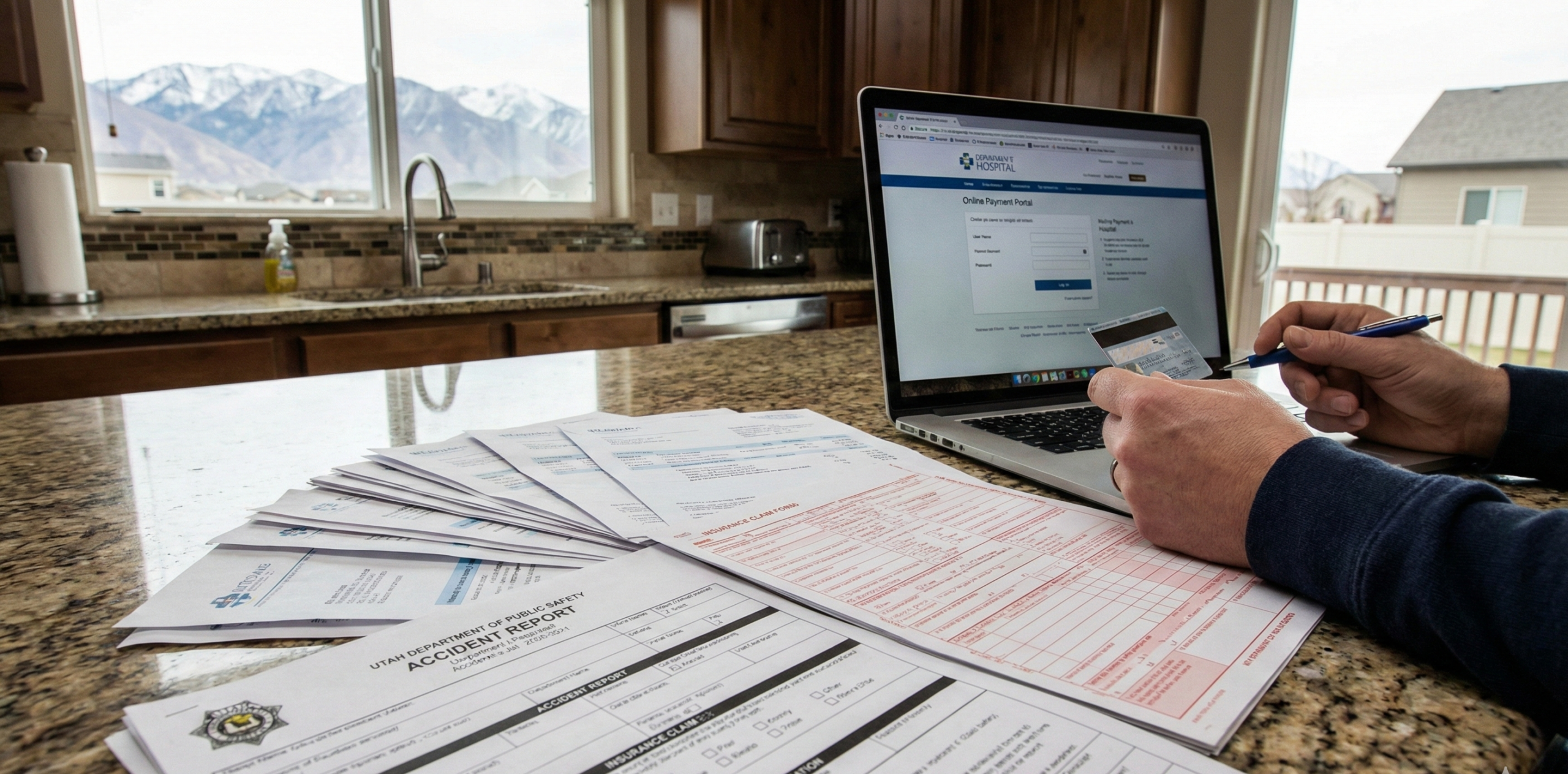
After a crash, a police report can matter for two big reasons. First, Utah law may require prompt notice to law enforcement in certain accidents, especially when someone is injured or killed.
Second, even when police are not required to respond, an official report can help reduce disputes in an insurance claim by documenting the basics: who was involved, where it happened, and what was observed at the scene.
If you are looking for immediate steps after a collision, start with what to do after a car accident in Utah. To understand how insurers evaluate responsibility, read how fault is determined in Utah car crashes. If you are confused about PIP and the no-fault label, see understanding Utah’s no-fault insurance rules. If the crash is serious or the insurer is pushing back, when to hire a Utah car accident attorney can help you gauge next steps.
Note: This article is educational information, not legal advice. Deadlines and requirements can depend on the facts, the agencies involved, and the insurance policies in play.
Overview of Police Reports After a Utah Car Accident
People often say “file a police report,” but that phrase can mean a few different things in real life. In Utah, there is a difference between giving notice to law enforcement right away, an investigating officer creating an official crash report, and a driver being asked to submit a report to the state after a crash.
Some crashes require immediate notice: When injuries are involved, you should treat calling law enforcement as a priority step after safety and medical needs.
An officer report is not the same as a driver report: You may have an officer-generated report number even if no separate driver report is required.
Insurance companies often ask for the report number: A report number helps connect your claim to an official record and can reduce verification delays.
Documentation still matters: Photos, witness details, and consistent timelines help even when an officer does not respond.
| Question people ask | What it usually means in a real claim |
|---|---|
| Do I have to call the police? | In many injury scenarios, contacting law enforcement is a best practice and may be required depending on the facts. |
| What if nobody is hurt? | You may still want a report for documentation, but your best move is to document the scene carefully and follow safe post-crash steps. |
| Will the report decide fault? | A report can be important evidence, but insurers often evaluate fault using multiple sources, including photos, statements, and vehicle damage patterns. |
| Is it worth getting a copy? | Often yes. It can help with claim consistency, especially if the other driver later changes their story. |
The short video below walks through the practical “report the crash” steps that matter right away, including staying safe and collecting key information.
Watch: How to Report a Car Accident to the Police
Key Definitions and Utah Statutes
Utah’s crash reporting rules focus on duties after an accident. The practical goal is to protect injured people, exchange information, and create a reliable record for later investigation or insurance questions.
Crash report: Typically the officer-generated report created after law enforcement responds and documents the collision.
Report number: A reference number that helps you, the insurer, and the agency locate the official report.
Driver responsibilities: Your responsibilities can include exchanging identifying and insurance information, staying at the scene when required, and notifying law enforcement in serious situations.
Insurance impact: A report can help support your timeline and reduce disputes, especially if fault becomes contested.
The Instagram reel below focuses on a practical point: protecting your rights after a collision by making sure the event is documented and evidence is preserved.
To connect the reporting question to how fault is evaluated later, it helps to review how fault is determined in Utah car crashes before you provide any detailed statements to an insurer.
Typical Claim Steps and Police Report Timing
Most people are juggling two timelines at once: what has to happen right away at the scene, and what should happen in the days after. A simple structure helps protect your claim and reduce mistakes.
Step 1: Prioritize safety and medical needs
Move to a safer location when appropriate, check for injuries, and seek medical help. Safety comes before paperwork.
Step 2: Contact law enforcement when needed
If injuries are involved, call 911 and follow instructions. If an officer responds, ask how to get the report number.
Step 3: Exchange the right information
Get names, contact details, vehicle information, and insurance details. Keep it calm and factual.
Step 4: Document the scene
Photos and notes can be critical if there is later disagreement about damage, lane position, or traffic signals.
Step 5: Notify insurance and keep a clean timeline
Report the claim and keep a single folder with your report number, photos, and key documents.
The video below explains when to call authorities, what information to provide, and why documentation matters.
Watch: Filing a Police Report After a Car Accident
If you are also trying to understand what coverage applies first after a crash, read understanding Utah’s no-fault insurance rules.
The reel below highlights common rear-end accident steps, including calling police, getting a report number, and documenting the scene.
Records and Paperwork That Often Matter
A police report is most useful when it connects cleanly to your broader claim file. Think of your documentation as one folder that you keep updating as you receive bills, estimates, and insurer letters.
Report number and agency name: If police respond, save the report number and which agency handled the crash.
Photos and videos: Damage, skid marks, road conditions, and traffic controls can help clarify what happened.
Witness contact information: A short, neutral witness statement can matter if stories change later.
Medical documentation: If someone is hurt, your treatment timeline is often central to the claim.
If you want a simple checklist for what to capture right after a crash, revisit what to do after a car accident in Utah.
Common Mistakes to Avoid
Most police report issues are preventable. They usually happen when people assume the process is automatic, fail to document, or give inconsistent information across different conversations and forms.
Not calling when the situation is serious: If anyone is injured or there is a safety risk, call 911.
Failing to get the report number: If police respond, the report number is often the fastest way to connect your claim to the official record.
Waiting too long to document: Photos and notes taken right away are usually more persuasive than recollections days later.
Giving a detailed statement too early: It can help to understand how fault is evaluated before you go deep with an insurer.
Assuming no-fault means the report does not matter: Even in a no-fault state framework, documentation can still affect claims and disputes.
The video below explains when and how you can file a report after a crash, why it matters, and what to do to avoid report-related problems.
Watch: When and How to File a Police Report After a Crash
The reel below reinforces why many people choose to call police after a collision so the scene is documented for the claim.
Next Steps After the Police Report Is Filed
Once the report process is underway, your focus should shift to preserving evidence and keeping your claim organized. That is what helps you respond if an insurer asks questions later.
Build a simple claim folder: Report number, photos, medical notes, repair estimates, and adjuster emails.
Keep your story consistent: A clean timeline helps when multiple parties are involved or fault is disputed.
Learn the coverage basics: Read understanding Utah’s no-fault insurance rules so you know what your insurer may pay first.
Know when legal help makes sense: If injuries are serious or the claim is contested, see when to hire a Utah car accident attorney.
Talk to Gibb Law About a Utah Car Accident Claim
Gibb Law is a Utah-based law firm focused on clear, practical guidance. If you have questions about police reports, reporting duties, or how documentation affects an insurance claim, we can help you understand your options and next steps.
Schedule a Consultation