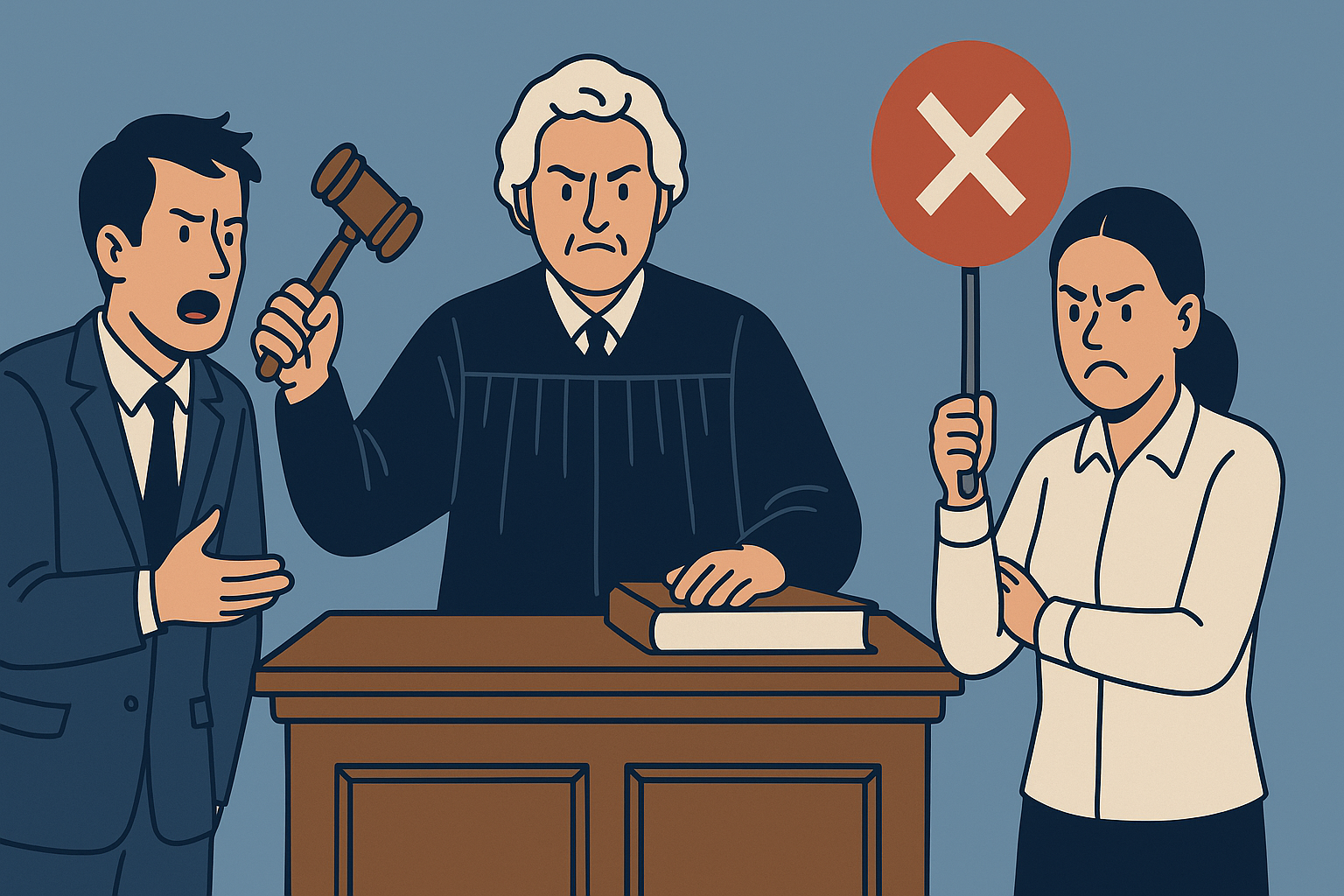
When a Utah family court issues an order about custody, parent-time, child support, alimony, or property division, each party is legally required to follow it. When someone deliberately refuses to comply, the court can step in. This enforcement process is called contempt of court and it plays a central role in making sure Utah family-court orders are taken seriously.
This overview explains how contempt works under Utah family law, what the court looks for before finding someone in contempt, what the process usually involves, and common mistakes to avoid. It is designed to help Utah parents and former spouses understand their options and prepare for real-world cases, whether they are seeking enforcement or defending themselves.
What Contempt of Court Means Under Utah Law
Under Utah law, a person can be held in contempt when they willfully violate a lawful court order they know about and have the ability to follow. In family cases, contempt frequently comes up after a divorce decree, custody order, or support order has already been entered.
Valid order: There must be a clear, enforceable Utah court order or decree in place, such as a divorce decree or custody order.
Knowledge of the order: The person accused of contempt must have received the order or been present when it was issued so they are on notice of what is required.
Ability to comply: The court generally expects that a person can follow the order. If they truly cannot, that may be a defense.
Willful violation: The noncompliance must be intentional, not simply the result of confusion, an honest mistake, or circumstances outside the person’s control.
These elements guide judges when deciding whether noncompliance is serious enough to justify contempt sanctions in a Utah family case.
Watch: High-Conflict Custody and Contempt in Family Court
This video helps illustrate how judges view contempt in the middle of high-conflict custody disputes and why courts are careful about when to use sanctions.
Common Situations That Lead to Contempt Claims
Most contempt motions in Utah family court fall into a handful of recurring patterns. Understanding these scenarios can help you spot problems early and document them properly.
Violating Custody or Parent-Time Orders
Refusing to exchange the child, routinely returning the child late, or unreasonably denying scheduled parent-time may lead to a contempt motion, especially when there is a pattern of violations.
Failure to Pay Child Support or Alimony
Unpaid support obligations are a common basis for contempt. Courts look at the payment history and the paying party’s actual ability to pay under Utah support guidelines.
Interfering With Communication and Co-Parenting
Blocking phone calls, refusing to share school or medical information, or ignoring decision-making provisions in the decree can also give rise to contempt claims if they violate clear orders.
Even when an order is clear, ongoing conflict and mistrust can make it difficult for parents to follow the rules without outside help.
This short reel explains how carefully following your custody order and documenting problems can help you avoid being found in contempt while protecting your parenting time.
For broader context on how custody and schedules work in Utah, visit the article Understanding Child Custody in Utah: Legal vs. Physical Custody.
How to File for Contempt in a Utah Family Case
In Utah, contempt proceedings usually start when one party files a motion asking the court to require the other person to explain why they have not followed the order. This is often called a Motion for Order to Show Cause.
Gather Records and Evidence
Parents typically collect calendars, messages, payment histories, and any other documents that show when and how the order was violated. Good documentation makes it easier for the judge to see the pattern.
File a Motion for Order to Show Cause
The motion explains which order was violated, how it was violated, and what relief you are asking for. It is usually supported by a sworn declaration or affidavit attaching key documents.
Serve the Other Party
The motion and the court’s Order to Show Cause must be formally served so the other party has notice and a chance to respond. Utah rules of service still apply even in post-divorce enforcement cases.
Attend the Contempt Hearing
At the hearing, both sides can present testimony and exhibits. The judge decides whether contempt occurred and, if so, what sanctions or corrective steps are appropriate.
The Utah Courts site offers forms and instructions for self-represented parties, but because contempt can lead to fines, attorney fees, or even jail time, many people choose to work with counsel.
Watch: Enforcement of Family Law Court Orders
This video walks through common tools courts use when parties do not follow family-law orders, including wage garnishment, payment plans, and make-up time with children.
This reel reflects the frustration some parents feel when they believe enforcement is inconsistent. An experienced Utah family-law attorney can help you focus less on emotion and more on what the judge needs to see in order to act.
Evidence Utah Courts Look For in Contempt Cases
Clear, organized evidence often makes the difference in whether a contempt motion succeeds. Judges need to see not only that the order was violated, but that the violation was willful and repeated enough to justify sanctions.
Parent-time logs and calendars: Written records of exchanges, no-shows, and delays help show patterns over weeks or months.
Text messages and emails: Communications can show refusals to follow orders, attempts to resolve issues, or agreements that were not honored.
Payment records: Bank statements, ORS printouts, or support ledgers document what has and has not been paid for child support or alimony.
Screenshots of blocked communication: Proof of blocked calls, messages, or removed access can support claims of interference with parent-time or legal decision-making.
Police reports or third-party statements: In more serious situations, reports or statements from neutral witnesses may help confirm that orders are not being followed.
Organizing this information chronologically makes it much easier for a judge to see how often orders are being ignored and what impact that has had on you and your children.
Stories about “family court horror” can be overwhelming to hear. Focusing on precise, well-organized evidence gives you a better chance of a clear outcome than relying on emotion alone.
If you want a deeper look at how Utah courts handle contested divorce and litigation strategy generally, see our article Mediation vs. Litigation in Utah Divorce.
What Happens at a Utah Contempt Hearing
At a contempt hearing, the judge reviews the order, hears from both parties, and decides whether a willful violation occurred. The process can feel formal, but it follows a fairly predictable structure.
Testimony and exhibits: Each side can testify, call witnesses, and present documents such as texts, emails, and payment records.
Opportunity to explain: The person accused of contempt can explain why they did not comply and whether there were obstacles outside their control.
Findings and sanctions: If the judge finds contempt, possible outcomes include orders to immediately comply, make-up parent-time, payment plans, attorney fees, fines, or in serious cases, short jail sentences.
The stakes at a contempt hearing can be high, especially when the case involves ongoing contact with children and long-term support obligations.
Watch: Litigating Family Law Contempt Proceedings
This video offers a behind-the-scenes view of how lawyers prepare for contempt hearings, including evidentiary issues and common arguments judges expect to hear.
Common Mistakes to Avoid in Utah Contempt Cases
Some of the most damaging missteps in contempt situations happen before anyone ever files a motion. Avoiding these mistakes can protect your credibility and keep conflict from escalating.
Withholding parent-time as punishment: Denying scheduled visits because support is unpaid (or for other reasons) can backfire and expose you to your own contempt risk.
Relying only on verbal agreements: Informal changes to exchanges or payments can be helpful, but without written confirmation, they are hard to prove if things go wrong.
Assuming temporary orders “don’t really count”: Temporary orders are binding. Ignoring them because you expect final orders later can still result in contempt findings.
Using contempt instead of modification: If circumstances have truly changed (work schedule, relocation, or a child’s needs), a motion to modify may be more appropriate than asking the judge to punish the other parent.
Delaying action for too long: Waiting months or years to address repeated violations can make the situation harder to untangle and may weaken your case.
For a broader picture of how divorce orders are created and changed in the first place, you can review How to File for Divorce in Utah: Step-by-Step Guide and related articles on support, custody, and enforcement.
When Contempt May Not Be the Right Tool
Contempt is a powerful enforcement mechanism, but it is not the right fit in every disagreement. In some situations, the better option is to adjust the order itself rather than punish past behavior.
Vague or outdated orders: If an order is unclear, internally inconsistent, or no longer matches the child’s schedule, a motion to modify may be more effective than asking the judge to punish violations.
True inability to pay support: Job loss, disability, or other major changes in income may require a support modification instead of a contempt motion focused on nonpayment. For more on support changes, see How to Modify Child Support in Utah.
Safety and domestic violence concerns: In situations involving threats or abuse, protective orders or other safety-focused tools may be more appropriate than contempt alone. You can learn more in Domestic Violence and Protective Orders in Utah.
Gibb Law Firm can help you evaluate whether contempt, modification, or a different strategy makes the most sense in your specific Utah family case. In some instances, combining enforcement with a carefully tailored modification gives the most durable solution.
Talk to Gibb Law Firm About Contempt and Enforcement in Utah
If you believe an ex-spouse or co-parent is ignoring a Utah family-court order or if you have been served with a contempt motion, you do not have to navigate it alone. An experienced Utah family-law attorney can help you understand the law, gather the right evidence, and present your position clearly to the court.
Gibb Law Firm provides practical, plain-English guidance to clients throughout Northern Utah on divorce, custody, and enforcement issues. We focus on realistic strategies that protect your rights and support long-term stability for your children.
Schedule a Consultation with Gibb Law Firm