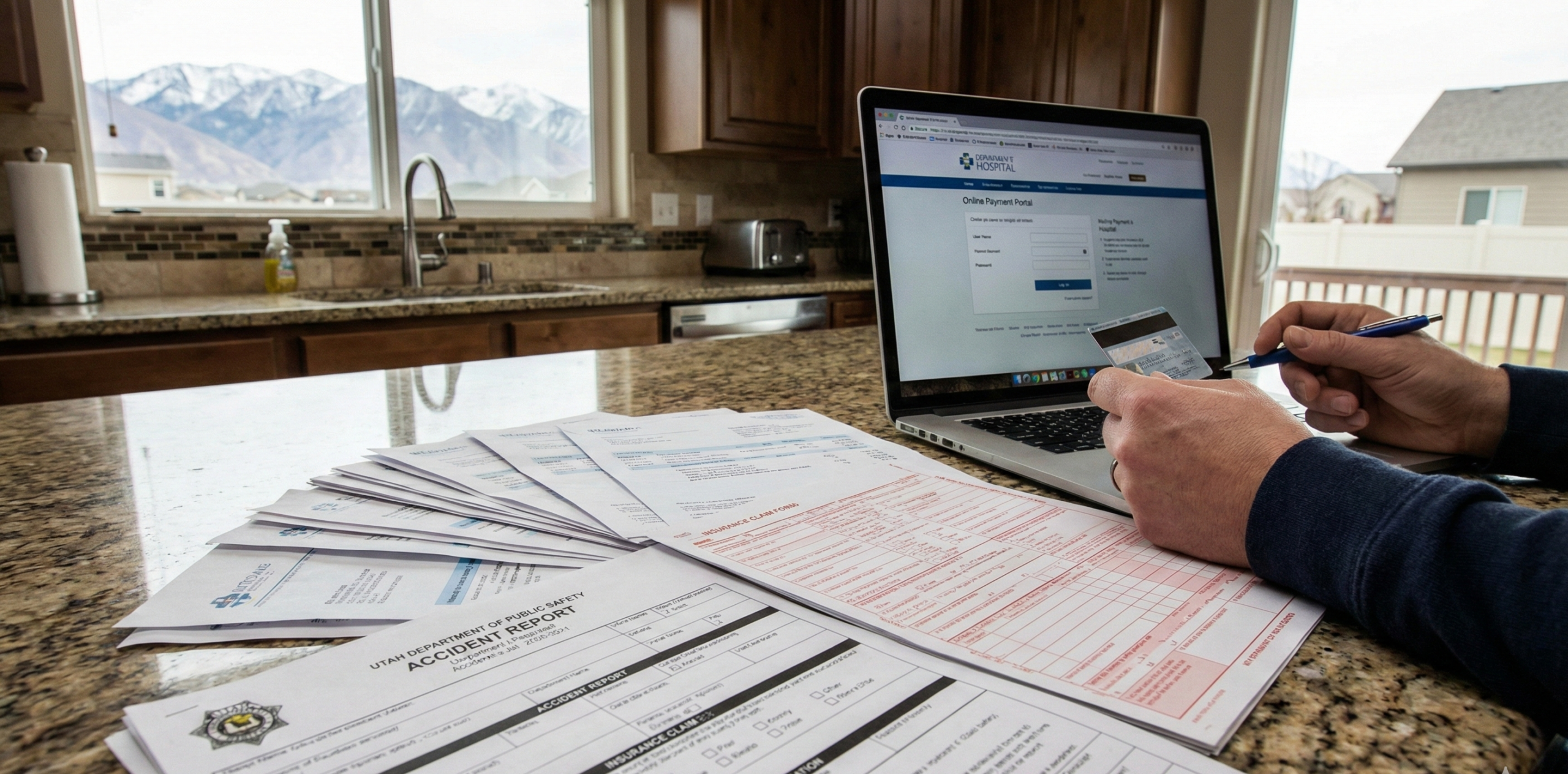
In a Utah medical malpractice case, “damages” means the losses tied to the injury, not just the fact that something went wrong. A strong claim usually connects the medical error to measurable costs, real life impacts, and future needs.
Most damages fall into three buckets: economic damages (bills and income losses), non-economic damages (pain and life impact), and in rare situations punitive damages (meant to punish extreme misconduct, not compensate).
Note: This article is educational information, not legal advice. The value of a case depends on medical proof, documentation, and Utah-specific rules that may apply to your facts.
Calculating Damages in Utah Medical Malpractice Cases
Calculating damages is about building a clear, evidence-based picture of what the injury has cost you so far, what it is likely to cost in the future, and how it has changed day-to-day life. In court, damages are typically proven through records, expert analysis, and credible testimony.
A practical way to think about it is: past losses (what has already happened) plus future losses (what is reasonably likely to happen) plus human impact (pain, limitations, and loss of enjoyment). If you want the broader malpractice framework, start with the Utah medical malpractice and negligence guide.
The video below explains common categories of damages and how they are evaluated in medical negligence cases.
Watch: Determining Medical Malpractice Damages
Key Definitions and Utah Rules That Affect Damages
Damages terms can sound technical, but the concepts are straightforward once you break them down.
Economic damages: Financial losses like past and future medical care, rehabilitation, medication, travel for treatment, lost wages, and reduced earning capacity.
Non-economic damages: Human impacts like pain, suffering, emotional distress, disfigurement, and loss of enjoyment of life.
Punitive damages: A separate category that may apply only in limited situations involving very serious conduct. These are not meant to cover bills or income.
Wrongful death-related damages: When malpractice results in death, the damages analysis can include different categories and different people may have rights to recover depending on the claim structure.
Utah also has rules that can shape what a claim is worth. For example, Utah law sets a cap on non-economic losses in malpractice actions against health care providers. The Utah Courts list the cap for causes of action arising on or after May 15, 2010 as $450,000.
For punitive damages, Utah law generally requires clear and convincing evidence of willful and malicious conduct, intentionally fraudulent conduct, or knowing and reckless indifference. Utah also has a unique rule about how punitive awards are paid out: the first $50,000 goes to the injured party, and amounts above that are split equally between the injured party and the state.
| Rule or requirement | What it can mean for your damages calculation |
|---|---|
| Non-economic damages cap in malpractice cases | Even if a jury finds major pain and life impact, the non-economic portion may be limited by Utah’s cap in medical malpractice actions. |
| Punitive damages standards and distribution | Punitive damages are uncommon and require a higher level of misconduct. If awarded, Utah law directs how the money is divided. |
| Future damages must be supportable | Future medical care and earning capacity losses usually need solid proof, often with expert support and clear documentation. |
| Pre-lawsuit process in Utah malpractice cases | Utah’s prelitigation panel process can affect timing and strategy. Early organization helps avoid delays and missed deadlines. |
| Documentation and consistency | Claims are stronger when records, treatment history, and work history tell the same story without major gaps or contradictions. |
The video below discusses how caps can affect damage calculations and how those policy debates can show up in real-world case valuation.
Watch: Utah Legislature Considering Bill to Cap Medical Malpractice Damages
How Damages Are Usually Built in a Utah Malpractice Claim
Most malpractice damages packages are built the same way: collect complete records, document the timeline, prove the injury and cause, then show the full scope of losses with credible support. When damages are organized early, the case is often easier to evaluate and negotiate.
Step 1: Document the medical costs
Collect bills, insurance EOBs, pharmacy receipts, therapy costs, and records that show what care was needed because of the injury.
Step 2: Document work and income impacts
Missed time, reduced hours, job changes, and future earning capacity issues are easier to prove with clean employment records.
Step 3: Prove future needs
Future care is often supported through treating providers, specialists, and sometimes a life care plan or similar analysis.
Step 4: Explain the human impact
Non-economic damages are usually supported by consistent treatment history and credible testimony about daily limitations and suffering.
Step 5: Follow Utah’s malpractice process and negotiate or litigate
Utah’s Notice of Intent and prelitigation panel process can be required before a lawsuit. After that, damages are tested in settlement talks, mediation, or trial.
The video below gives a practical breakdown of how damages can be totaled and evaluated in civil cases, including negligence-based claims.
Watch: Calculating Damages in a Lawsuit
The Instagram posts below highlight how damages can accumulate in severe cases. Headlines are not typical outcomes and are not a prediction of results, but they can help illustrate why documentation and expert support matter.
Records, Filings, and Proof That Commonly Support Damages
There is no single form that “proves” damages. What matters is meeting Utah’s process requirements and backing up each category of loss with reliable documents and testimony.
Medical records and bills: Chart notes, operative notes, imaging, labs, prescriptions, therapy notes, and all related billing and insurance records.
Employment and income records: Pay stubs, W-2s or 1099s, attendance records, employer letters, and documentation of job changes tied to the injury.
Future care support: Treating provider opinions, specialist recommendations, and detailed projections for long-term treatment needs when appropriate.
Daily impact evidence: A consistent treatment story, symptom notes, and testimony from the injured person and close family members about limitations.
Utah malpractice pre-lawsuit steps: A Notice of Intent and the required prelitigation panel process may apply before filing in court.
Utah’s Division of Professional Licensing explains that prelitigation panel reviews in alleged medical liability cases are required, confidential, informal and non-binding, and that panel findings are not admissible in later court proceedings.
| Evidence type | What it helps prove |
|---|---|
| Itemized medical bills and EOBs | Past medical expenses and what care was needed because of the injury. |
| Work records and tax documents | Lost wages, reduced earning capacity, and the financial impact over time. |
| Treating provider opinions | Future care needs, prognosis, and medical support for long-term effects. |
| Personal and family testimony | Pain, limitations, and how the injury changed daily life and relationships. |
| Prelitigation panel materials | Compliance with Utah’s required process before a lawsuit is filed. |
This reel also emphasizes the real-world stakes of how damages are measured and awarded in serious malpractice cases.
Common Mistakes That Can Undercut a Damages Claim
Even when liability is strong, damages can be discounted if the proof is incomplete, inconsistent, or overly speculative. These are common issues that can be avoided with early organization.
Missing documentation: If expenses and missed work time are not backed by records, they are harder to recover.
Big gaps in treatment: Long breaks in care can lead to arguments that the injury was not as serious, or was caused by something else.
Overstating future losses: Future care and future earning capacity usually need support from medical opinions and real-world work history.
Ignoring Utah-specific limits: In malpractice actions, non-economic damages may be capped, which affects valuation and settlement strategy.
Waiting too long: Damages proof often depends on records and expert review, and malpractice cases can involve pre-lawsuit steps that take time.
The post below is another example used in public discussion around malpractice verdicts and damages. It is not a promise of results, but it shows why damages evidence can become complex in high-impact cases.
Explore Related Utah Medical Malpractice Resources
If you are building a malpractice claim, damages are only one part of the equation. These related resources can help you understand how Utah malpractice cases are evaluated from end to end.
Next Steps If You Are Trying to Calculate Malpractice Damages
If your goal is to protect your options and understand what a claim may be worth, focus on organizing the proof in a way that makes sense to an insurer, an opposing attorney, or a jury.
Collect complete records: Include medical records, billing, prescriptions, therapy, and referrals from every provider involved.
Build a timeline: A simple date-by-date story helps connect the error, the injury, and the treatment that followed.
Track every expense: Out-of-pocket costs add up fast. Keep receipts and logs for travel, equipment, and home assistance when applicable.
Document work impact: Save pay stubs, attendance records, and communications that show how the injury affected your ability to work.
Act early on process and deadlines: Utah malpractice claims can involve a Notice of Intent and prelitigation panel review before a lawsuit is filed.
Talk to Gibb Law Firm About a Utah Medical Malpractice Damages Review
Gibb Law Firm is a Utah-based law firm focused on clear, practical guidance for people facing serious legal problems. If you believe medical negligence caused harm, we can help you understand what damages may be available, what proof matters most, and what steps to take next under Utah law.
Schedule a Consultation