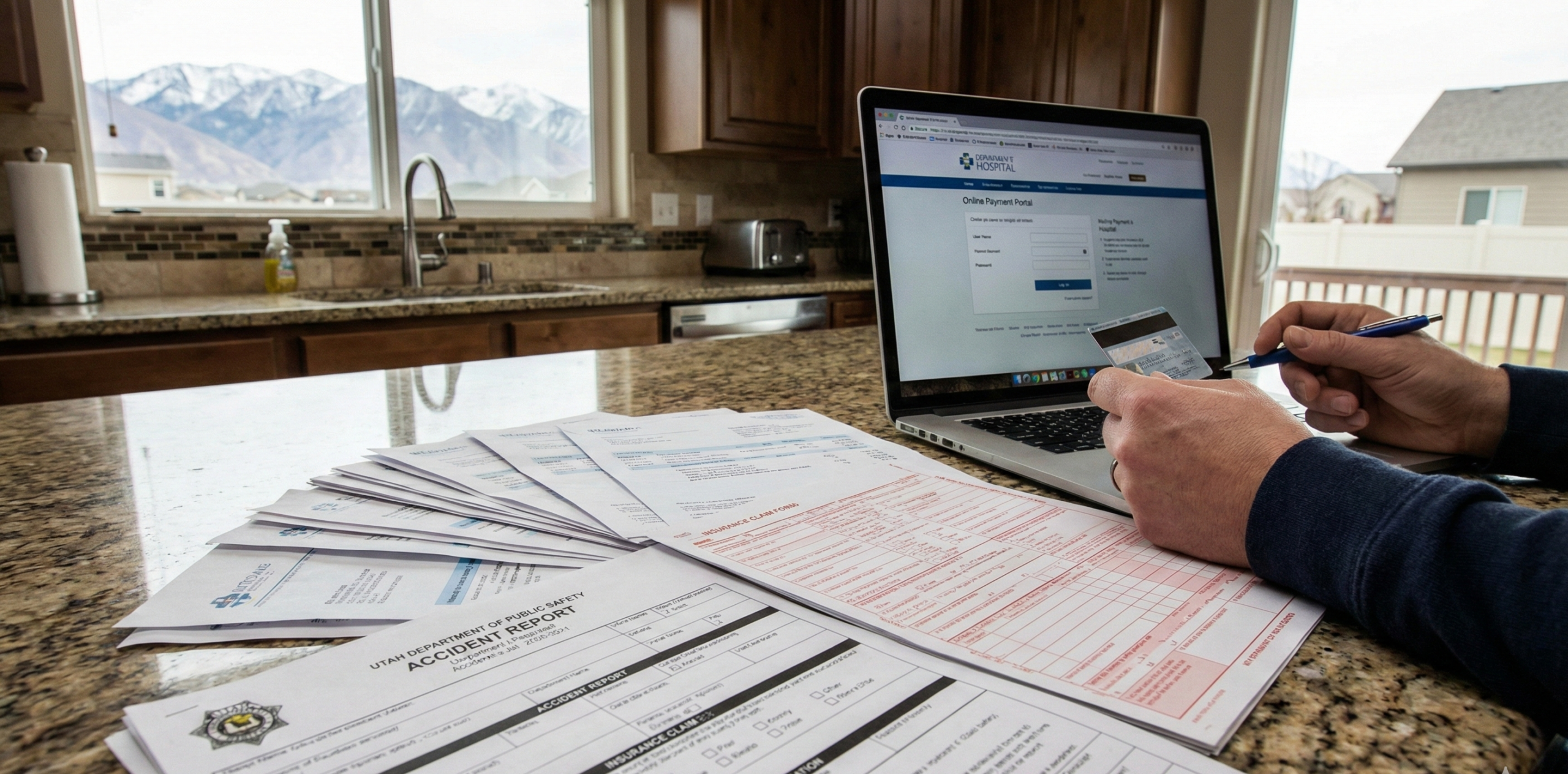
Insurance companies in Utah must handle claims honestly and fairly. When an insurer delays without a real reason, misrepresents coverage, or tries to wear you down into accepting less than the claim is worth, people often describe that behavior as bad faith.
This guide explains bad faith insurance practices in Utah in plain English: what the term usually means, what Utah rules and courts look at, and what practical steps can help protect you if an insurer is not playing it straight.
If you are still early in the process, it can help to start with the basics: how to file an insurance claim after an accident in Utah and understanding first-party vs third-party claims in Utah.
Note: This is educational information, not legal advice. Bad faith questions are fact-specific and depend on the policy language, the claim file, and the communications timeline.
Bad Faith Insurance Practices in Utah Explained
At a high level, “bad faith” refers to an insurer handling a claim in a way that is unfair, unreasonable, or not honest. Utah recognizes that insurance contracts include an implied duty of good faith and fair dealing, and Utah courts have addressed how that duty operates in first-party insurance situations. :contentReference[oaicite:0]{index=0}
Utah also has a statute that lists examples of unfair claim settlement practices. These include things like knowingly misrepresenting policy provisions, failing to promptly acknowledge communications, failing to reasonably explain a denial, and not attempting in good faith to settle when liability is reasonably clear. :contentReference[oaicite:1]{index=1}
One important detail: the Utah unfair claim settlement practices statute says it does not create a private cause of action. In other words, it is not a simple “you violated this statute, so I automatically win” claim. :contentReference[oaicite:2]{index=2}
The video below gives a helpful foundation for what people mean when they say an insurer is acting in bad faith, and the kinds of conduct that can raise red flags.
Watch: What Counts as Bad Faith Insurance Conduct
Key Definitions and Utah Rules That Often Come Up
Bad faith disputes usually revolve around the same core issues: what the policy promises, what the insurer knew (and when), and whether the insurer’s actions were reasonable in light of the facts it had.
First-party claim: A claim you make with your own insurer under your own policy (for example, medical benefits, property coverage, or uninsured or underinsured motorist coverage). If you need a refresher, see understanding first-party vs third-party claims in Utah.
Third-party claim: A claim made against someone else’s liability insurance, typically after an accident where you believe the other person is at fault.
Unfair claim settlement practices: Utah law lists specific examples, including failing to act promptly on claim communications, failing to implement reasonable standards for prompt investigation, failing to explain denials, and not attempting in good faith to settle when liability is reasonably clear. :contentReference[oaicite:3]{index=3}
Timely payment: Utah law also addresses the timely payment of valid claims by an insurer, with details guided by statute and regulatory rules. :contentReference[oaicite:4]{index=4}
If your dispute is tied to an accident claim, it helps to understand how value is typically built and supported. This resource walks through common damage categories: calculating damages in a Utah car accident case.
This Instagram reel connects the “bad faith” concept to real settlement friction people experience after crashes, especially when the claim value is clear but the offers are not.
The table below summarizes common “red flag” behaviors versus claim handling that is more typical (even if frustrating).
| Claim handling issue | Why it matters in a bad faith discussion |
|---|---|
| Policy language is misrepresented | Utah’s unfair practices statute lists knowingly misrepresenting material facts or policy provisions as an unfair claim settlement practice. :contentReference[oaicite:5]{index=5} |
| Communications are ignored or delayed | Repeated failures to acknowledge and act promptly on claim communications can signal a broader problem, especially if it looks like a “general business practice.” :contentReference[oaicite:6]{index=6} |
| Investigation is slow without a real reason | Failing to adopt and implement reasonable standards for prompt investigation and processing is listed as an unfair practice when done with sufficient frequency. :contentReference[oaicite:7]{index=7} |
| Denials are vague or unexplained | Failing to provide a reasonable explanation for a denial or compromise offer is listed in the statute. :contentReference[oaicite:8]{index=8} |
| Liability is clear, but settlement is not attempted | Not attempting in good faith to effectuate a prompt, fair, and equitable settlement when liability is reasonably clear is also listed. :contentReference[oaicite:9]{index=9} |
Important Utah-specific reminder: the statute that lists unfair claim settlement practices also states that it does not create a private cause of action. That is why many disputes focus on the policy contract, the claim file, and whether the implied duty of good faith and fair dealing was breached under Utah law. :contentReference[oaicite:10]{index=10}
Typical Claim Steps and What to Document
Most “bad faith” disputes are not decided by one phone call. They are decided by a timeline: what was requested, what was provided, what the insurer said, and whether the insurer’s actions make sense in light of the available information.
Step 1: Confirm the claim type and coverage
Know whether you are dealing with your own policy (first-party) or someone else’s carrier (third-party). Your coverage and duties can differ based on that starting point.
Step 2: Build a clean written record
Track claim numbers, adjuster names, dates, and what was requested. When possible, confirm key points in writing after calls.
Step 3: Provide documents in a complete package
Send relevant records together so the insurer cannot reasonably claim it is “still waiting” on basic proof. Keep copies of what you send.
Step 4: Ask for clear written explanations
If the insurer denies, delays, or offers a low settlement, ask for the basis in writing and request the specific policy provisions relied on.
Step 5: Escalate when the claim stalls
Escalation can include supervisor review, a formal complaint to the Utah Insurance Department, or legal review of the claim file depending on what is happening.
If you are dealing with heavy adjuster pressure or confusing tactics, this companion guide can help you reset the basics before you respond: dealing with insurance adjusters in Utah.
The video below reinforces why bad faith matters. It explains how “small” handling decisions can have big consequences for policyholders.
Watch: Bad Faith, Big Consequences
Common Forms, Filings, and Requests You May See
There is no single “bad faith form.” Instead, bad faith issues usually show up through everyday claim paperwork, written requests, and how the insurer responds.
Written claim notice and follow-up: Claim number confirmation, contact information, and written summaries of what has been provided and what is still needed.
Policy and claim file requests: Requests for the specific policy provisions supporting a denial or settlement position, plus a clear explanation of what facts the insurer is relying on.
Proof of loss and supporting documentation: Depending on the type of claim, insurers may request a formal proof of loss or similar documentation. Keep copies of what you submit and when.
Utah Insurance Department complaint: Consumers can file complaints through the Utah Insurance Department’s complaint portal when they believe claim handling is improper. :contentReference[oaicite:11]{index=11}
This Instagram reel gives a non-technical example of bad faith style behavior people report after major losses, where the dispute is not whether damage happened, but whether the insurer will pay what is fair.
Common Mistakes to Avoid
Bad faith situations often get worse when the record is sloppy. These are practical mistakes that can make it harder to prove what really happened and when.
Relying on phone calls only: When the dispute becomes serious, the written record matters. Confirm key points in writing so the file is clear.
Missing what the insurer is actually claiming: If you receive a denial or a low offer, ask for the written basis and the policy provisions being relied on. Vague explanations can be a warning sign. :contentReference[oaicite:12]{index=12}
Under-documenting damages: Keep a clean file of bills, receipts, repair estimates, wage loss documentation, and out-of-pocket costs.
Letting the claim timeline drift: Delays can reduce leverage. Keep a simple log of “submitted” and “response” dates so the pacing is visible.
Waiting too long to get help: If the claim stalls, facts are disputed, or the policy language is being used in a way that does not make sense, legal guidance can help you understand options under Utah law.
If you are in the auto accident context, these two resources often help people spot problems earlier: Utah car accident claim timelines explained and common mistakes after a Utah auto accident.
This post highlights why state oversight matters. Utah’s insurance regulators review consumer complaints and claim handling issues, which can be relevant context when problems become repetitive or widespread.
What Policyholders Can Do When a Claim Feels Unfair
Sometimes a claim dispute is a normal disagreement about value. Other times, the handling itself is the problem. The goal is to move from “this feels wrong” to “here is what happened, here is what I provided, and here is what the insurer did (or did not do).”
Utah’s unfair claim settlement practices statute includes examples like failing to act promptly on communications, failing to implement reasonable investigation standards, and failing to reasonably explain denials or compromise offers. :contentReference[oaicite:13]{index=13}
When claim handling crosses into bad faith territory, options can include formal internal escalation, regulatory complaints, or legal action focused on the policy contract and related duties recognized under Utah law. :contentReference[oaicite:14]{index=14}
The video below takes a more case-focused angle and explains what policyholders can do when they believe a claim was unreasonably denied or delayed.
Watch: When Insurers Act in Bad Faith and What to Do Next
Next Steps
If you suspect bad faith insurance practices, focus on steps that protect your file and clarify your options.
Ask for clarity in writing: Request the specific policy provisions and a reasonable explanation for any denial or low offer. :contentReference[oaicite:15]{index=15}
Organize your documentation: Keep one folder for communications, estimates, bills, photos, and submissions. A clean record makes the timeline hard to dispute.
Track delays: Note what you submitted, when you submitted it, and what response you received. If the claim handling becomes a dispute, that timeline matters.
Consider a regulatory complaint when appropriate: Utah provides a complaint portal through the Utah Insurance Department. :contentReference[oaicite:16]{index=16}
Get legal guidance before your options narrow: If the insurer is misrepresenting coverage, refusing to explain decisions, or dragging out a claim without a real reason, a review can help you understand the best path forward under Utah law. :contentReference[oaicite:17]{index=17}
Talk to Gibb Law Firm About a Utah Insurance Dispute
Gibb Law Firm is a Utah-based law firm focused on clear, practical guidance for people dealing with stressful claim and settlement problems. If you are facing delays, denials, or settlement tactics that do not feel fair, we can help you understand your options and next steps.
Schedule a Consultation