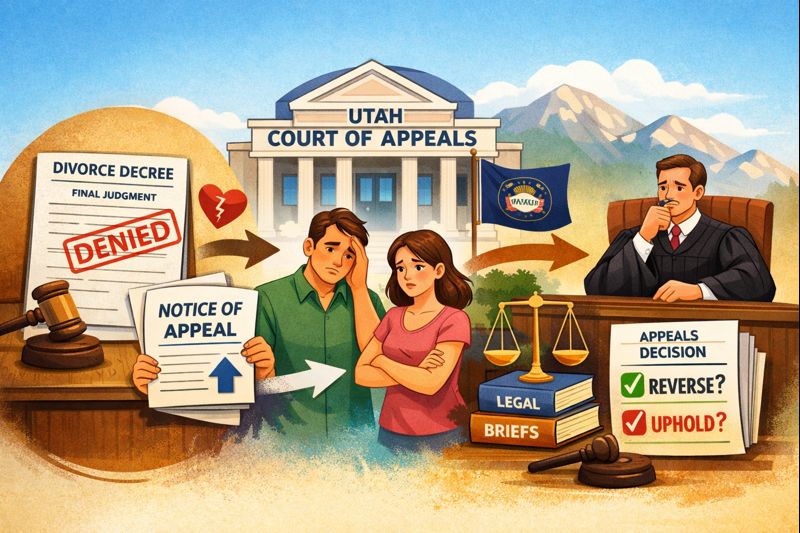
A final divorce decree can feel like the end of a long and stressful process. Sometimes, though, a party believes the court made a legal or procedural mistake that affected the outcome. In Utah, an appeal is the main path for asking a higher court to review certain decisions in a divorce case.
An appeal is not a do-over and it is not a second trial. The appellate court generally reviews what happened in the district court using the written record, the transcripts, and the legal arguments in the briefs.
If you want background on how Utah divorce cases reach a final decree, start with how to file for divorce in Utah with a step by step guide. For common decree topics that sometimes lead to disputes, review property division in Utah and what equitable really means and how alimony is determined in Utah.
If children are involved, it can also help to understand how courts frame custody decisions: understanding child custody in Utah, including legal vs physical custody.
If you want a visual reference image to place near the top of this article, you can use: Divorce appeals image reference.
Note: This article is educational information, not legal advice. Appeal deadlines and procedures are strict, and the right approach depends on the court record and the specific orders entered in your case.
Overview of How Divorce Appeals Work in Utah
When people talk about “appealing a divorce decree,” they usually mean asking Utah’s appellate courts to review a final judgment from a district court. In most cases, the goal is to show that a legal error happened and that the error matters to the outcome. Many issues in a divorce involve the trial court’s discretion, which can make appeals more challenging than people expect.
What an appeal is: A review of the district court’s decision based on the record, not new evidence or new testimony.
What an appeal is not: A second chance to “tell your story” or introduce documents that were never presented to the district court.
Why timing matters: Utah appeal deadlines are strict. Missing a deadline can end the right to appeal, even if you have strong arguments.
What courts focus on: Whether the law was applied correctly, whether required procedures were followed, and whether findings are supported by the evidence in the record.
The video below provides a general, plain-English overview of how divorce appeals are filed and how timelines typically work, which can help you understand the process before you decide on next steps.
Watch: How a Divorce Appeal Is Filed and What the Timeline Looks Like
Key Definitions and Utah Rules That Shape an Appeal
Appeals use specific terms that matter. Understanding the basics can help you set realistic expectations and avoid common misunderstandings about what appellate courts can and cannot do.
Divorce decree: The final written order that resolves divorce issues such as property division, alimony, custody, parent-time, and support.
Notice of appeal: The document that starts the appeal process. It must be filed on time, usually within 30 days after entry of the judgment, subject to specific rule exceptions.
Record on appeal: The materials the appellate court reviews, typically including filed documents, admitted exhibits, and hearing or trial transcripts.
Standard of review: The level of deference the appellate court gives the district court. Some issues are reviewed more strictly, while many divorce decisions are reviewed with deference to the trial court’s discretion.
Key timing rule: Utah’s appellate timing requirements are addressed in the Utah Rules of Appellate Procedure. See Utah Rules of Appellate Procedure Rule 4 on time to file a notice of appeal.
The Instagram reel below explains a point that surprises many people: an appeal is generally a review of the written record, not a second trial with new testimony.
Typical Court Procedures in a Utah Divorce Appeal
Every case is different, but most divorce appeals follow a predictable path. The best way to stay organized is to treat the process like a structured project with strict deadlines and limited room for error.
Step 1: Identify what you are appealing
Start with the signed decree and any related findings or post-trial rulings. Decide which specific rulings you believe were legally incorrect or unsupported by the record.
Step 2: Confirm the appeal deadline
Appeal timelines are strict. The deadline often runs from the entry date of the final judgment, and some post-judgment motions can affect timing under the rules.
Step 3: Secure the record and transcripts
Appeals rely on the record. If key hearings were not transcribed or key exhibits are missing, it can limit what the appellate court can review.
Step 4: Briefing and legal argument
The appellant usually files an opening brief explaining the legal issues and citations to the record. The other party responds, and a reply brief may follow.
Step 5: Decision and next steps
The appellate court may affirm, reverse, remand for further proceedings, or issue other relief depending on the issues and standards of review.
| Appeal stage | What it usually involves |
|---|---|
| Notice of appeal filed | A timely filing that starts the appeal and identifies the judgment being challenged. |
| Record and transcript preparation | Assembling the materials the appellate court will review, including transcripts of key hearings or trial. |
| Written briefing | Legal arguments with citations to the record and to controlling authority. This is where most appeals are won or lost. |
| Oral argument when scheduled | Some cases are set for oral argument, but many are decided on the briefs and the record alone. |
| Opinion or order | The appellate court issues its decision, which may uphold the decree or require further action in the district court. |
The video below is Utah-focused and discusses how a family law attorney evaluates whether an appeal makes sense, including realistic expectations and the practical risks of challenging divorce orders.
Watch: Should You Appeal a Family Law Case in Utah
Common Filings and Documents That May Be Required
Exact filing requirements depend on the court and the issues involved, but most divorce appeals require early paperwork, careful record citations, and strict compliance with the rules. Missing a required filing or formatting requirement can cause delays, added expense, or dismissal.
Notice of appeal: This starts the appeal and must be filed on time under the Utah Rules of Appellate Procedure.
Transcript and record requests: Many appeals depend on what was said and what evidence was admitted. If the record is incomplete, it can limit the issues you can raise.
Appellate briefs: The written briefs explain what the lower court did wrong, why it matters, and where the record supports your argument.
Motions during the appeal: Some situations involve motions for extensions, to supplement the record, or to address urgent issues like temporary enforcement or a stay.
Rule guidance: If you are trying to understand the core deadline framework, review Utah Rules of Appellate Procedure Rule 4 and follow the specific directions that apply to your case type.
The video below discusses whether and how someone can appeal a divorce judgment, including common grounds people raise and the importance of focusing on legal error rather than frustration with the outcome.
Watch: Can You Appeal a Divorce Judgment and What Grounds Matter
The Instagram post below reinforces a practical point: a divorce decree is the order that finalizes many legal issues, which is why people often look at appeal deadlines right after the decree is entered.
Common Mistakes to Avoid When Considering an Appeal
Divorce appeals can be expensive and time-consuming. They also have narrow rules. The most common problems come from misunderstanding what an appeal can actually accomplish and missing the procedural steps that keep an appeal alive.
Missing the deadline: If the notice of appeal is late, the appellate court may not be able to hear the case. Track the entry date of the judgment and the applicable rules.
Trying to add new evidence: Appeals generally review the record from the district court. New documents or new witnesses usually cannot be introduced on appeal.
Appealing frustration instead of legal error: Appellate courts focus on legal standards, procedure, and the record, not whether the outcome feels unfair.
Ignoring the standard of review: Many divorce issues are reviewed with deference to the trial court, which can make reversal difficult without clear, record-based error.
Overlooking other legal tools: In some situations, a post-judgment motion or a modification process is the better fit than an appeal. For example, if support needs to change because circumstances changed after the decree, review how to modify child support in Utah.
The reel below is a helpful mindset reminder: appellate decisions are driven by facts in the record and legal standards, not emotion. That focus can help people evaluate appeals more realistically.
Next Steps: A Practical Checklist Before You File
If you are thinking about appealing a divorce decree in Utah, a checklist approach can help you avoid rushed decisions and missed deadlines. The goal is to quickly identify whether there is a real legal issue and whether the record supports it.
Confirm the entry date: Identify the date the final decree or order was entered, because appeal deadlines often run from that date.
List the issues clearly: Write the specific rulings you believe were wrong, such as a property valuation decision, an alimony finding, or a custody-related ruling.
Match issues to the record: For each issue, identify where the evidence appears in the record and whether the court made findings that support its decision.
Plan for transcripts and briefing: Appeals often depend on transcripts and detailed briefing. Build a timeline and assume the process will take time.
Talk to Gibb Law Firm About Appealing a Divorce Decree in Utah
Gibb Law Firm is a Utah-based firm focused on clear, practical guidance in high-stakes family matters. If you are considering an appeal, we can help you understand the rules, the likely costs and timeline, and whether the record supports the arguments you want to raise.
Schedule a Consultation