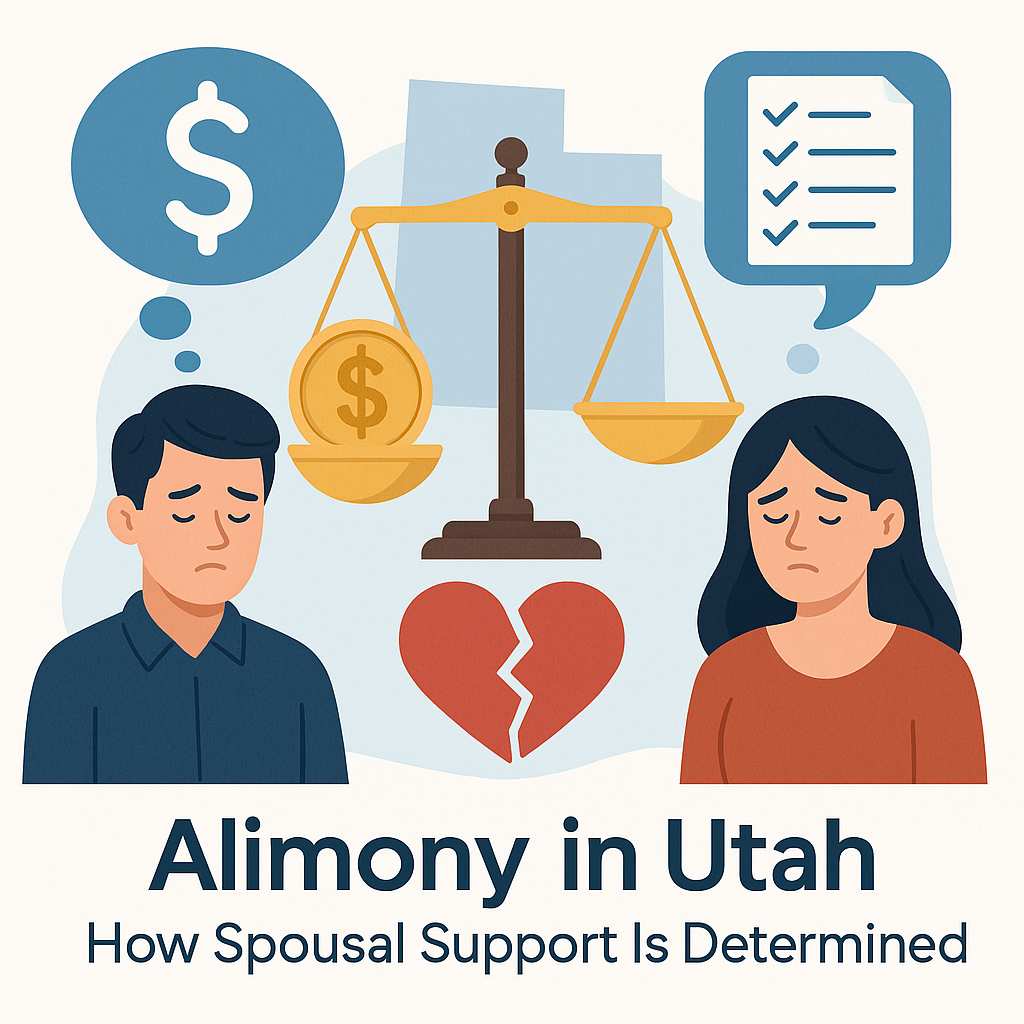
Alimony in Utah exists to help ensure both spouses can maintain reasonable financial stability after a divorce. It is not automatic, and it is not designed to punish either spouse. Instead, Utah courts evaluate several factors to determine whether alimony is appropriate, how much should be paid, and how long payments should last.
At Gibb Law Firm, we help clients understand how Utah’s laws apply to their situation, ensuring alimony outcomes are both fair and legally sound.
Introduction: Understanding When Alimony Applies in Utah
Alimony is awarded based on need, ability to pay, and the overall financial circumstances of the marriage. Utah courts look closely at monthly budgets, income, work history, and how the marital lifestyle was structured. The goal is to prevent extreme unfairness after a separation while still encouraging both spouses to become self-reliant when possible.
This guide breaks down eligibility, duration rules, modification standards, and how Utah’s family law system approaches spousal support decisions.
Watch: Overview of Alimony in Utah
How Utah Law Approaches Alimony
Alimony in Utah is governed by a fairness-based system. Judges evaluate the marriage as a whole: how long it lasted, what each spouse contributed, and what each person needs to move forward without severe hardship. Utah Code § 30-3-5 outlines the framework for spousal support awards, including duration limits and modification options.
Courts consider the length of the marriage, each spouse’s income and earning capacity, and the marital standard of living.
Judges look at both spouses’ monthly budgets to see whether one spouse has a genuine financial need and whether the other has the ability to help.
Alimony is not meant to create a windfall. It is designed to reduce unfairness while still encouraging long-term financial independence when possible.
Watch: Four Main Factors in Utah Alimony
Key Definitions and Utah Statutes
Utah courts rely on several core concepts when deciding whether to award alimony and in what amount:
Marital Standard of Living refers to the lifestyle the couple established during the marriage. Alimony cannot exceed the requesting spouse’s reasonable needs based on that standard.
Need and Ability to Pay require the spouse requesting alimony to show a financial need and the other spouse to have the ability to cover that need without falling below a reasonable budget themselves.
Length of the Marriage typically limits how long alimony can last. A ten-year marriage, for example, usually means alimony cannot exceed ten years except in unusual situations.
Fault can influence alimony in select circumstances. Utah is one of the few states where financial misconduct, infidelity, or domestic violence may be considered.
Watch: Utah’s Three-Step Alimony Analysis
Typical Court Procedures in Utah Alimony Cases
When alimony becomes part of a divorce case, Utah courts follow predictable steps. Understanding this process helps spouses prepare the right documents and expectations.
Financial Declarations
Both spouses file detailed financial forms listing income, expenses, debts, and assets. Accuracy is crucial because alimony often turns on monthly budgets.
Budget Review
Judges compare the spouses’ budgets to see whether a genuine need exists and whether the other spouse can realistically support that need.
Temporary Orders
In some cases, short-term alimony is ordered early in the case to stabilize the situation until the final decree is entered.
Final Ruling
The judge decides amount, duration, and conditions. Alimony may be ordered as monthly payments or, in rare cases, lump-sum support.
Required Forms and Filings
Utah alimony evaluation relies heavily on documentation. The court cannot evaluate need and ability to pay without clear financial records.
Financial Declaration (required in most divorce cases) listing income, expenses, debts, and assets.
Income verification such as pay stubs, tax returns, or profit-and-loss statements for self-employed spouses.
Household budget worksheets for both parties, showing realistic monthly living expenses.
Supporting evidence for need or ability to pay, such as medical expenses, childcare costs, or documentation of bonuses and commissions.
Common Mistakes to Avoid
Courtroom decisions often turn on credibility. These common mistakes can harm an alimony case in Utah.
Overestimating expenses: Courts look closely at inflated budgets. Overstating costs can hurt your credibility and reduce the judge’s trust in your numbers.
Underreporting income: Failing to disclose bonuses, side income, or investment earnings can damage your case and lead to adverse findings.
Ignoring tax implications: Post-2018 federal tax law generally does not treat alimony as deductible for the payer or taxable to the recipient, which affects net budgets on both sides.
Assuming alimony is guaranteed: Spousal support is case-specific. Many Utah divorces result in no alimony at all if both spouses can be self-supporting.
How Long Alimony Lasts in Utah
In most cases, Utah courts will not order alimony for a longer period than the marriage itself. A 12-year marriage, for example, generally means a maximum of 12 years of alimony, though the court can shorten that period based on finances and fairness.
Alimony is usually limited to the length of the marriage, with extensions reserved for unusual or severe hardship situations.
Courts may phase alimony down over time to encourage the recipient to increase income or become self-supporting.
Alimony automatically ends if either spouse dies, the recipient remarries, or the recipient cohabits in a marriage-like relationship.
Alimony Modification and Termination
Utah allows alimony modifications when there is a substantial, material, and unforeseen change in circumstances. The change must be significant enough to make the original order unfair or unworkable.
Examples include long-term job loss, medical disability, or major changes in income or necessary living expenses. Voluntary reductions in income are rarely accepted as a basis for reducing alimony.
To modify alimony, the requesting party must file a petition to modify, serve the other spouse, and present evidence supporting the requested change.
Next Steps for Utah Residents Considering or Facing Alimony
If alimony is likely to be part of your divorce, early preparation can make a major difference in the outcome.
Gather financial documents early, including tax returns, pay stubs, bank statements, and documentation of major expenses.
Prepare an accurate monthly budget that reflects your actual, reasonable living expenses.
Understand Utah’s statutory limits on duration and the court’s focus on need and ability to pay.
Avoid common documentation mistakes and speak with a Utah family law attorney before agreeing to any support terms.
Talk to Gibb Law Firm About Utah Alimony
Have questions about whether alimony applies in your case, how long it might last, or how judges will view your finances? Our family law team can help you evaluate your rights, prepare your documentation, and move forward with confidence.
Schedule a Consultation