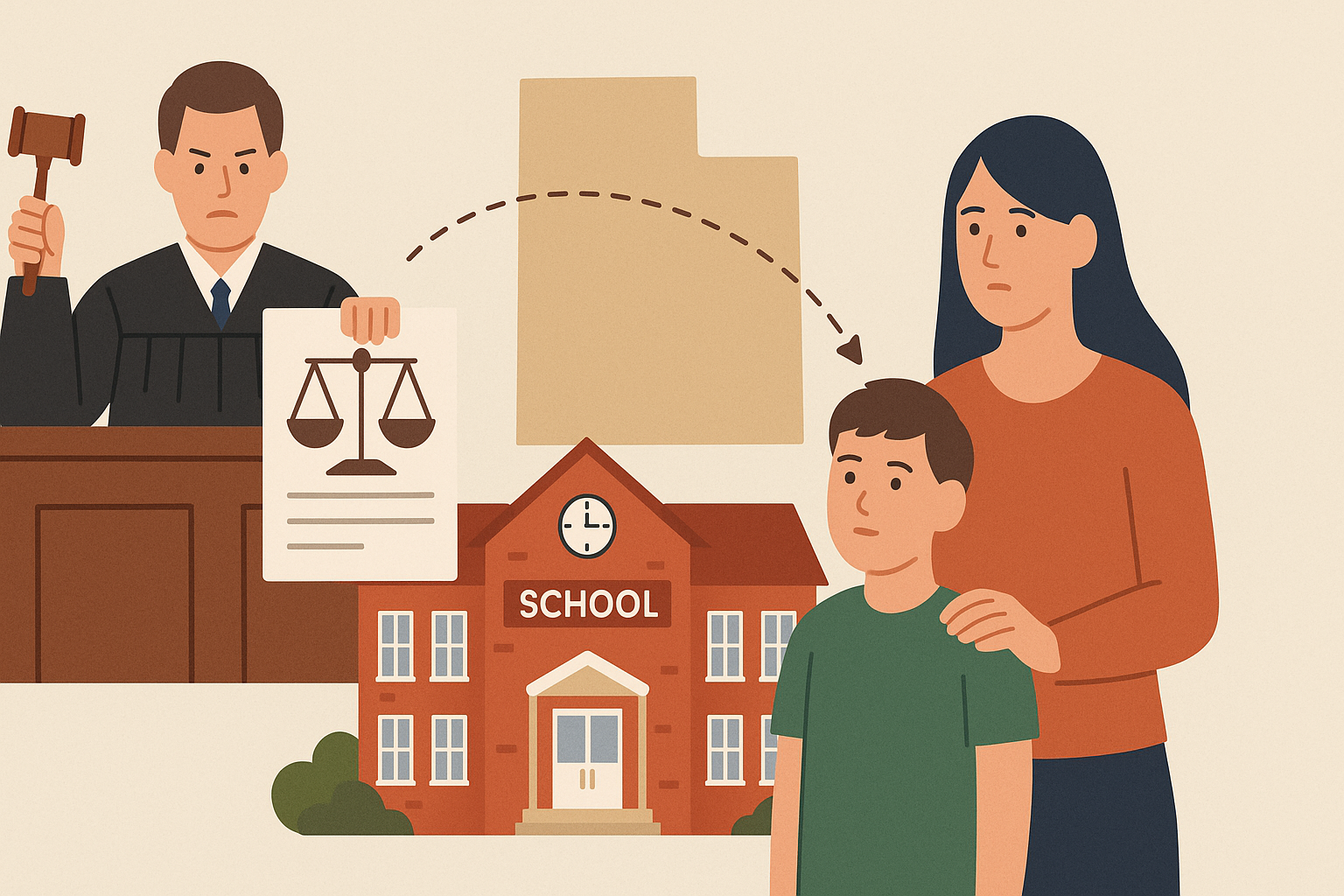
Where a child goes to school is one of the most important decisions divorced or separated parents make in Utah. School choice affects the child’s daily routine, friendships, and long-term stability, so Utah courts treat education as a major custody decision not just a scheduling detail.
Gibb Law Firm helps Utah parents understand how legal custody, physical custody, and parenting plans all shape who gets to decide things like school district, school changes, and special education services. This overview explains how Utah law approaches school decisions, what happens when parents disagree, and which steps to take if you need to change your orders.
Why School Decisions Matter in Utah Custody Cases
School decisions are part of a child’s core stability. Changing a school can change the child’s commute, peer group, academic support, and how easily each parent can exercise parent-time. Because of that, education is usually treated as a legal custody decision in Utah, not just a logistical issue.
School choice is tied to legal custody, which gives one or both parents the right to make major decisions about the child’s life.
Physical custody and the child’s primary residence often determine which school districts and bus routes are realistically available.
Changes in school can disrupt the other parent’s parent-time schedule, transportation, and evening routines if not carefully planned.
Courts want school decisions to support the child’s long-term best interests, not just one parent’s preference or convenience.
The following video offers a plain-English explanation of how Utah courts think about custody, including who usually has authority over education and other big-picture choices.
Watch: How Is Child Custody Determined in Utah?
How Utah Custody Arrangements Affect School Choices
In Utah, education choices flow mainly from which parent has legal custody. Physical custody and parent-time affect the practical side of getting the child to and from school.
Joint Legal Custody
Both parents share decision-making authority over major issues like education. In most cases, one parent cannot unilaterally switch schools without consulting the other and following the parenting plan’s dispute process.
Sole Legal Custody
One parent has the final say on major decisions, including school choice. Even then, the court may look at the impact on the other parent’s parent-time and the child’s stability before approving large changes.
Physical Custody and School Districts
The child’s primary residence often dictates which public schools are available. When parents live in different districts, the court may weigh commute time, transportation, and how each option affects the child’s relationship with both parents.
To understand how legal and physical custody fit together, you may want to review Gibb Law’s Firm guide to legal vs. physical custody in Utah. For a broader look at how weekly schedules are built, see our resource on parenting plans in Utah.
This Instagram reel focuses on how Utah’s custody framework aims to create fair, workable parenting arrangements context that also applies when judges weigh school-related decisions.
Key Terms and Common School-Related Disputes
Several recurring concepts show up in Utah school-choice disputes. Understanding them can help you read court papers and talk effectively with your attorney.
Legal custody: The right to make major decisions about education, health care, religion, and other significant issues. School choice usually falls under legal custody.
Physical custody: Where the child primarily lives. The child’s primary home often drives which school is geographically practical and which district applies.
Parent-time: Utah’s term for what many states call “visitation.” School start and end times heavily influence how parent-time is scheduled on school days.
Best interests of the child: The guiding standard Utah judges use when deciding custody, school disputes, and relocations. The focus is on the child’s needs, not either parent’s convenience.
School-related disagreements often arise when one parent wants to:
Move the child to a different school district after a relocation or remarriage.
Switch from public school to charter, private, or online school without clear agreement from the other parent.
Enroll the child in or remove the child from special education services, IEPs, or 504 plans.
Change the school calendar in a way that makes it harder for the other parent to exercise parent-time.
School Decisions When Parents Were Never Married
Many Utah custody cases involve parents who never married. In those cases, school decisions are still tied to legal custody and the court’s custody order but the starting point may be different, especially before paternity and custody are formally established.
Establishing Paternity and Custody
Before a court can clearly assign legal custody and school decision-making, paternity and custody usually need to be formally established. Gibb Law’s guide to paternity in Utah explains this process in more detail.
Allocating Legal Custody Rights
Once the court enters custody orders, it will identify who has legal custody and how school decisions are made whether jointly or by one parent. The order may require parents to consult each other before changing schools.
Aligning School Choice with Parent-Time
Even when one parent has more overnights, the judge may look at how each proposed school affects the other parent’s ability to stay involved with homework, school events, and transportation.
The following video explains how Utah approaches custody when parents never married a useful foundation if you’re now facing a school decision in that context.
Watch: Custody When Utah Parents Are Not Married
Changing Schools, Relocations, and Utah Court Procedures
When parents disagree about changing schools, Utah courts usually expect them to follow a process rather than make unilateral decisions. The exact steps depend on your orders and whether you are changing legal custody or just resolving a dispute under joint legal custody.
Review Your Decree and Parenting Plan
Many Utah decrees and parenting plans include a dispute-resolution clause explaining how parents should handle disagreements about education. Before filing anything with the court, carefully read what your order already requires.
Use Mediation or Negotiation First
Utah courts frequently require mediation in custody disputes. Mediation can help parents explore transportation, before- and after-school care, and academic support so the school decision is thought through, not just rushed.
Filing a Motion or Petition
If mediation fails or the issue is urgent, a parent may file a motion asking the judge to decide a specific school dispute, or a petition to modify custody if the underlying legal custody arrangement no longer works. For a deeper look at modifications, see Gibb Law Firm’s guide on Utah child custody modifications.
Considering Relocation Factors
When a parent wants to move far enough that it affects school and parent-time, the court may look at factors similar to those in our article on relocation after divorce in Utah, including travel time, the child’s ties to each community, and overall stability.
The Instagram reel below focuses specifically on how school changes are handled in co-parenting situations, which is often the heart of these disputes.
If one parent repeatedly ignores court-ordered decision-making rules or changes schools without proper notice, the other parent may need to explore enforcement options. Our resource on enforcing custody and visitation orders in Utah explains how those tools work.
Forms and Filings Often Involved in School Disputes
Every case is different, but Utah parents dealing with school-choice issues commonly encounter the following filings and documents:
Petition or complaint establishing custody: In a divorce, paternity, or custody case, this is where parents first ask the court to define legal custody and spell out decision-making authority over education.
Parenting plan: When joint legal or joint physical custody is requested, Utah courts typically require a written parenting plan. That plan often describes how major decisions (including school choice) will be made and what happens if parents do not agree.
Motion to modify custody or legal decision-making: If the current legal custody setup is causing repeated conflict about schooling, a parent may ask the court to adjust decision-making authority, not just the schedule.
Notice of relocation and related filings: When one parent wants to move far enough to change schools, notices and relocation filings may be required so the court can re-evaluate custody and parent-time alongside the school issue.
Stipulated agreements and amended orders: If parents reach an agreement about a new school or updated decision-making process, they often submit a written stipulation and proposed order so the court can make it enforceable.
Modifying Custody or Decision-Making Because of School Issues
Sometimes, school conflicts reveal that an existing order is no longer workable especially if parents have grown further apart geographically or communication has broken down. In those cases, a parent may ask the court to modify legal custody, physical custody, or both.
Do not change schools unilaterally under joint legal custody: Courts often view unilateral changes as a red flag. It can hurt your credibility and expose you to enforcement or contempt issues.
Avoid tying school decisions to money or unrelated disputes: Withholding cooperation on education because of child support or communication issues can backfire in front of a judge.
Do not wait until the week before school starts: Courts move slowly. If you know a school change is coming, start the conversation and any legal process early.
Document your concerns with facts, not accusations: Attendance records, teacher feedback, and transportation details are more persuasive than angry texts.
The video below explains how Utah parents can seek changes to custody and parent-time orders, including when education issues are part of the reason for asking the court to revisit the decree.
Watch: How to Modify Custody and Parenting Orders in Utah
Next Steps for Utah Parents Facing School Disputes
School decisions can feel urgent and emotional, especially when you believe your child is not thriving where they are, or when a sudden move threatens to uproot their stability. But rushing ahead without a plan can create long-term legal problems.
Start by carefully reading your decree and parenting plan so you understand what they say about legal custody, school decisions, and dispute resolution.
Gather school records, emails, and calendars that show how each option affects your child’s attendance, performance, and relationship with each parent.
Consider mediation or a structured conversation before filing in court, especially if you and the other parent can still communicate with some help. Our overview of Utah divorce mediation explains what to expect from that process.
Talk with a Utah family law attorney about whether your situation calls for a targeted motion, a broader modification case, or simply better documentation and communication.
Gibb Law Firm offers Utah-focused guidance on custody, parent-time, and school decisions so you understand both your rights and your responsibilities as a parent.
Talk to Gibb Law Firm About Custody and School Decisions in Utah
If you are facing a disagreement about where your child should attend school, or you believe your current custody orders no longer reflect your child’s educational needs, Gibb Law Firm can help. Our team can review your decree, explain your options, and work with you to pursue a plan that supports your child’s best interests while protecting your rights.
Schedule a Consultation