After a car accident, it is normal to wonder if you can handle the insurance process yourself or if it is time to bring in an attorney. In Utah, that decision often depends on how serious the injuries are, whether fault is disputed, and whether the claim is likely to become more than a routine paperwork exercise.
Hiring a Utah car accident attorney does not automatically mean filing a lawsuit. In many cases, it means getting help early with evidence, deadlines, medical documentation, and fair settlement negotiations so you do not get boxed into a low offer or a damaging statement.
For immediate action steps, read what to do after a car accident in Utah. If you are already dealing with a fault argument, see how fault is determined in Utah car crashes.
Note: This article is educational information, not legal advice. Utah deadlines and insurance rules can be strict, and the right strategy depends on the facts of your crash and the coverage involved.
When to Hire a Utah Car Accident Attorney
A good rule of thumb is this: if your claim involves significant injuries, complicated liability, multiple insurance policies, or pressure to settle quickly, it is worth getting legal guidance early. The earlier you get help, the easier it usually is to preserve evidence and avoid common pitfalls that can reduce the value of your claim.
Injuries are more than “minor”: ER care, imaging, physical therapy, injections, surgery, or ongoing symptoms can quickly move a claim beyond a simple adjuster negotiation.
Fault is disputed or being shifted onto you: Comparative fault can reduce what you recover and in some situations can block recovery if your fault is higher than the other party’s.
You are dealing with commercial or government vehicles: Trucking cases and government-related claims often involve additional rules, layers of insurance, and faster notice requirements.
The insurer is pushing a quick settlement: Once you sign a release, you usually cannot reopen the claim later, even if your injuries or costs grow.
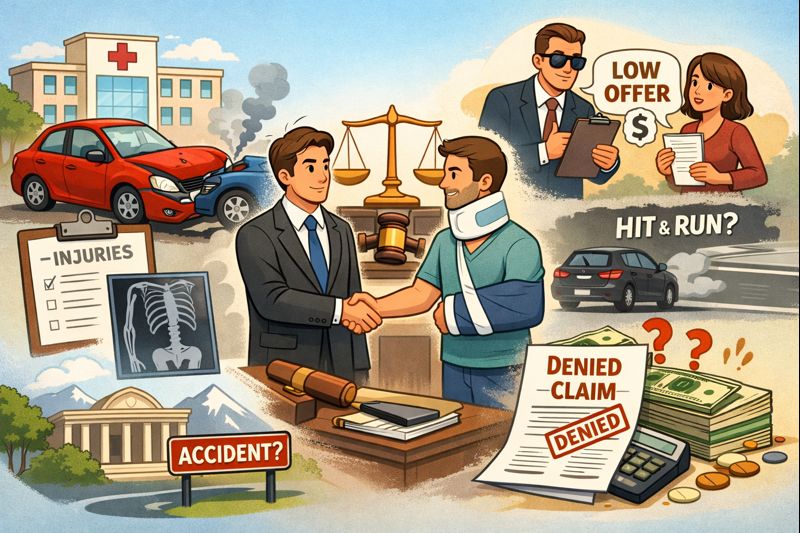
Here is a quick visual that matches the core decision most people face: routine claim vs. “get help now” claim.
| Situation | Why legal help may matter |
|---|---|
| Soft tissue pain that improves quickly | Some claims can be handled with strong documentation, but you still want to avoid mistakes that hurt credibility or value. |
| Ongoing pain, missed work, or multiple providers | Medical proof, wage loss documentation, and a clear timeline become more important and easier to challenge without a plan. |
| Disputed fault or multiple vehicles | Comparative fault arguments and shifting stories can reduce recovery unless evidence is preserved and presented well. |
| Commercial, rideshare, or government involvement | Extra insurance layers and stricter procedures can create traps for deadlines and notice requirements. |
| Pressure to settle early | Early offers may not reflect future medical needs, long-term symptoms, or full wage loss. |
The Utah-focused video below discusses when it makes sense to hire a lawyer vs. handling a claim on your own.
Watch: Is It Worth It to Hire a Utah Car Accident Lawyer
Key Definitions and Utah Laws That Affect When You Should Hire an Attorney
Most car accident cases turn on a few core legal ideas: negligence, comparative fault, and Utah’s insurance structure. Understanding these basics can help you spot when a claim is likely to become complicated.
Negligence: Failing to use reasonable care and causing harm. Your claim is typically built around proving the other driver was negligent.
Comparative fault: Utah uses a modified comparative fault system. Your recovery can be reduced by your percentage of fault, and you may be barred from recovery if your fault is greater than the combined fault of others you are claiming against. See Utah Code Section 78B-5-818.
No-fault and PIP threshold: Utah is a no-fault state for certain initial benefits, and Utah law includes limitations and conditions tied to personal injury protection and the ability to pursue certain damages. See Utah Code Section 31A-22-309.
General personal injury filing deadline: Many injury claims must be filed within four years. See Utah Code Section 78B-2-307.
Wrongful death deadline: If a crash results in death, the timeline can be shorter. See Utah Code Section 78B-2-304.
Government claims notice rules: Claims involving government entities can require a notice of claim, and missing the deadline can bar the claim. See Utah Code Section 63G-7-401 and Utah Code Section 63G-7-402.
If you were a passenger, you may have separate rights and insurance paths depending on the vehicles and policies involved. This short reel highlights passenger-rights basics after a crash.
Typical Insurance and Legal Steps in a Utah Car Accident Claim
Most Utah car accident cases start as insurance claims. Some stay there. Others escalate into formal demands, mediation, or a lawsuit if the insurer disputes liability, undervalues damages, or delays resolution.
Step 1: Get safe and document the scene
Photos, video, witness names, and basic notes can become the backbone of your claim if fault is disputed later.
Step 2: Get medical care and keep it consistent
Delays and gaps in treatment can give insurers room to argue your injuries were not caused by the crash.
Step 3: Start the insurance claim and track communications
Write down claim numbers, adjuster names, dates of contact, and what was said, especially if statements are recorded.
Step 4: Build a clean damages file
Medical records, bills, wage loss proof, and out-of-pocket expenses matter more than general descriptions of pain.
Step 5: Demand and negotiation, then mediation or suit if needed
If the insurer refuses to be fair, legal counsel can help prepare a demand package and decide whether formal litigation makes sense.
If you are unsure what to do in the first 24 to 72 hours after a crash, start with what to do after a car accident in Utah. It can help you protect your claim before the insurance process hardens into a one-sided story.
This reel shares why legal support can help during insurance negotiations, especially when adjusters push quick settlement language or partial fault.
Records and Paperwork That Often Matter
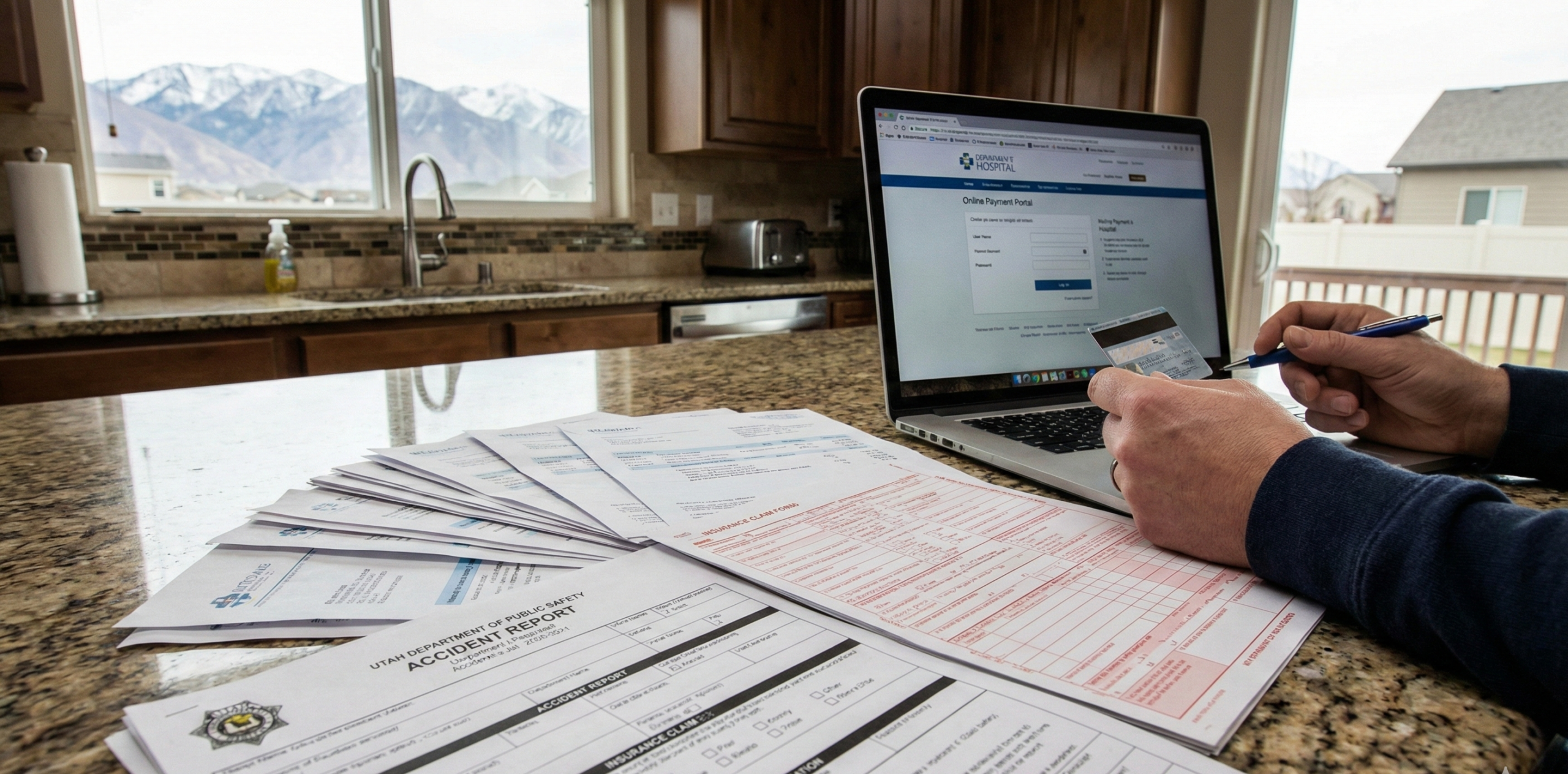
“Forms” vary by insurer and by the facts of the crash, but the documentation categories are consistent. The goal is to preserve proof of liability, proof of injury, and proof of financial loss.
Crash report and supporting materials: The report, diagram, and referenced materials can help clarify who did what and when.
Photos, video, and witness information: Third-party evidence can be critical if the other driver changes their story.
Medical records and billing: Keep itemized bills, treatment notes, imaging, and discharge summaries so the injury story is consistent and supported.
Wage loss verification: Employer letters, pay stubs, and time-off records help support lost income and reduced earning capacity arguments.
Property damage records: Repair estimates, total loss documents, towing and rental records, and receipts keep the property side of the claim organized.
Image reference for your design system (optional to include in your template):
Featured image: Use the provided image asset as a supporting visual near the top of the article.

Common Mistakes to Avoid After a Utah Car Accident
Many claims lose value because of preventable mistakes early on. These are common issues that can make it smart to hire a Utah car accident attorney sooner rather than later.
Giving a recorded statement without preparation: Small inconsistencies can be used to argue you were at fault or not truly injured.
Accepting fault or “splitting blame” casually: Fault percentages matter in Utah and can reduce recovery.
Gaps in treatment or missing follow-up care: Insurers often argue that gaps mean you were not injured or that something else caused the symptoms.
Settling before you understand your medical outlook: Once a claim is settled, you typically cannot come back for more later.
Waiting too long and drifting toward deadlines: Some deadlines are shorter than people expect, especially when a government entity is involved.
This video answers a common question people ask right away: do you need to hire an accident attorney, and what facts should guide that decision?
Watch: Do I Need to Hire an Accident Attorney
If you are facing a fault dispute, this is a good companion read: how fault is determined in Utah car crashes.
Next Steps and a Simple Hiring Checklist
If you are on the fence, focus on the facts that increase risk: disputed liability, meaningful injuries, multiple parties, or an insurer that is denying, delaying, or minimizing your damages. A short checklist can help you decide what to do next.
Preserve evidence now: Save photos, video, vehicle damage images, and witness contact information before it disappears.
Write down your timeline: A clear timeline helps prevent inconsistencies later and helps your attorney evaluate fault arguments.
Organize your medical file: Keep treatment dates, providers, restrictions, and referrals in one place.
Track wage loss and expenses: Small expenses add up, and they are easier to prove when documented consistently.
This reel shares general tips about when to contact a personal injury lawyer after an auto crash and how legal help can protect your recovery and your claim.
If you decide to speak with an attorney, the questions you ask can make the process clearer and more productive.
Watch: What to Ask When Hiring an Attorney
Need a starting point on the site? Review Gibb Law practice areas or return to the Gibb Law homepage for additional Utah legal resources.
Talk to Gibb Law About Your Utah Car Accident Claim
Gibb Law is a Utah-based law firm focused on clear, practical guidance and client-centered representation. If you are dealing with injuries, a fault dispute, or pressure from an insurance company, we can help you understand your options under Utah law and what next steps may fit your situation.
Schedule a ConsultationExplore Related Utah Car Accident Resources
These pages expand on the most common issues people face after a crash in Utah, including immediate next steps and how fault questions get resolved.