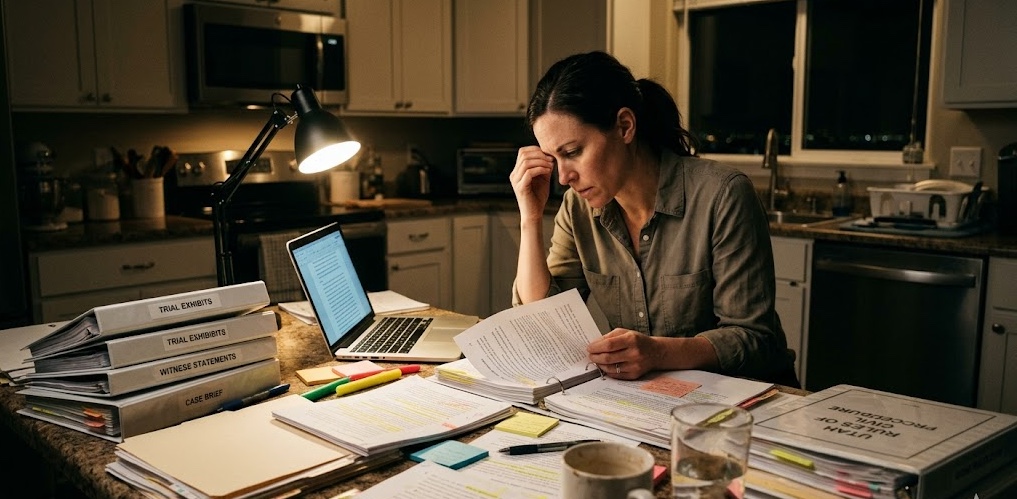
Preparing for Trial in Utah Civil Court
Why this matters: Preparing for trial in Utah civil court can shape the outcome of a case long before anyone enters the courtroom. Trial preparation affects witness credibility, admissibility of evidence, compliance with deadlines, and the overall ability to present a clear and persuasive position under Utah law.
In Utah civil litigation, trial preparation often includes reviewing scheduling orders, finalizing witness lists, organizing exhibits, addressing motions in limine, preparing jury instructions when applicable, evaluating settlement options, and making sure the case is ready to be presented in a structured and rule-compliant way.
Note: This article is for educational purposes only and is not legal advice. Trial preparation in a Utah civil case depends on the court, the claims involved, the pretrial rulings already entered, the evidence available, and the specific deadlines in the case.
Preparing for Trial in Utah Civil Court
If you are searching for Utah trial, preparing for trial in Utah civil court, or practical guidance under Utah law, you are likely trying to understand what happens after discovery and before the judge or jury hears the case. Trial preparation is the stage where legal strategy becomes courtroom presentation. It is where evidence, witnesses, arguments, deadlines, and procedure all come together.
Many civil cases settle before trial, but preparing thoroughly still matters. Strong preparation can improve settlement leverage, expose evidentiary weaknesses, reduce surprises, and help a party comply with the rules that govern trial presentation. Even when a case does not actually go to verdict, the discipline of trial preparation often shapes the final result.
In Utah civil court, effective preparation usually involves both legal and practical work. Lawyers and litigants may need to review pleadings, update damage calculations, confirm witness availability, prepare exhibit binders, file required pretrial materials, anticipate objections, and understand how the judge expects the trial to proceed. Missing even a seemingly small step can affect credibility, timing, or admissibility.
For related guidance, see our Utah trial preparation and appeals guide, Utah discovery, evidence and motions practice guide, and Utah contract dispute litigation guide.
Overview of Trial Preparation in a Utah Civil Case
Trial preparation begins when the case is moving out of discovery and toward final presentation. By this stage, the parties should have a clearer picture of the key facts, disputed legal issues, available evidence, and likely witness testimony. The work shifts from gathering information to deciding how to present it effectively and in compliance with the rules.
Preparation usually includes both substance and logistics. Substantive preparation means deciding what claims or defenses remain strongest, what evidence will support them, and how to explain the case clearly. Logistical preparation includes organizing documents, complying with deadlines, preparing witness schedules, and making sure exhibits and testimony are ready for use in court.
It narrows the case
Trial prep helps identify which facts, legal issues, and damages questions will actually matter at trial.
It tests the evidence
Parties must evaluate whether documents, testimony, and other materials are admissible and persuasive under Utah rules.
It requires deadline control
Pretrial disclosures, motions, and court-ordered submissions often have strict deadlines that can affect what may be presented.
It supports settlement and trial
Serious preparation can improve negotiation positions while also making the case ready if settlement does not happen.

In practical terms, good trial preparation is about reducing uncertainty. The more clearly a party understands the evidence, the rules, and the expected courtroom process, the better positioned that party will be to present the case effectively.
Key Definitions and Utah Trial Concepts
Before examining the trial preparation process, it helps to define several terms that often appear in Utah civil litigation. A pretrial order may govern deadlines, witness disclosures, exhibit exchange, and motions. Motions in limine are requests asking the court to allow or exclude certain evidence before trial begins. Exhibits are documents, photographs, records, and other materials offered as evidence. Witness preparation involves helping witnesses understand the process, expected questions, and the importance of truthful and clear testimony.
Another important concept is the distinction between preparing a case and merely collecting paperwork. Trial preparation is strategic. It involves selecting what matters most, presenting it clearly, and anticipating objections or weaknesses before the hearing starts.
Pretrial disclosures: Required exchanges identifying witnesses, exhibits, damage information, and other materials expected to be used at trial.
Motions in limine: Requests to resolve evidentiary issues before trial so the parties know what may or may not be presented.
Exhibit preparation: The process of organizing, labeling, reviewing, and planning how documentary or physical evidence will be introduced.
Witness preparation: Reviewing expected testimony, logistics, and courtroom process so witnesses can testify clearly and truthfully.
These concepts matter because Utah civil trials are not simply informal presentations. The court expects parties to be prepared, organized, and compliant with procedural and evidentiary requirements.
Typical Steps in Preparing for Trial in Utah Civil Court
Although every case is different, many Utah civil cases follow a recognizable preparation sequence. Trial readiness usually builds over time through final evidence review, witness planning, exhibit organization, motion practice, and coordination with the court’s scheduling requirements.
Review the claims defenses and issues still in dispute
Before trial, parties usually narrow the case to the facts and legal arguments that still matter after discovery, motions, and settlement discussions.
Organize witnesses and exhibits
Trial preparation often includes deciding which witnesses will testify, what documents or records will be used, and how each piece of evidence supports the case theory.
Address pretrial filings and deadlines
The parties may need to file disclosures, proposed jury instructions, witness lists, exhibit lists, trial briefs, or other materials required by rule or court order.
Resolve evidentiary and procedural disputes
Motions in limine and other pretrial requests often help clarify what evidence will be admitted and how the trial will proceed.
Prepare witnesses for testimony
Witnesses should understand the courtroom process, the subjects they may be asked about, and the importance of giving direct and truthful answers.
Build a clear trial presentation
Opening themes, witness sequence, exhibit use, and closing arguments should all work together to tell a coherent and legally supported story.
Watch: Civil Procedure Made Practical Part 3 Trial Preparation and Trial
This video fits here because it gives a broad overview of pretrial procedures and the practical work that needs to happen before a civil case is ready to be presented in court.
What Usually Needs to Be Ready Before Trial
By the time trial approaches, parties should be moving from general preparation to final readiness. That means not only knowing the facts of the case, but being able to present them efficiently and in a rule-compliant way. The court is unlikely to slow the process because a party is still sorting through documents or deciding what testimony matters most.
| Trial preparation area | What usually happens | Why it matters |
|---|---|---|
| Witness planning | Parties confirm who will testify, what each witness covers, and how testimony fits the case theory | Helps avoid gaps, repetition, and confusion during trial |
| Exhibit preparation | Documents and other evidence are reviewed, labeled, exchanged, and organized for courtroom use | Reduces delay and improves the chances of smooth admission |
| Pretrial motions | The parties ask the court to address evidentiary or procedural issues before trial begins | Clarifies boundaries and reduces surprise in front of the jury or judge |
| Legal arguments | Claims, defenses, and key legal theories are refined into a presentation the court can follow | Supports persuasive opening statements, objections, and closing arguments |
| Damage analysis | Parties verify the numbers, supporting records, and explanation for requested relief | Prevents weak or inconsistent damages presentations |
| Courtroom logistics | Scheduling, technology, binders, witness timing, and courtroom procedure are coordinated in advance | Helps the case proceed smoothly and professionally |
Trial preparation is often strongest when each of these areas supports the others. A well-prepared exhibit plan can strengthen witness examinations. A clear damages presentation can support both settlement and closing argument. A focused pretrial motion can remove avoidable distractions before the first witness is called.
Watch: Mastering Trial Preparation Essential Tips for Success
This video belongs here because it focuses on practical step-by-step trial preparation, including evidence planning, organization, and how to approach the final push before trial.
Required Filings Forms and Utah-Specific Timing Issues
Trial preparation is closely tied to procedure. In Utah civil court, the specific forms, disclosures, and filings required before trial can depend on the type of case, the governing rules, and the individual court’s scheduling order. Parties may need to exchange and file witness lists, exhibit lists, trial briefs, proposed findings, proposed jury instructions, or motions addressing evidentiary questions.
Timing is often as important as substance. A party that waits too long to prepare exhibits, identify witnesses, or raise evidentiary concerns may find that important arguments are harder to make or that the court has less flexibility to address late issues. Careful review of the scheduling order and Utah procedural rules is a basic part of trial readiness.
Scheduling orders matter: Court-set deadlines may control when pretrial materials must be exchanged or filed.
Exhibit and witness disclosures should be organized early: Waiting until the last moment can create avoidable disputes or logistical problems.
Evidentiary issues should be anticipated: Objections are easier to manage when they are identified before trial begins.
Utah rules still control even under pressure: Trial preparation must stay grounded in the applicable civil procedure and evidence requirements.
This reel fits well here because it emphasizes the practical side of trial readiness, including witness preparation and the need to think through key presentation issues before court begins.
Common Mistakes to Avoid Before Trial
Many trial problems come from avoidable preparation mistakes rather than unexpected legal surprises. A party may assume the case is already ready because discovery is over, only to realize too late that exhibits are disorganized, damage calculations are incomplete, or witness testimony has not been properly coordinated. Good preparation requires both legal judgment and disciplined execution.
Waiting too long to organize the case: Last-minute preparation can lead to weak witness sequencing, missed details, and preventable stress in court.
Failing to connect evidence to legal issues: Trial materials are most useful when they are tied directly to the claims, defenses, and damages questions that matter.
Overlooking witness preparation: Witnesses do not need scripted answers, but they do need to understand process, timing, and the importance of clarity.
Ignoring pretrial evidentiary issues: Problems with foundation, relevance, authenticity, or procedure can limit the usefulness of otherwise important evidence.
This post supports this section because it highlights that winning at trial often starts well before the hearing itself, especially through planning, mock presentation work, and thoughtful witness preparation.
How Trial Preparation Supports Settlement Motions and Final Presentation
Trial preparation does more than get a case ready for court. It also helps parties evaluate whether the case should settle, whether certain issues should be raised through motion practice, and which arguments are most likely to succeed. As the evidence becomes more organized and the strengths and weaknesses become clearer, settlement conversations often become more realistic.
Preparation can also expose issues that need to be addressed before trial begins. A party may decide to file a motion in limine, refine a damages theory, adjust the witness sequence, or narrow arguments that are unlikely to help. In that sense, trial preparation is not just about performance. It is a final round of case analysis.
It clarifies trial themes
As evidence and witness testimony are organized, the strongest themes of the case often become easier to see and explain.
It improves settlement leverage
A party that is visibly prepared is often in a stronger position during final negotiations.
It strengthens motion practice
Focused preparation can reveal evidentiary or legal issues that should be resolved before trial begins.
It reduces courtroom surprises
The more thoroughly the case has been prepared, the less likely avoidable confusion will disrupt presentation.
Watch: Litigation and Trial Preparation Class
This video fits naturally here because it explains broader courtroom preparation concepts and reinforces that trial success often depends on planning, organization, and disciplined presentation.
Next Steps for Preparing for Trial in Utah Civil Court
If you are getting ready for a Utah civil trial, the best approach is to treat preparation as a structured process rather than a final rush. Trial readiness is built through careful review of the case theory, evidence, witnesses, deadlines, and procedural requirements. The earlier those pieces are organized, the more effectively the case can be presented.
Talk With Gibb Law About Preparing for Trial in Utah Civil Court
Gibb Law helps Utah clients prepare for civil litigation with practical, organized, and client-centered guidance. If you need help evaluating evidence, preparing witnesses, handling pretrial motion practice, or getting ready for a civil trial under Utah law, our firm can help you assess your options and prepare a stronger case strategy.
Schedule a ConsultationLegally Reviewed by Dustin Gibb, Kaysville & Clearfield Lawyer
This article was legally reviewed by Dustin Gibb, a Utah attorney serving Kaysville, Clearfield, and surrounding communities. Dustin brings practical experience in Utah litigation and motion practice, including trial preparation, evidentiary issues, and civil procedure strategy. If you need personalized legal guidance about preparing for trial in Utah civil court, contact Gibb Law to discuss your case and next steps.