How Witness Testimony Works in Utah Trials
Why this matters: Witness testimony is often the part of a Utah trial that people remember most, but it is also one of the most structured parts of the case. How a witness is called, questioned, challenged, and evaluated can directly affect how the court understands the facts.
In Utah civil litigation, testimony does more than tell a story. It helps establish the foundation for exhibits, fills gaps that documents cannot explain, and gives the judge or jury a way to assess credibility in real time. That is why testimony must be prepared carefully and presented under the rules that govern Utah trials.
Note: This article is for educational purposes only and is not legal advice. How witness testimony works in a Utah case can depend on the court, the claims involved, the judge’s rulings, and the facts specific to the dispute.
How Witness Testimony Works in Utah Trials
If you are searching for Utah trial, how witness testimony works in Utah trials, or practical guidance under Utah law, you are likely trying to understand what actually happens when a witness takes the stand. In many cases, witness testimony helps turn documents, timelines, and disputed facts into something the court can evaluate directly.
Witness testimony can come from parties, fact witnesses, professionals, records custodians, and in some cases expert witnesses. Each plays a different role. Some witnesses describe what they saw or heard. Others explain business records, injuries, damages, or specialized subjects that require technical knowledge.
Understanding the structure of testimony can make trial preparation less intimidating. It can also help parties avoid common mistakes, such as giving unfocused answers, misunderstanding objections, or assuming a witness can say anything that feels relevant. For related guidance, see our Utah trial preparation and appeals guide, Utah discovery, evidence and motions practice guide, Utah contract dispute litigation guide, and Utah civil litigation guides.
Overview of How Witness Testimony Fits Into a Utah Trial
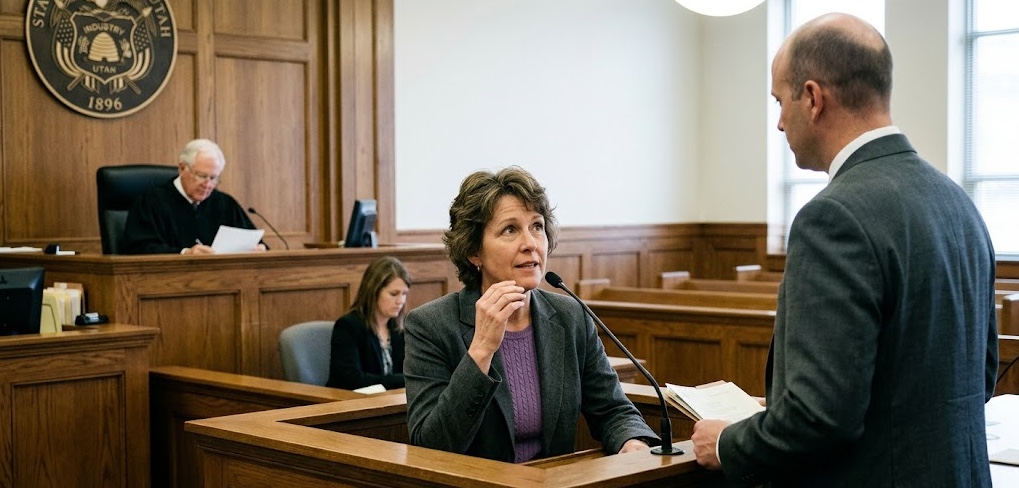
Most trials do not begin with witnesses immediately speaking freely. Testimony is presented in an ordered process. A witness is called, sworn in, and questioned by the attorney who called that witness. After that, the opposing side usually has the chance to cross-examine. Depending on the case, there may also be redirect and recross examination.
This structure matters because testimony is not just about what a witness knows. It is also about how the information is introduced, whether objections are raised, whether the testimony is relevant, and whether the judge or jury finds the witness believable.
Testimony gives facts context
Witnesses often explain events, conversations, documents, and decisions that cannot be fully understood from records alone.
Credibility matters
The court may consider not only what a witness says, but also how clearly, consistently, and confidently it is said.
Procedure controls presentation
Questions, objections, and the order of examination shape what the court ultimately hears and relies on.
Preparation affects impact
Well-prepared witnesses usually make the record easier to follow and reduce avoidable confusion at trial.

In practical terms, witness testimony helps the court connect the legal issues in the case to real people, real events, and real evidence.
Key Definitions That Help Explain Witness Testimony
Before looking at the step-by-step process, it helps to understand a few terms that often come up when witnesses testify in a Utah trial. A fact witness usually testifies about firsthand knowledge. An expert witness may offer opinions within a specialized field if the court allows it. Direct examination is the initial questioning by the side that called the witness. Cross-examination is questioning by the opposing side.
Other terms matter too. An objection is a request for the court to exclude or limit a question or answer. Foundation is the testimony needed to show why evidence may be admitted. Credibility refers to whether the witness appears reliable, believable, and consistent.
Fact witness: A person who testifies about what they personally saw, heard, said, or did.
Expert witness: A witness allowed to give opinion testimony based on specialized knowledge, training, or experience.
Direct examination: The first round of questioning by the attorney who called the witness.
Cross-examination: The opposing attorney’s opportunity to test, clarify, limit, or challenge the witness’s testimony.
Watch: What Witness Testimony Means in a Trial
This video fits here because it introduces the basic role of witness testimony, including how testimony is given under oath and why it matters in a legal proceeding.
Typical Trial Steps When a Witness Is Called to Testify
Although every case is different, witness testimony in Utah trials usually follows a predictable sequence. That sequence helps the court maintain order and gives both sides a fair chance to present and test the evidence.
The witness is called
The party presenting the case asks that the witness come forward and be placed under oath before testifying.
Direct examination begins
The attorney who called the witness asks questions designed to build a clear factual record for the court.
Exhibits may be introduced
Documents, messages, photos, records, or other evidence may be shown to the witness to establish foundation or explain events.
Cross-examination follows
The opposing side may question the witness to test memory, challenge credibility, or highlight omissions and inconsistencies.
Redirect may occur
The original attorney may ask follow-up questions to clarify points raised during cross-examination.
The court weighs the testimony
The judge or jury considers the witness’s answers together with the rest of the evidence in the case.
Watch: The Basics of How a Witness Is Examined
This video belongs here because it walks through the basic structure of witness examination and how testimony contributes to the trial record.
Direct Examination and Cross-Examination in Practice
Direct examination is usually meant to be clear, organized, and focused on the witness’s own knowledge. In many trials, this is where the court first hears the witness’s version of events. The questions are often open enough to allow explanation, but still controlled enough to keep the record understandable.
Cross-examination has a different purpose. Instead of helping the witness tell a full story, cross often tests accuracy, exposes weaknesses, and highlights facts that may help the opposing side. In some cases, cross-examination is brief. In others, it becomes one of the most important parts of the entire trial.
Direct examination should be structured: A witness usually does best when the questions move in a logical order and stay tied to key issues.
Cross-examination should have a purpose: Good cross-examination often aims at a specific point instead of arguing with the witness.
Delivery matters: Clear, careful answers are often more effective than long or defensive explanations.
Consistency matters: Prior statements, documents, and testimony can all affect how believable a witness appears.
This reel fits naturally here because it explains the purpose of direct and cross-examination and how each stage tests a witness’s testimony in a different way.
How Courts Evaluate Witness Credibility
In many trials, two witnesses may describe the same event differently. When that happens, the court does not decide credibility based on confidence alone. Judges and juries may look at consistency, detail, demeanor, logic, corroborating evidence, and whether the testimony fits the rest of the record.
Credibility is rarely about style alone, but the way a witness answers can matter. A witness who appears evasive, overly argumentative, or unable to explain basic facts may be given less weight. By contrast, a witness who answers carefully and stays within personal knowledge often appears more reliable.
Consistency
Courts often notice whether the witness’s testimony aligns with prior statements, records, and other evidence.
Clarity
Answers that are direct and understandable are usually easier for the court to trust and follow.
Demeanor
Calm, respectful testimony often carries more weight than answers that seem combative or evasive.
Fit with the full record
The court often evaluates testimony in context, not in isolation, and compares it to exhibits and other witnesses.
This reel works well in this section because it focuses on what makes a witness persuasive in court, including the importance of delivery and clarity.
View the Instagram reel about what makes a witness persuasive.
Using Witnesses to Introduce Documents and Other Evidence
Witness testimony often does more than describe events. It can also lay the groundwork for admitting exhibits into evidence. A witness may identify a photograph, explain a business record, verify a text message, or connect a timeline to documents already produced in the case.
That is why preparation matters. A useful exhibit may still create problems if no witness is ready to explain what it is, where it came from, or why it is relevant. In many cases, foundation and authenticity are as important as the document itself.
Foundation matters: The court usually needs enough testimony to understand what the document or record is.
Authentication matters: A witness may need to explain how an exhibit is genuine and connected to the case.
Relevance matters: Not every document should be introduced just because it exists.
Organization matters: Exhibits are more effective when witnesses and attorneys can move through them in a logical sequence.
Watch: How Witness Examination Connects to Evidence
This video fits here because it breaks down how witnesses give evidence and what happens when they are called to testify, which often includes walking through documents and other proof.
Common Mistakes to Avoid When Preparing a Witness
Witness preparation does not mean telling someone what to say. It means helping the witness understand the process, the issues in the case, and the importance of listening carefully and answering truthfully. Many testimony problems come from poor preparation, not bad facts.
| Common mistake | What it often looks like | Why it can hurt the case |
|---|---|---|
| Rambling answers | The witness goes beyond the question and adds unnecessary details | Extra information can create confusion or open the door to damaging follow-up questions |
| Guessing instead of clarifying | The witness answers even when unsure or does not remember clearly | Inaccurate testimony can damage credibility quickly |
| Becoming defensive on cross | The witness argues with counsel or tries to out-explain every point | The court may focus more on demeanor than the substance of the answer |
| Not reviewing key documents | The witness appears surprised by records, emails, or prior statements | Unexpected inconsistencies can weaken the testimony |
| Speaking outside personal knowledge | The witness speculates about what others thought, intended, or knew | Speculation often draws objections and reduces the value of the testimony |
| Forgetting the audience | The witness answers in a way that may make sense personally but is hard for the court to follow | Even truthful testimony loses value if it is confusing or disorganized |
This reel belongs here because it gives a short explanation of cross-examination, which is often the stage where poor witness preparation becomes most visible.
Required Filings and Trial Preparation Steps That Affect Testimony
Witness testimony does not exist in isolation. It is shaped by disclosures, witness lists, exhibit exchange, pretrial deadlines, and the court’s scheduling orders. In many Utah cases, these procedural steps affect which witnesses will testify and how smoothly their testimony can be presented.
That is one reason trial preparation starts well before the hearing date. Witnesses may need to be identified in advance. Exhibits may need to be exchanged before trial. Attorneys may also need to address evidentiary issues ahead of time if there is likely to be a dispute about what a witness can say or what documents may be admitted.
For broader procedure questions, readers may also find it useful to review our Utah small claims and debt collection guide, Utah mediation and arbitration guide, and contact page for Gibb Law.
Next Steps if Witness Testimony Will Matter in Your Utah Case
If your case is moving toward a hearing or trial, it helps to prepare for witness testimony early. Start by identifying who has firsthand knowledge, what facts actually need to be proved, and what exhibits those witnesses may need to explain. Then focus on clarity, consistency, and organization rather than volume alone.
Talk With Gibb Law About Trial Preparation in Utah
Gibb Law helps Utah clients prepare for hearings and trial with practical, organized, and client-centered guidance. If you need help understanding witness testimony, preparing for examination, organizing exhibits, or evaluating trial strategy under Utah law, our firm can help you assess your options and prepare for the next step.
Schedule a ConsultationLegally Reviewed by Dustin Gibb, Kaysville & Clearfield Lawyer
This article was legally reviewed by Dustin Gibb, a Utah attorney serving Kaysville, Clearfield, and surrounding communities. Dustin brings practical experience in Utah litigation and motion practice, including trial preparation, evidentiary issues, and courtroom procedure. If you need personalized legal guidance about witness testimony in Utah trials, contact Gibb Law to discuss your case and next steps.