Child Custody and Substance Abuse in Utah: Evidence Courts Look For
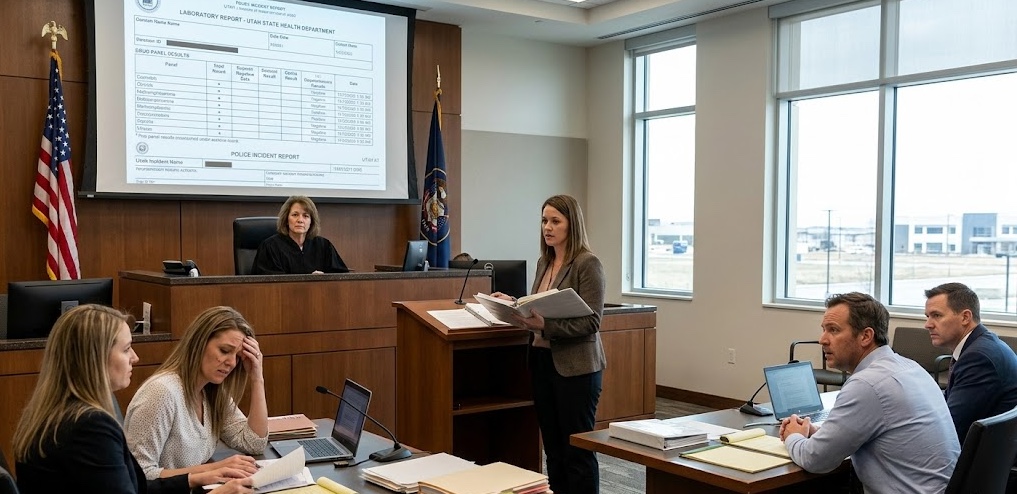
Why this matters: In a Utah custody case, substance abuse allegations can shift the conversation fast—from “What schedule is fair?” to “What keeps the child safe and stable?” Judges do not decide these cases based on rumors, labels, or one parent’s fear alone. They decide them based on credible evidence, the child’s needs, and whether any substance use is affecting parenting in real life.
Utah family courts focus on the child’s best interests. When alcohol or drug use becomes part of the record, the court’s attention typically turns to risk, reliability, and patterns: Is there impairment around the child? Missed school or medical care? Unsafe driving? Domestic conflict? Or is the concern mostly historical, treated, and no longer affecting day-to-day parenting?
Note: This article is for educational purposes and is not legal advice. Outcomes depend on the facts, your current orders, and Utah procedure. If you need advice for your situation, speak with a Utah family law attorney.
Substance Abuse Custody Utah: The Overview
When people search for substance abuse custody Utah, they are usually asking one question: “What will the judge believe?” The better question is: What will the judge rely on? Utah custody decisions are evidence-driven. Courts look for reliable proof that substance use impacts a parent’s ability to meet a child’s basic needs—safety, supervision, emotional stability, medical care, school attendance, and predictable routines.
That does not mean a parent with a history of addiction automatically loses custody. Utah courts often distinguish between past issues that are meaningfully addressed and current behavior that creates current risk. If a parent is in recovery, consistently sober, engaged in treatment, and parenting responsibly, that can matter. But when substance use is active—or when relapse risk is unmanaged—the court may impose safeguards to reduce risk to the child.
If you want the bigger framework for how custody and parent-time are decided, start with our Utah child custody and parenting time guide. If substance abuse concerns arise during a divorce, it also helps to understand timelines, temporary orders, and settlement leverage in our Utah divorce process guide.
Big idea: Utah courts focus on impact—how substance use affects parenting and the child’s wellbeing—not just accusations.
What helps most: Clear documentation: reliable witnesses, records, testing results (when properly ordered/handled), and patterns over time.
What hurts most: Overstatements, vague claims, or “character attacks” that don’t connect to the child’s safety or daily care.
The video below explains, in practical terms, how judges tend to evaluate substance use in custody disputes and why the focus is usually on the child’s safety and the parent’s reliability.
Watch: How Substance Abuse Impacts Child Custody
Substance abuse allegations can also overlap with safety issues that lead to protective orders or restricted contact. For that overview, see our Utah domestic violence and protective orders guide.
How Utah Family Courts Think About Substance Use in Custody Cases
Utah family court judges have a difficult job: they must decide parenting time and decision-making in a way that protects children while respecting each parent’s role. Substance use raises special concerns because it can be hard to prove, easy to exaggerate, and genuinely dangerous when it’s real.
Most custody cases involving substance abuse end up centering on three practical courtroom questions:
Is the child safe?
The court looks for evidence of impairment, unsafe supervision, risky driving, or chaos in the home that affects the child.
Is the pattern current?
Judges weigh recent and ongoing behavior more heavily than distant history, especially when treatment and stability are documented.
Is there a workable protection plan?
The court may use safeguards like testing, treatment compliance, supervised parent-time, or step-up schedules to reduce risk.
Is the evidence reliable?
Courts prefer objective records and consistent witnesses over speculation, social media battles, or “he said, she said” claims.
In other words, judges are not trying to diagnose addiction from the bench. They are trying to determine whether the child’s day-to-day life is being affected—and what court orders can realistically reduce that risk.

If your case involves court motions, temporary orders, or disputes over what evidence can be used, procedural clarity matters. A plain-English overview is our Utah discovery, evidence, and motions practice guide.
Key Legal Standards That Shape These Decisions
Most parents do not need to memorize legal standards to understand the direction of a custody case. But it helps to know the core framework Utah courts use when substance abuse is alleged.
Best interests of the child is the anchor
Utah custody decisions are guided by the child’s best interests. When substance use is in the mix, “best interests” often becomes a concrete checklist: safety, supervision, school and medical follow-through, emotional stability, and whether each parent can co-parent in a way that reduces conflict and risk.
Courts look at parenting capacity, not just personal conduct
Judges do not usually punish parents for private choices in the abstract. They focus on parenting impact. If substance use leads to missed pick-ups, unpredictable mood, unsafe people in the home, or neglect of school/medical routines, it becomes highly relevant. If the evidence shows stable sobriety and responsible parenting, that can shift the analysis.
Protective conditions are common when the risk is real
When the court believes there is an active risk, it may issue orders designed to protect the child while preserving the parent-child relationship. Depending on the facts, those orders can include supervised parent-time, limited overnights, restrictions on driving with the child, restrictions on alcohol use during parent-time, or proof-based step-up plans.
Plain-English takeaway: The more clearly you can tie evidence to child safety and parenting reliability, the more likely it is to matter in court.
Practical detail: Courts often care less about one “bad day” and more about documented patterns—especially patterns that continue despite warnings, prior orders, or treatment opportunities.
Custody evidence Utah: Judges prefer concrete records and consistent testimony over broad claims or inflammatory labels.
Substance abuse concerns can also influence child support and financial planning if parenting time or overnights change. For that broader context, see our Utah alimony and child support guide.
How Judges Evaluate Evidence in Substance Abuse Custody Cases
“Evidence” can mean a lot of things in custody disputes. In a substance abuse case, the strongest evidence tends to fall into a few categories: objective records, credible third parties, and patterns that are consistent over time.
The table below summarizes the kinds of custody evidence Utah courts often find most helpful, along with common mistakes that can undermine credibility.
| What the court looks for | Examples of supporting evidence | Common mistake to avoid |
|---|---|---|
| Impact on the child | Missed school or medical appointments, unsafe supervision, child left with inappropriate caregivers, emotional distress tied to intoxication, unsafe driving patterns | Focusing on adult moral judgments without connecting facts to the child’s daily life |
| Recent and repeated behavior | Police reports, documented incidents, consistent witness accounts, repeated missed exchanges, repeated intoxication during parent-time | Relying on old history with no proof of current risk or recent concerns |
| Testing and monitoring | Court-ordered random testing results, documented compliance, credible chain-of-custody records, consistent negative results over time | Trying to “self-test” in a way that looks selective, staged, or unreliable |
| Treatment and recovery stability | Treatment participation records, sober living supports, therapy or counseling records (when appropriate), sponsor/support documentation, consistent routines | Claiming “I’m fine now” without showing a track record of stability and follow-through |
| Credibility and co-parenting conduct | Calm written communications, truthful disclosures, reasonable proposals to protect the child, willingness to follow safeguards | Using allegations as leverage, exaggerating, or making claims that collapse under cross-examination |
This Instagram reel emphasizes a core court priority: when substance abuse is alleged, the court’s focus tends to be child safety and practical protections, not “winning” a conflict.
If you are preparing for hearings where evidence disputes are likely, understanding motions and what judges can consider is critical. See our Utah discovery, evidence, and motions practice guide for how documentation and procedure often drive outcomes.
Common Types of Evidence That Matter Most
In a substance abuse custody dispute, the details matter. Judges generally want to know what happened, when it happened, who observed it, and how it affected the child. Below are the evidence types that often carry more weight when they are credible and properly presented.
1. Court orders and compliance history
If there are already custody, parent-time, or protective orders in place, compliance history matters. Courts pay close attention to whether a parent follows rules, shows up on time, avoids conflict at exchanges, and respects restrictions (like no alcohol during parent-time). A pattern of noncompliance can become “evidence” of unreliability even without a dramatic incident.
2. Neutral third-party records
When substance use is alleged, courts often trust records that were not created to “win” the custody case. Examples can include law enforcement interactions, medical records, school attendance patterns, or documented third-party observations. These records can be powerful because they don’t depend solely on one parent’s story.
3. Testing evidence, when it is appropriate and reliable
Testing can be a useful tool, but it is also frequently misunderstood. Random testing is often more persuasive than “testing on my terms,” because random testing reduces the appearance of gaming the system. If testing becomes part of the case, the court will generally care about the reliability of the process and consistent compliance over time.
The Instagram reel below highlights a common court tool: random testing (such as urine or hair testing) may be used to confirm sobriety when substance use is a credible concern.
4. Treatment participation and recovery proof
If a parent has a substance use disorder history, the most important evidence often becomes: what has changed, and how durable is the change? Judges may look for treatment participation, consistent counseling, stable housing, stable employment, and a clear relapse-prevention plan. The goal is not perfection. The goal is stability and predictability for the child.
5. Witness testimony that is specific and credible
Witnesses can matter, but the most persuasive testimony is usually specific and child-focused. “He’s an alcoholic” is less helpful than “On three exchanges last month, he smelled strongly of alcohol, slurred his words, and forgot the child’s medication; I wrote down the dates and the child’s teacher observed the child arriving late the next day.”
The video below discusses how substance abuse allegations can shift custody outcomes and what kinds of evidence tend to move the needle.
Watch: Navigating Substance Abuse in Custody Cases
What Courts May Order When Substance Use Is Alleged
When a judge believes substance use is relevant, the court may order steps that help clarify the facts and protect the child. The exact tools used depend on the seriousness of the allegation, how recent the concern is, and how credible the supporting evidence appears.
Evaluations and assessments
The court may require professional evaluations or assessments to understand whether substance use is affecting parenting and what safeguards make sense.
Random testing and compliance tracking
When ordered and properly managed, random testing can provide an objective data point over time—especially when the court wants more than competing stories.
Parent-time conditions
Depending on risk, the court may impose restrictions such as supervised parent-time, limits on overnights, or requirements that a parent not consume alcohol during parent-time.
Step-up schedules
Courts sometimes use a gradual plan: safety-first structure up front, with increased parent-time tied to documented sobriety and consistent follow-through.
This Instagram reel summarizes potential court-ordered steps—testing, evaluations, and other safeguards—that may appear when substance use becomes a custody issue.
If the facts also involve threats, harassment, or violence, those issues can change the legal path quickly. For that context, see our Utah domestic violence and protective orders guide.
Practical Implications for Families
Substance abuse allegations do not stay neatly inside a courtroom. They affect school drop-offs, missed weekends, last-minute cancellations, and the child’s sense of stability. Whether you are the parent raising the concern or the parent responding to it, the practical approach matters—because credibility matters.
If you are concerned about the other parent’s substance use
Courts respond best to concerns that are documented, measured, and child-focused. In practical terms, that often means:
Document the child impact: missed school, missed medication, unsafe supervision, erratic behavior at exchanges, or driving concerns—write down dates and specifics.
Keep communication clean: calm messages that focus on the child’s needs are more persuasive than angry accusations.
Use the right legal tool: some problems are enforcement; some require temporary orders; some implicate protective orders.
If you already have an order and the issue is repeated noncompliance or unsafe exchanges, understanding enforcement and motion practice can help you avoid chaotic, last-minute litigation. See our Utah discovery, evidence, and motions practice guide.
If you are accused of substance abuse
False or exaggerated allegations happen, and they can be devastating. But the court will still look for clarity and stability. A strong response usually focuses on proof and reliability:
Show stability
Consistent parenting routines, reliable attendance at exchanges, and steady follow-through with school and medical needs.
Address the concern directly
If there is a history, show treatment participation and sobriety supports. If there is no history, be prepared with clear documentation and credible witnesses.
Avoid retaliation
Counter-accusations without evidence can damage credibility and distract from the child-focused issues the judge cares about.
Protect the child relationship
Courts often look for parents who can keep children out of adult conflict while following the court’s structure.
The video below discusses how evidence like testing, treatment compliance, and documented parenting patterns can influence court decisions in custody disputes involving substance use.
Watch: Navigating Substance Abuse Issues in Child Custody Battles
Common Pitfalls to Avoid
Substance abuse custody disputes often go sideways for predictable reasons. The legal system is not designed to sort out every messy relationship dynamic. It is designed to make enforceable orders based on evidence.
Pitfall 1 Treating suspicion as proof
Many parents sense there is a problem long before they can prove it. That’s real—and it’s emotionally exhausting. But court action works best when you can point to concrete events, credible observations, and child-focused impacts.
Pitfall 2 Turning the case into a character trial
Custody decisions are not meant to be a referendum on who was the better spouse. Judges want to know who can reliably parent now and what conditions best protect the child. Personal attacks often backfire when they are not tied to parenting behavior.
Pitfall 3 Using social media as your evidence strategy
Social media can sometimes matter, but it is also easy to misinterpret and easy to manipulate. Screenshots without context can create more noise than clarity. If something online truly shows risk to the child, it should be handled carefully and paired with reliable corroboration.
Pitfall 4 Ignoring procedure and deadlines
In a contested custody case, procedure shapes outcomes. If you wait until the last minute to raise safety concerns, or you file the wrong motion, you may not get the relief you need when you need it. That’s one reason to understand how Utah family court handles evidence and motion practice.
Stay child-focused: Judges prioritize safety, stability, and reliable parenting over adult conflict.
Build credibility: Clear documentation and calm communication often matter as much as the accusation itself.
Use the right tools: Enforcement, temporary orders, and protective orders serve different purposes.
Next Steps
If substance use is part of a Utah custody dispute, the most useful next step is to move from fear and frustration to a plan that courts can act on: specific facts, credible evidence, and a child-centered proposal for safety and stability.
Collect your best documentation
Focus on dates, specifics, and child impact. Save calm written communications and keep records organized.
Understand your current orders
Read your decree or temporary orders closely. Compliance history often becomes part of the evidence.
Consider a workable safety proposal
Courts often prefer structured solutions—testing, treatment compliance, supervised time—over vague demands.
Get legal guidance early
When safety is involved, waiting can increase risk and increase litigation costs. Early advice can prevent emergency motion practice.
Talk With Gibb Law About Child Custody and Substance Abuse Concerns
Gibb Law helps Utah families navigate custody disputes where safety and evidence matter. If you are facing substance abuse allegations, concerned about your child’s wellbeing, or need help building a court-ready plan that fits Utah procedure, we can help you understand your options and next steps.
Schedule a ConsultationLegally Reviewed by Dustin Gibb, Kaysville & Clearfield Lawyer
This article was legally reviewed by Dustin Gibb, a Utah attorney serving Kaysville, Clearfield, and surrounding communities. Dustin brings practical experience in Utah litigation and motion practice, and he helps clients make informed decisions in family law matters where procedure and evidence shape outcomes. If you need guidance specific to your situation, contact Gibb Law to discuss your options and next steps.