Sole Physical Custody in Utah
Why this matters: Sole physical custody in Utah generally means one parent has the child in their care for more than 255 overnights each year. That arrangement can affect daily routines, school logistics, transportation, decision-making dynamics, and the other parent’s parent-time schedule.
Many parents hear the word sole custody and assume it means one parent has all authority and the other parent has no meaningful role. That is not always true. Physical custody and legal custody are different. A parent may have sole physical custody while both parents still share legal custody and major decision-making responsibilities.
Note: This article is for educational purposes only and is not legal advice. Utah courts look at the child’s best interests, the parents’ circumstances, and the practical realities of the family before entering any custody order.
Sole Physical Custody in Utah
If you are searching for sole physical custody in Utah, you are probably trying to understand what it means when one parent has the child most of the time and how that affects the other parent’s role. In Utah custody cases, physical custody focuses on where the child lives and how many overnights the child spends with each parent. A sole physical custody arrangement usually means one parent provides the child’s primary home base for most of the year.
That does not automatically answer every other custody question. A sole physical custody order may still leave both parents involved in important decisions if the legal custody arrangement is joint. It also does not mean the other parent disappears from the child’s life. In many cases, the noncustodial parent still has parent-time, holiday time, summer time, and ongoing responsibilities under the court order.
Because Utah custody issues often overlap with divorce, parenting plans, and support questions, it helps to view the issue in context. For related guidance, see our Utah child custody and parenting time guide, Utah divorce process guide, Utah family law guides, and contact page for practical help tailored to your situation.
What Sole Physical Custody Means in Practice
Sole physical custody generally means one parent has the child for more than 255 nights each year. That parent is often called the primary physical custodian because the child’s main residence is with that parent. The other parent may still have regular parent-time, but the schedule does not rise to the level of joint physical custody.
In daily life, this arrangement often affects school-week routines, transportation responsibilities, holiday planning, and how the child’s basic weekly schedule is organized. It can also shape child support issues because overnights matter when support is calculated.
Primary residence
The child usually lives most of the year with one parent, creating a central home base for school, activities, and daily routines.
Parent-time for the other parent
The noncustodial parent may still have scheduled weekends, holidays, summer time, and other parent-time under the court order.
Not the same as sole legal custody
Physical custody concerns overnights and residence. Legal custody concerns authority to make major decisions for the child.
Practical impact on family life
School transportation, medical scheduling, childcare planning, and exchange logistics often look different in a sole physical custody arrangement.

Understanding that practical structure is important because many custody disputes are really about how the family will function week to week, not just what label appears in the final order.
Key Definitions Parents Should Understand
Custody language can be confusing, especially when parents use the words sole custody, physical custody, and legal custody interchangeably. Utah custody orders work best when parents understand what each term actually means.
A clear understanding of these basic terms can help parents read court papers more carefully, negotiate parenting plans more effectively, and avoid conflict based on misunderstandings.
Sole physical custody: One parent has the child in their physical care for more than 255 overnights each year.
Joint physical custody: Both parents have substantial periods of physical care, with the child spending significant overnights with each parent.
Legal custody: Refers to authority over major decisions such as education, non-emergency healthcare, and other important matters affecting the child.
Parent-time: The schedule that defines when the noncustodial parent spends time with the child.
Watch: What Sole Custody Means for Parents

Open the YouTube video explaining what sole custody means
This video fits well here because it explains the core concept of sole custody, including the idea that one parent has the child’s primary residence while the other parent may still have visitation or parent-time rights.
How Utah Courts Look at Sole Physical Custody
Utah courts focus on the child’s best interests, not on a parent’s preferred label. When the court considers whether a sole physical custody arrangement makes sense, it looks at the child’s needs, each parent’s ability to provide care, the child’s routines, and the practical realities of the family’s situation.
In some cases, a sole physical custody arrangement may be appropriate because one parent has historically provided most day-to-day care, because the child needs stability in one primary home, or because the parents’ circumstances make a more evenly shared schedule impractical. In other cases, the real dispute is not whether one parent is primary, but how much time the other parent should have and how transitions should be handled.
Review the child’s daily needs
The court often considers school routines, healthcare needs, emotional stability, and the child’s overall adjustment to home and community.
Consider each parent’s caregiving role
Judges may look at who has historically handled day-to-day care, scheduling, transportation, appointments, and the child’s regular routines.
Evaluate the practicality of the schedule
Distance, work schedules, school location, and the child’s age can all influence whether a sole physical custody arrangement is workable.
Assess the child’s stability
Courts generally want an arrangement that supports consistency, minimizes disruption, and promotes the child’s well-being.
Address the other parent’s continuing role
Even where one parent has primary physical custody, the court still considers how the other parent will maintain a meaningful relationship with the child.
This Instagram reel belongs here because it gives a legal perspective on child custody decisions and helps explain why sole custody may be appropriate in some cases depending on the child’s needs and the facts before the court.
View the Instagram reel about when sole custody may be appropriate
Sole Physical Custody Compared With Sole Legal Custody
One of the biggest custody misunderstandings is assuming that a parent with sole physical custody also has sole legal custody. That is not necessarily true. A parent may be the primary physical custodian while still sharing legal custody with the other parent. That means the child lives mainly with one parent, but both parents still have a role in major decisions.
Because these concepts are different, parents need to read a custody order carefully. The overnight schedule tells you about physical custody. The decision-making language tells you about legal custody.
| Custody concept | What it generally covers | Why the distinction matters |
|---|---|---|
| Sole physical custody | One parent has the child most overnights and provides the primary home | It affects residence, routines, parent-time structure, and often child support calculations |
| Joint physical custody | Both parents have substantial physical care of the child | It affects exchanges, scheduling, and how daily life is divided between households |
| Sole legal custody | One parent has primary authority over major child-related decisions | It determines who makes important choices about education, healthcare, and similar issues |
| Joint legal custody | Both parents share authority over major decisions | It requires communication and cooperation even when one parent has primary physical custody |
This reel fits naturally here because it explains the difference between joint and sole custody and helps parents understand that custody labels can refer to different kinds of authority and parenting arrangements.
View the Instagram reel explaining the difference between joint and sole custody
How Parent-Time Works When One Parent Has Sole Physical Custody
When one parent has sole physical custody, the other parent usually still has parent-time unless the court orders otherwise. The exact schedule depends on the case, but the important point is that sole physical custody does not always mean minimal involvement by the other parent. Many orders still give the other parent regular contact through weekends, holidays, evenings, school breaks, and summer periods.
That is why the wording of the order matters so much. A clear parent-time schedule can reduce conflict, set realistic expectations, and help both parents plan around school, work, and the child’s activities.
Weekly schedule: The order may define regular weekday or weekend time for the noncustodial parent.
Holiday allocation: Holidays are often divided specifically to avoid confusion and repeated disputes.
Summer and school breaks: Extended time may be available even when one parent has primary physical custody during the school year.
Transportation rules: Exchange logistics should be clear so the schedule is workable in practice.
Watch: Utah Issues That Come Up With Sole Physical Custody

Open the YouTube video about Utah sole physical custody issues
This video supports this section because it discusses Utah-specific issues that often arise when one parent has sole physical custody, including how the arrangement affects the legal rights and practical role of the other parent.
Relocation and Sole Physical Custody
Relocation can become a major issue when one parent has sole physical custody. Moving to a different city or state may affect school placement, transportation burdens, and the other parent’s ability to maintain regular contact with the child. Even when one parent is the primary physical custodian, a move can still trigger legal issues that need to be handled carefully.
Because relocation disputes can change the practical meaning of the custody order, parents should review the terms of the existing order and get advice before making assumptions about what is allowed. A move that seems manageable from one parent’s perspective may create major scheduling or relationship problems from the other parent’s perspective.
Review the current order
The existing custody and parent-time language often matters when relocation becomes an issue.
Consider the child’s stability
Courts generally care about how a move will affect schooling, routines, emotional support, and continuity in the child’s life.
Evaluate parent-time impact
A move may make the existing parent-time schedule unrealistic and require a new approach.
Address transportation and cost issues
Longer distances can create practical and financial complications that must be resolved clearly.
Watch: Moving With a Child After Sole Physical Custody Is Awarded
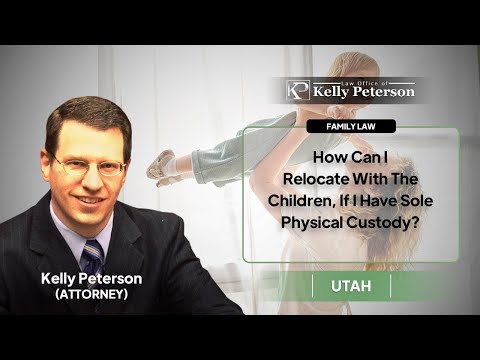
Open the YouTube video about relocation and sole physical custody in Utah
This video belongs in this section because it focuses on what can happen when a parent with sole physical custody wants to move with the child and why relocation issues require careful legal analysis.
Common Misunderstandings About Sole Physical Custody
Parents sometimes approach a custody case believing that sole physical custody is the same thing as total control. That is often not correct. A sole physical custody order may still require communication with the other parent, compliance with parent-time rights, and joint participation in major decisions if legal custody is shared.
Another common misunderstanding is that the label alone determines whether the arrangement works. In reality, a custody order works only when the details are clear. The schedule, exchange rules, communication expectations, and decision-making framework often matter more than the label itself.
Sole physical custody is not always sole legal custody: A parent may provide the primary home while still sharing authority over major decisions.
The other parent may still have meaningful time: Parent-time can remain regular and important even when overnights are not equal.
The details matter: Transportation, holiday schedules, notice rules, and communication expectations all shape how the order functions.
Relocation can complicate everything: A move can change how custody and parent-time work in practice.
This reel works well here because it discusses custody arrangements generally and reinforces how lawyers help parents understand and navigate sole custody issues in practical, child-focused ways.
View the Instagram reel about navigating custody arrangements with legal guidance
Practical Tips for Parents Dealing With a Sole Physical Custody Issue
Whether you are seeking sole physical custody, responding to that request, or reviewing an existing order, it helps to focus on facts rather than labels. Courts usually want to know how the child’s daily life will work, what arrangement is realistic, and how the order will support the child’s long-term welfare.
Read the full order carefully: Do not assume the custody label answers parent-time or decision-making questions by itself.
Focus on the child’s routine: School, transportation, bedtime, childcare, and medical needs often shape what arrangement is actually workable.
Keep communication organized: Clear records and respectful communication can reduce disputes over schedules and responsibilities.
Address relocation early: A possible move should be discussed and evaluated before it becomes a crisis.
Next Steps for Parents Facing a Sole Physical Custody Question
If your case involves a dispute about where the child should primarily live, how many overnights each parent should have, or whether a relocation issue may affect the current arrangement, it helps to step back and evaluate the full picture. The key questions are usually practical: where the child will be most stable, how the parent-time schedule will work, whether legal custody is shared, and what structure will best serve the child over time.
Talk With Gibb Law About Sole Physical Custody in Utah
Gibb Law helps Utah parents understand custody arrangements, parent-time schedules, relocation concerns, and related family law issues with clear, practical guidance. Whether you are seeking a new custody order, reviewing an existing arrangement, or trying to resolve a dispute over parenting time or a proposed move, our firm can help you evaluate your options under Utah law.
Schedule a ConsultationLegally Reviewed by Dustin Gibb, Kaysville & Clearfield Lawyer
This article was legally reviewed by Dustin Gibb, a Utah attorney serving Kaysville, Clearfield, and surrounding communities. Dustin brings practical experience in Utah litigation and motion practice, along with client-centered guidance in family law matters involving custody, parenting disputes, and court procedure. If you need personalized legal guidance about sole physical custody in Utah, contact Gibb Law to discuss your situation and next steps.