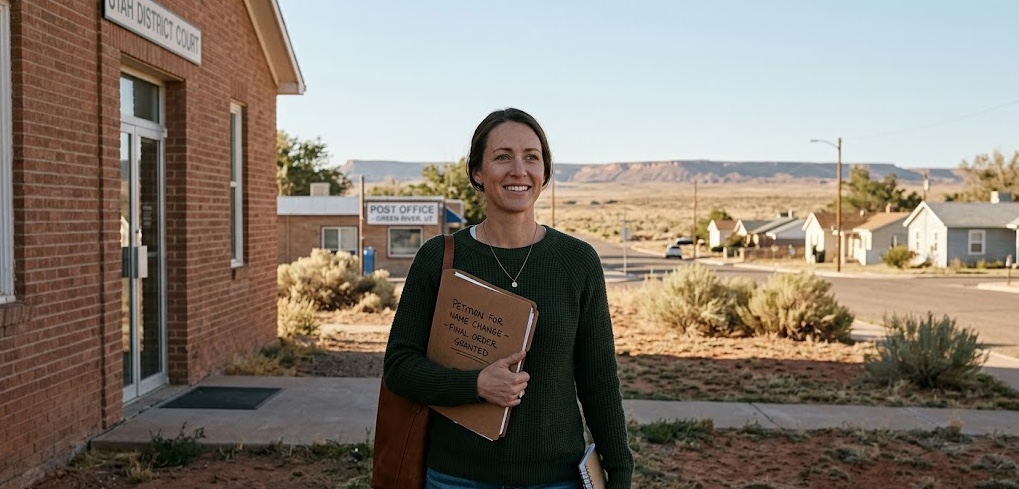
Name Change After Divorce in Utah: Steps and Timing
Why this matters: A name change after divorce in Utah can feel simple in principle but still create practical confusion. Many people want to restore a former name quickly after a divorce decree is entered, yet the real questions usually involve timing, what the decree says, whether a separate court filing is needed, and how to update records with agencies and institutions afterward.
For some people, the divorce case itself already provides the answer because the decree restores a former name. For others, the decree may be silent, incomplete, or limited to the issues decided in the divorce, which can mean a separate name-change process may be necessary. Even when the court step is straightforward, follow-up tasks with Social Security, the Utah Driver License Division, employers, financial institutions, and other agencies can take time and careful documentation.
Note: This article is for educational purposes and is not legal advice. Whether you can resume a former name in the divorce decree or need a separate petition depends on the wording of the court order, your circumstances, and the requirements of the agencies where you need to update your records. Before relying on assumptions about what a decree does or does not allow, it is wise to get Utah-specific legal advice.
Name Change After Divorce in Utah: Steps and Timing
If you are searching for name change divorce Utah, post divorce paperwork Utah, or Utah court process, you are usually trying to solve a practical problem: how do you legally return to a former name after divorce, and how long does it take to update everything afterward?
In Utah, the answer often starts with the divorce case itself. In many cases, a party asks the court to restore a former name as part of the divorce, and the decree can include that relief. If that happened, the certified divorce decree may be the document you use to begin updating records. If the divorce decree does not restore a former name, you may need to look at Utah’s separate adult name-change process.
That distinction matters because people often assume that once the divorce is finalized, every agency will automatically accept a new or restored name. In reality, the court order is only one part of the process. You may still need certified copies, identity documents, and follow-up updates with state and federal agencies, employers, insurers, banks, schools, and other record holders.
For broader context on how these issues fit into a Utah family law matter, see our Utah divorce process guide. If your case also includes issues involving custody, support, or post-decree filings, our Utah family law guides and Utah discovery, evidence, and motions practice guide can help explain the broader procedure.
Overview of How Utah Courts Approach Name Restoration After Divorce
Utah courts generally separate two related questions. The first is whether a former name can be restored in the divorce case itself. The second is what someone must do after the divorce decree is entered to make that name change effective in day-to-day records and identification.
When a divorce decree clearly restores a former name, that decree is often the key court document. But if the decree does not address the issue, or if someone wants a different kind of name change that was not included in the divorce case, the process may not be as simple as just using the final divorce paperwork. A separate adult name-change petition may become necessary.
The decree may already solve the court issue
If the divorce decree restores a former name, that order is often the starting point for later record updates.
Post-divorce paperwork still matters
Even with a decree, agencies often require certified copies and identity documents before changing records.
Not every case is the same
If the divorce decree is silent, incomplete, or does not match the name you want to use, extra legal steps may be required.
Timing depends on follow-up actions
The court order may be only the first step, because record changes with outside agencies can take additional time.

In practical terms, Utah courts approach this issue by focusing on the order first and the administrative follow-up second. Families often get into trouble when they assume the paperwork will update itself or when they realize too late that the divorce decree did not include the exact relief they needed.
Key Legal Standards and Utah Procedure
Utah procedure matters because there is a meaningful difference between restoring a former name in a divorce case and filing a separate name-change petition. If the request is handled in the divorce, the decree should clearly state the restored former name. If not, the person may need to use Utah’s general name-change process for adults.
That distinction matters because many people are not trying to create a brand-new name after divorce. They are trying to return to a prior legal name. If that return is spelled out in the decree, the process is often more direct. If it is not, the case may move out of the divorce file and into a separate petition process.
Utah law and court forms also matter because paperwork must be precise. Small wording issues can create avoidable delays when agencies compare your divorce decree, Social Security records, driver license records, and financial accounts.
When the divorce decree includes the restored name
If the decree restores a former name, certified copies of that decree are usually essential. The decree becomes the legal basis for many downstream updates.
When a separate petition may be necessary
If the decree is silent, if the requested name is not the former name restored in the divorce, or if other issues complicate the request, Utah’s separate name-change process may be the correct path.
Start with the decree: The final divorce paperwork may already contain the order restoring a former name.
Read the exact language: Agencies often want the legal document to clearly support the name you want to use.
Separate petitions exist: If the divorce order does not solve the issue, a standalone Utah name-change case may be needed.
Administrative updates are separate: Court approval does not automatically change Social Security, driver license, or bank records.
For a broader view of how court orders, filings, and deadlines fit together, visit our Utah divorce process guide. If your case also involves post-decree motions or corrections, our Utah discovery, evidence, and motions practice guide can help explain how Utah courts handle follow-up issues.
How Judges Evaluate the Request and the Paperwork
Name restoration after divorce is usually less about courtroom conflict and more about whether the paperwork is clear, accurate, and properly connected to the existing case. Judges and clerks generally need to see what the person is asking for, whether it fits within the divorce case, and whether the final order reflects that relief plainly enough to be useful later.
Clear request in the divorce case
When the name issue is raised during the divorce, the request should be stated clearly so the final decree can identify the former name to be restored. Vague or missing language can create avoidable problems later.
Matching documents
Even after a divorce decree is entered, outside agencies may compare the decree with other identification records. Consistency across documents matters because mismatches can slow down the process.
Practical proof for later updates
The court order is important, but the follow-up process often depends on having certified copies, government-issued identification, and supporting documents ready when you start updating records.
| Document or issue | Why it matters | Common problem |
|---|---|---|
| Divorce decree | Shows whether the court restored a former name as part of the divorce | The decree may be silent or may not clearly identify the restored name |
| Certified copies | Often required when updating government or financial records | People sometimes rely on ordinary copies that agencies will not accept |
| Social Security records | Important because other institutions often want your federal record updated first | Delays can occur if identity documents and name-change proof do not line up |
| Utah driver license or ID | Helps bring state identification into line with your legal name | Applicants may arrive without the documents the agency requires |
| Bank, payroll, insurance, and school records | These updates affect daily life after the court process ends | People often underestimate how many records must be changed |
Watch: How to Legally Change Your Name After Divorce Step by Step
This video fits here because it walks through the practical paperwork and timing issues people usually face once they decide to restore or change a name after divorce.
Common Steps After the Divorce Decree Is Entered
Many people focus on the court order and then realize the bigger challenge is updating everything else. In practice, the post-divorce paperwork stage often takes more time than the actual request for name restoration.
A common sequence is to obtain certified copies of the divorce decree, update the name with Social Security, then update the Utah driver license or ID, and then move through employment, banking, insurance, tax, voter, travel, and school records as needed.
Step 1 Get certified copies of the decree
If your decree restores your former name, certified copies are often the first thing to obtain. Many agencies want an official court-certified document rather than a plain copy.
Step 2 Update Social Security
For many people, updating Social Security is an early priority because other institutions may ask for records that match federal identification information.
Step 3 Update your Utah driver license or state ID
Once you have the required legal documentation, updating your Utah identification can help align your daily-use documents with your legal name.
Think beyond the court order: The decree may be only the start of the process.
Certified copies matter: Many agencies will not accept informal copies of divorce paperwork.
Plan your sequence: Updating federal and state identification early can make later updates smoother.
Watch: How to Legally Change Your Name After Divorce Attorney Advice
This video belongs in this section because it explains the difference between the legal court step and the practical follow-up tasks that usually come afterward.
Practical Timing for a Name Change After Divorce in Utah
People often ask how long the process takes, but there is no single answer. The timing can depend on whether the name restoration was included in the divorce decree, how quickly certified copies are obtained, whether a separate petition is necessary, and how long outside agencies take to process updates.
For some people, the court issue is already finished the day the decree is entered because the restored name appears in the decree. For others, the legal step takes longer because the decree does not contain the needed language. Then there is the administrative timeline, which may continue after the divorce case is over.
In real life, the process often moves in phases: court order first, identity records second, and private account updates third. That is why a person may have legal authority to use a former name before every agency and institution has finished updating its records.
This post fits naturally here because it highlights the practical follow-up sequence many people face after divorce, including getting the decree and then updating government and personal records.
Practical Implications for Families
Name changes after divorce affect more than identification cards. They can influence payroll records, health insurance, retirement accounts, tax filings, school communications, travel documents, professional licenses, and online account records. That is why families often need a checklist rather than a single court document.
If you are still in the divorce process
It is often easier to address the issue clearly in the divorce paperwork if you already know you want to restore a former name. Clear decree language can reduce later confusion.
If your divorce is already final
The first question is whether the decree already restores your former name. If it does, your next work may be administrative rather than judicial. If it does not, you may need to consider a separate name-change filing.
If children, schools, or shared accounts are involved
Even a straightforward name restoration can create practical coordination issues. Parents may need to think about school records, medical portals, co-parenting communications, and travel documents, especially when different records update at different times.
Clarity matters
A decree with clear name-restoration language can save time later.
Timing matters
Agency updates may not all happen at the same speed, even after the court order is entered.
Consistency matters
Matching records across Social Security, Utah ID, payroll, and financial accounts reduces complications.
Planning matters
A checklist approach is often better than trying to update records one by one without a sequence.
This reel is relevant here because it emphasizes the practical value of handling name restoration clearly in the divorce judgment whenever possible.
Common Pitfalls to Avoid
Name restoration issues usually become harder when people rely on assumptions instead of the actual decree and agency requirements. These are some of the most common mistakes.
Pitfall 1 Assuming divorce automatically changes every record
A divorce decree does not automatically update all federal, state, and private records. Additional steps are usually required.
Pitfall 2 Not checking the exact wording of the decree
If the decree does not clearly restore the former name, agencies may not treat it as enough proof for the change you want.
Pitfall 3 Waiting too long to collect certified copies
Delays in getting certified paperwork can slow the entire post-divorce update process.
Pitfall 4 Forgetting follow-up institutions
People often remember Social Security and the DMV but forget payroll, health insurance, retirement plans, professional licenses, and banking records.
Pitfall 5 Treating a new name request like a simple former-name restoration
Those issues may not always be the same. In some cases, a separate adult name-change petition is more appropriate than relying on the divorce decree alone.
Use the exact decree language: Do not assume the order says more than it actually says.
Think in phases: Court approval, identification updates, and private account updates often happen separately.
Keep a checklist: The process is usually smoother when you work through each institution methodically.
This post works well here because it reinforces that a divorce judgment may already supply the legal authority to resume a former name, but people still need to understand what additional steps remain.
How to Respond and Move Forward
The best approach is usually organized and document-driven. Whether you are still negotiating divorce terms or dealing with a decree that has already been entered, the goal is to identify the exact legal document that controls and then move through the follow-up institutions in a sensible order.
Read the final divorce decree carefully
Start by confirming whether the decree expressly restores your former name and how that name is written in the order.
Get certified copies of the decree
Certified court copies are often needed for government and financial updates.
Update your Social Security record
Many people begin here because other institutions often want supporting identity records to match.
Update your Utah driver license or ID
Once you have the required paperwork, bring your state identification into line with your legal name.
Update private and institutional records
Move through payroll, banks, insurance, schools, travel records, and other accounts using a checklist so nothing important is missed.
Watch: Can I Change My Name During the Divorce Process
This video fits here because it helps explain why it is often easier to address the name issue during the divorce case rather than trying to solve it only afterward.
Related Utah Family Law Questions That Often Overlap
Name restoration after divorce rarely exists in isolation. Families may also be dealing with custody records, support orders, property transfers, school communications, beneficiary designations, or post-decree corrections. In some cases, the same paperwork that affects a name change also affects other important legal and financial records.
That is why the more useful question is often not just “How do I change my name?” but “What documents control, what records need to be updated, and what sequence will create the fewest problems?”
Next Steps for Families Handling Post Divorce Paperwork in Utah
If you are dealing with a name change after divorce in Utah, the best next step is usually to confirm what your decree actually says and then build a practical checklist from there. A careful review at the beginning can save significant time and frustration later.
Talk With Gibb Law About Name Change After Divorce in Utah
Gibb Law helps Utah families address divorce-related court orders and practical post-decree issues with a clear, problem-solving approach. If you are trying to determine whether your decree already restores a former name, whether additional court action is needed, or how to approach the post divorce paperwork Utah process, our firm can help you assess the facts and next steps.
Schedule a ConsultationLegally Reviewed by Dustin Gibb, Kaysville & Clearfield Lawyer
This article was legally reviewed by Dustin Gibb, a Utah attorney serving Kaysville, Clearfield, and surrounding communities. Dustin brings practical experience in Utah litigation and motion practice, including family law matters involving divorce decrees, post-decree issues, and court procedure. If you need personalized legal guidance about a name change after divorce in Utah, contact Gibb Law to discuss your options and next steps.